Pacific Ocean Shrinks, May Form Supercontinent
Pacific Ocean shrinking, new supercontinent possible, scientists say.
'%3E%3Crect%20width%3D'96'%20height%3D'96'%20fill%3D'%23B3261E'%2F%3E%3Ccircle%20cx%3D'30'%20cy%3D'24'%20r%3D'44'%20fill%3D'%23fff'%20opacity%3D'.12'%2F%3E%3Ccircle%20cx%3D'60'%20cy%3D'74'%20r%3D'40'%20fill%3D'%23000'%20opacity%3D'.10'%2F%3E%3C%2Fg%3E%3Cg%20fill%3D'%23fff'%3E%3Crect%20x%3D'29'%20y%3D'49'%20width%3D'8'%20height%3D'19'%20rx%3D'1'%2F%3E%3Crect%20x%3D'39'%20y%3D'40'%20width%3D'9'%20height%3D'28'%20rx%3D'1'%2F%3E%3Crect%20x%3D'50'%20y%3D'45'%20width%3D'8'%20height%3D'23'%20rx%3D'1'%2F%3E%3Crect%20x%3D'60'%20y%3D'53'%20width%3D'7'%20height%3D'15'%20rx%3D'1'%2F%3E%3Crect%20x%3D'41'%20y%3D'34'%20width%3D'5'%20height%3D'6'%2F%3E%3C%2Fg%3E%3C%2Fsvg%3E)
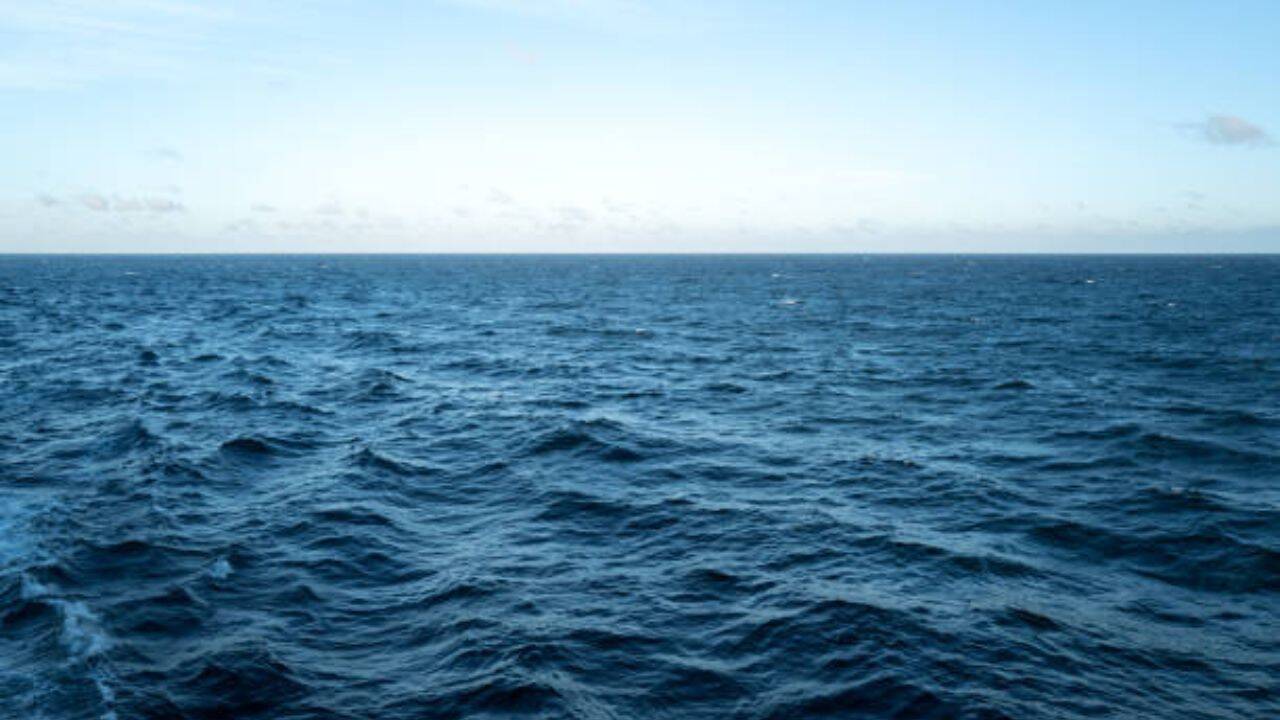
The Pacific Ocean, the largest of the world's five oceans, is slowly shrinking due to the movement of tectonic plates. This process, which occurs at the ocean's edges, is causing the ocean floor to be consumed at a faster rate than new material is being formed. As a result, scientists predict that the Pacific Ocean could potentially close up entirely in 200 to 300 million years.
The convergence of tectonic plates is the primary driver of this process. At the boundaries of the Pacific Ocean, there are subduction zones where one plate is being pushed beneath another. This movement is causing the ocean floor to be pulled down into the Earth's mantle, resulting in a decrease in the ocean's size.
The formation of a new supercontinent, known as Amasia, is a possible outcome of this process. As the Pacific Ocean shrinks, the continents surrounding it, including Asia and North America, will be pulled closer together. Eventually, these continents could merge to form a single large landmass.
The concept of a supercontinent is not new, as Earth's history has seen several instances of continents merging and then breaking apart. The most recent supercontinent, Pangaea, began to break apart about 200 million years ago. Since then, the continents have been slowly moving apart, resulting in the current configuration of the Earth's surface.
The process of continental drift and the formation of new supercontinents is a gradual one, occurring over millions of years. While the shrinking of the Pacific Ocean and the potential formation of Amasia are significant geological events, they will not have an immediate impact on human societies.
However, understanding these processes is essential for gaining insights into the Earth's history and the forces that shape our planet. By studying the movement of tectonic plates and the resulting changes to the Earth's surface, scientists can better understand the complex and dynamic nature of our planet.
In the context of Earth's history, the formation of a new supercontinent is a significant event that will shape the planet's surface for millions of years to come. As the Pacific Ocean continues to shrink, scientists will be closely monitoring the process, providing valuable insights into the Earth's geological evolution.
The potential formation of Amasia is a reminder of the dynamic and constantly changing nature of our planet. As the continents continue to move and the oceans shrink, the Earth's surface will undergo significant transformations, resulting in new landscapes and geological features.
In conclusion, the shrinking of the Pacific Ocean and the potential formation of a new supercontinent are significant geological events that will shape the Earth's surface for millions of years to come. While the process is gradual and will not have an immediate impact on human societies, it is essential for understanding the Earth's history and the forces that shape our planet.
Frequently asked questions
What is happening to the Pacific Ocean?
The Pacific Ocean is shrinking due to the convergence of tectonic plates.
What will happen when the Pacific Ocean closes up?
The continents surrounding the Pacific Ocean will be pulled closer together, potentially forming a new supercontinent called Amasia.