Maharashtra Minister: Protesters' Fingerprints to be Linked to Aadhaar
Fingerprints on stones to be linked to Aadhaar, Maharashtra minister claims.
'%3E%3Crect%20width%3D'96'%20height%3D'96'%20fill%3D'%231A5276'%2F%3E%3Ccircle%20cx%3D'30'%20cy%3D'24'%20r%3D'44'%20fill%3D'%23fff'%20opacity%3D'.12'%2F%3E%3Ccircle%20cx%3D'60'%20cy%3D'74'%20r%3D'40'%20fill%3D'%23000'%20opacity%3D'.10'%2F%3E%3C%2Fg%3E%3Cg%20fill%3D'%23fff'%3E%3Cpath%20d%3D'M31%2041%20L48%2031%20L65%2041%20Z'%2F%3E%3Crect%20x%3D'33'%20y%3D'43'%20width%3D'4'%20height%3D'17'%2F%3E%3Crect%20x%3D'41'%20y%3D'43'%20width%3D'4'%20height%3D'17'%2F%3E%3Crect%20x%3D'51'%20y%3D'43'%20width%3D'4'%20height%3D'17'%2F%3E%3Crect%20x%3D'59'%20y%3D'43'%20width%3D'4'%20height%3D'17'%2F%3E%3Crect%20x%3D'30'%20y%3D'62'%20width%3D'36'%20height%3D'4'%20rx%3D'1'%2F%3E%3C%2Fg%3E%3C%2Fsvg%3E)
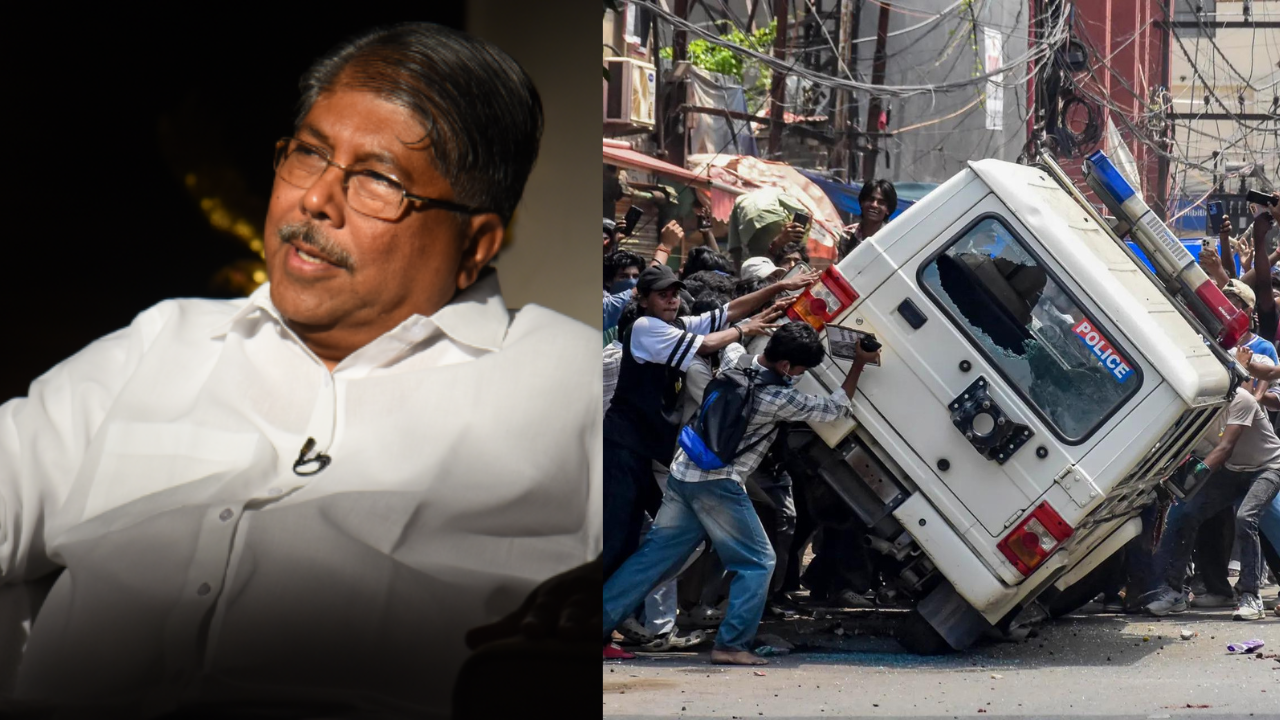
Maharashtra Minister Chandrakant Patil has stated that the Delhi Police have collected fingerprints from stones used during the recent CJP protest in Delhi. These fingerprints will be linked to Aadhaar numbers for identification purposes, according to the minister. The CJP protest in Delhi was marked by clashes and stone-pelting incidents, prompting a probe into the violence.
The minister claimed that advanced technology was used to lift fingerprints from the stones, which will be used to identify protesters with criminal links. This move is seen as an attempt to crack down on those involved in the violence.
However, not everyone is convinced by the minister's claims. Shiv Sena leader Sanjay Raut has mocked Patil's statement, questioning the scientific basis of such a claim. Raut's reaction suggests that there may be skepticism about the feasibility of linking fingerprints on stones to Aadhaar numbers.
The CJP protest in Delhi was a significant event, with thousands of people gathering to voice their concerns. The protest turned violent, with clashes between protesters and police, and stone-pelting incidents were reported. The Delhi Police have been investigating the violence, and the collection of fingerprints is part of this probe.
The use of advanced technology to identify protesters is not new, but the claim that fingerprints can be lifted from stones and linked to Aadhaar numbers has raised eyebrows. The Aadhaar database is a centralized repository of citizens' biometric and demographic data, and linking fingerprints to Aadhaar numbers could potentially help identify individuals.
The Maharashtra minister's statement has sparked a debate about the use of technology in law enforcement. While some see it as a useful tool for identifying criminals, others are concerned about the potential for misuse.
In the context of the CJP protest, the linking of fingerprints to Aadhaar numbers could have significant implications. If successful, it could help identify those involved in the violence and bring them to justice. However, it also raises questions about the privacy and security of citizens' biometric data.
The incident highlights the ongoing debate about the balance between security and individual privacy. As technology continues to evolve, it is likely that we will see more innovative methods being used to identify and track individuals.
In conclusion, the Maharashtra minister's claim that fingerprints on stones will be linked to Aadhaar numbers has sparked a debate about the use of technology in law enforcement. While the move may be seen as an attempt to crack down on violence, it also raises concerns about privacy and security. As the investigation into the CJP protest continues, it will be interesting to see how this technology is used and what implications it may have for citizens' rights.
Frequently asked questions
Can fingerprints be lifted from stones and linked to Aadhaar numbers?
According to Maharashtra Minister Chandrakant Patil, yes, fingerprints can be lifted from stones and linked to Aadhaar numbers for identification purposes.
What is the purpose of linking fingerprints to Aadhaar numbers in the CJP protest probe?
The purpose is to identify protesters with criminal links and bring them to justice.