RBI Prohibits Banks From Reselling Recovered Properties To Defaulters
RBI issues new norms, banks cannot sell recovered properties back to defaulters, must dispose within 7 years
'%3E%3Crect%20width%3D'96'%20height%3D'96'%20fill%3D'%23B3261E'%2F%3E%3Ccircle%20cx%3D'30'%20cy%3D'24'%20r%3D'44'%20fill%3D'%23fff'%20opacity%3D'.12'%2F%3E%3Ccircle%20cx%3D'60'%20cy%3D'74'%20r%3D'40'%20fill%3D'%23000'%20opacity%3D'.10'%2F%3E%3C%2Fg%3E%3Cg%20fill%3D'%23fff'%3E%3Crect%20x%3D'29'%20y%3D'49'%20width%3D'8'%20height%3D'19'%20rx%3D'1'%2F%3E%3Crect%20x%3D'39'%20y%3D'40'%20width%3D'9'%20height%3D'28'%20rx%3D'1'%2F%3E%3Crect%20x%3D'50'%20y%3D'45'%20width%3D'8'%20height%3D'23'%20rx%3D'1'%2F%3E%3Crect%20x%3D'60'%20y%3D'53'%20width%3D'7'%20height%3D'15'%20rx%3D'1'%2F%3E%3Crect%20x%3D'41'%20y%3D'34'%20width%3D'5'%20height%3D'6'%2F%3E%3C%2Fg%3E%3C%2Fsvg%3E)
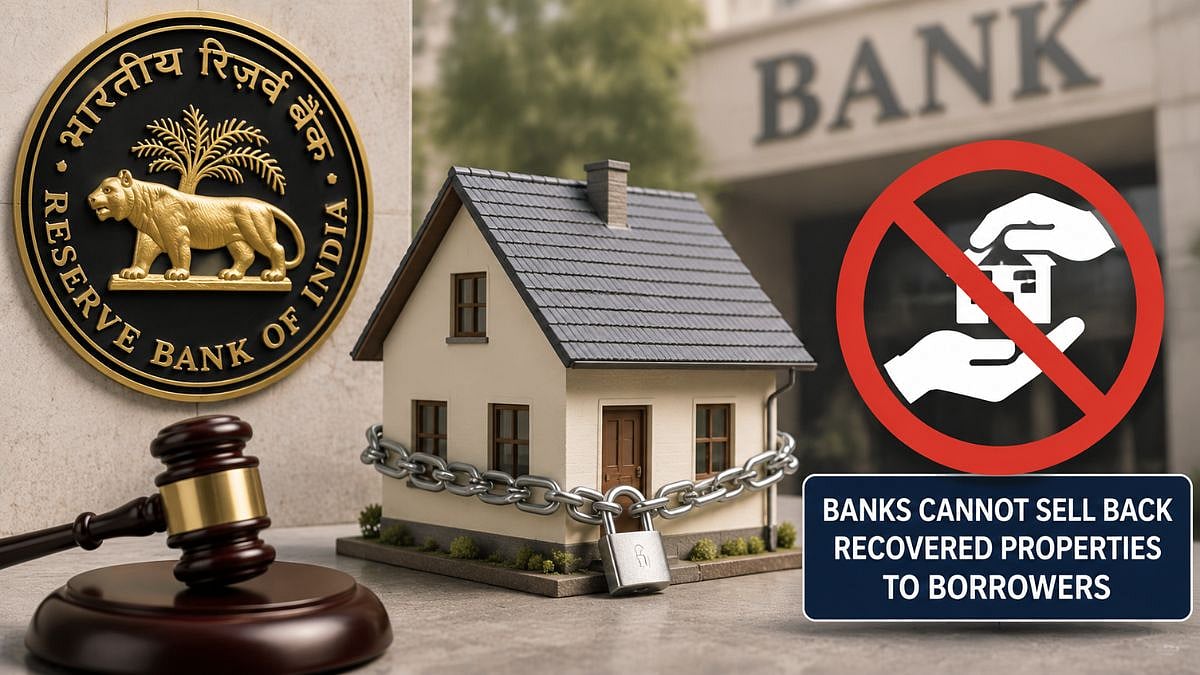
The Reserve Bank of India (RBI) has announced that banks are no longer allowed to sell recovered immovable properties back to defaulting borrowers or their related parties. This decision is part of the RBI's effort to provide clarity on the prudential treatment of non-financial assets acquired by banks through various mechanisms.
The RBI has issued prudential norms that require banks to dispose of these assets within a maximum period of 7 years, with the goal of disposing of them as soon as possible through public auctions. This move is intended to prevent defaulting borrowers from regaining possession of the assets they had previously used as collateral.
In exceptional cases, banks may acquire ownership of immovable assets as part of a recovery strategy when exposures become non-performing and legal or contractual remedies have been invoked. However, the RBI has made it clear that these assets should not be sold back to the defaulting borrowers, as this could create moral hazard and dilute credit discipline.
The RBI had previously issued draft norms in May and received feedback from stakeholders, including a suggestion that borrowers be allowed to buy back the properties. However, the RBI has rejected this suggestion, citing concerns that it could undermine credit discipline.
The new directions, which will come into effect on October 1, 2026, also provide guidance on the valuation of these assets. Upon acquisition, the assets should be recorded in the balance sheet at the lower of the net book value of the extinguished exposure or the distress sale value arrived at by at least two independent external valuers.
Additionally, if a bank decides to use the acquired asset for its own purposes, it will cease to be classified as a specified non-financial asset from the date of being put to use and will be recorded under the accounting head 'fixed assets' or any other relevant accounting head.
The RBI's decision is aimed at promoting credit discipline and preventing defaulting borrowers from taking advantage of the system. By prohibiting the resale of recovered properties to defaulters, the RBI hopes to encourage borrowers to meet their repayment obligations and prevent the accumulation of non-performing assets.
The new norms will have significant implications for the banking sector and will likely lead to a more efficient and transparent process for the disposal of non-financial assets. The RBI's efforts to strengthen credit discipline and prevent moral hazard will also have a positive impact on the overall health of the financial system.
In the context of the Indian banking sector, the RBI's decision is a timely reminder of the need for prudent lending practices and effective recovery mechanisms. The new norms will help to promote a culture of credit discipline and responsible borrowing, which is essential for the long-term stability of the financial system.
Overall, the RBI's decision to prohibit the resale of recovered properties to defaulters is a significant step towards promoting credit discipline and preventing moral hazard in the banking sector. The new norms will have far-reaching implications for the sector and will likely lead to a more efficient and transparent process for the disposal of non-financial assets.
The RBI's efforts to strengthen credit discipline and prevent moral hazard will also have a positive impact on the overall health of the financial system, promoting a culture of responsible borrowing and prudent lending practices. This, in turn, will contribute to the long-term stability of the financial system and promote economic growth and development in India.
In conclusion, the RBI's decision to prohibit the resale of recovered properties to defaulters is a significant development in the Indian banking sector. The new norms will have significant implications for the sector and will likely lead to a more efficient and transparent process for the disposal of non-financial assets. The RBI's efforts to promote credit discipline and prevent moral hazard will have a positive impact on the overall health of the financial system, promoting a culture of responsible borrowing and prudent lending practices.
The decision is also expected to have a positive impact on the real estate sector, as it will prevent defaulting borrowers from regaining possession of properties that they had previously used as collateral. This will help to promote a more stable and transparent real estate market, which is essential for the long-term growth and development of the sector.
In the broader context of the Indian economy, the RBI's decision is a significant step towards promoting financial stability and preventing moral hazard. The new norms will help to promote a culture of credit discipline and responsible borrowing, which is essential for the long-term stability of the financial system. This, in turn, will contribute to the long-term growth and development of the Indian economy, promoting economic stability and prosperity for all.
The RBI's decision is also expected to have a positive impact on the overall health of the banking sector, promoting a culture of prudent lending practices and effective recovery mechanisms. This will help to prevent the accumulation of non-performing assets and promote a more stable and transparent banking system, which is essential for the long-term growth and development of the sector.
In summary, the RBI's decision to prohibit the resale of recovered properties to defaulters is a significant development in the Indian banking sector. The new norms will have significant implications for the sector and will likely lead to a more efficient and transparent process for the disposal of non-financial assets. The RBI's efforts to promote credit discipline and prevent moral hazard will have a positive impact on the overall health of the financial system, promoting a culture of responsible borrowing and prudent lending practices.
What it means for Mumbai and India is that the RBI's decision will promote financial stability and prevent moral hazard in the banking sector. The new norms will help to promote a culture of credit discipline and responsible borrowing, which is essential for the long-term stability of the financial system. This, in turn, will contribute to the long-term growth and development of the Indian economy, promoting economic stability and prosperity for all.
The decision will also have a positive impact on the real estate sector, promoting a more stable and transparent market. This will help to prevent defaulting borrowers from regaining possession of properties that they had previously used as collateral, promoting a more efficient and transparent process for the disposal of non-financial assets.
Overall, the RBI's decision to prohibit the resale of recovered properties to defaulters is a significant step towards promoting financial stability and preventing moral hazard in the banking sector. The new norms will have far-reaching implications for the sector and will likely lead to a more efficient and transparent process for the disposal of non-financial assets, promoting a culture of responsible borrowing and prudent lending practices.
The RBI's efforts to promote credit discipline and prevent moral hazard will have a positive impact on the overall health of the financial system, contributing to the long-term stability of the financial system and promoting economic growth and development in India. The decision will also have a positive impact on the real estate sector, promoting a more stable and transparent market and preventing defaulting borrowers from regaining possession of properties that they had previously used as collateral.
In conclusion, the RBI's decision to prohibit the resale of recovered properties to defaulters is a significant development in the Indian banking sector, promoting financial stability and preventing moral hazard. The new norms will have significant implications for the sector, promoting a culture of responsible borrowing and prudent lending practices, and contributing to the long-term stability of the financial system and promoting economic growth and development in India.