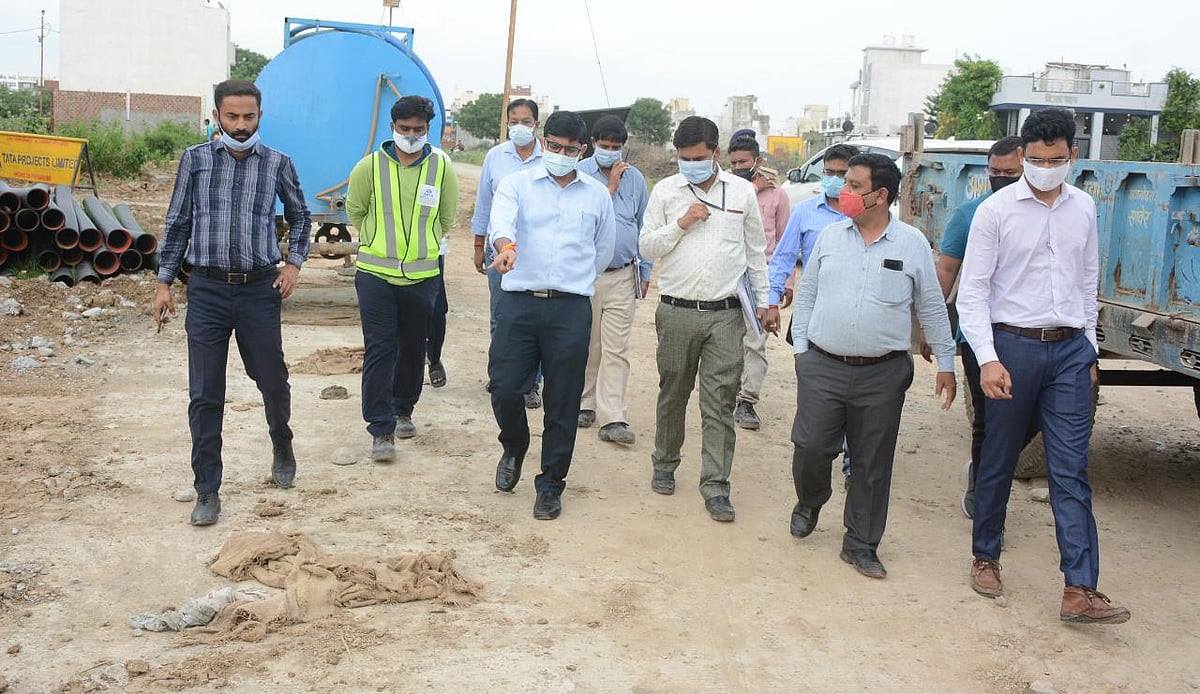
Bhopal Upgrades Public Transport With E-Buses
Bhopal's public transport evolves from tampos to e-buses, experts warn of planning gaps.
'%3E%3Crect%20width%3D'96'%20height%3D'96'%20fill%3D'%23B3261E'%2F%3E%3Ccircle%20cx%3D'30'%20cy%3D'24'%20r%3D'44'%20fill%3D'%23fff'%20opacity%3D'.12'%2F%3E%3Ccircle%20cx%3D'60'%20cy%3D'74'%20r%3D'40'%20fill%3D'%23000'%20opacity%3D'.10'%2F%3E%3C%2Fg%3E%3Cg%20fill%3D'%23fff'%3E%3Crect%20x%3D'29'%20y%3D'49'%20width%3D'8'%20height%3D'19'%20rx%3D'1'%2F%3E%3Crect%20x%3D'39'%20y%3D'40'%20width%3D'9'%20height%3D'28'%20rx%3D'1'%2F%3E%3Crect%20x%3D'50'%20y%3D'45'%20width%3D'8'%20height%3D'23'%20rx%3D'1'%2F%3E%3Crect%20x%3D'60'%20y%3D'53'%20width%3D'7'%20height%3D'15'%20rx%3D'1'%2F%3E%3Crect%20x%3D'41'%20y%3D'34'%20width%3D'5'%20height%3D'6'%2F%3E%3C%2Fg%3E%3C%2Fsvg%3E)
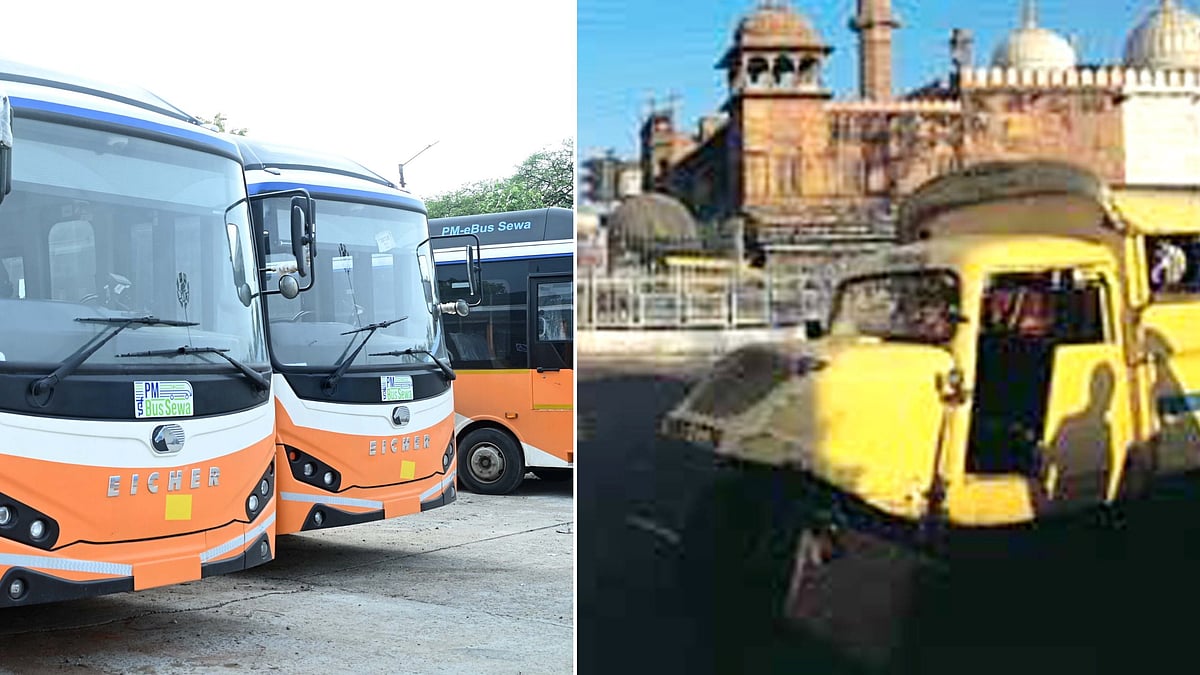
Bhopal, the capital city of Madhya Pradesh, has undergone a significant transformation in its public transport system over the past 25 years. From traditional tampos, also known as 'Bhat-Suar', to a modern fleet of electric buses, the city's transport network has seen a rapid evolution.
Until the late 1990s, tangas or horse carts were a common mode of transport in Bhopal. However, with the introduction of motorized three-wheelers, tampos, and mini buses around 2000, the city's transport landscape began to change. A major shift occurred in 2005 when the Centre's Jawaharlal Nehru National Urban Renewal Mission (JNNURM) introduced over 200 government-operated buses on 15 routes.
Despite these efforts, Bhopal's public transport system has struggled to establish a reliable and sustainable network. Urban mobility experts attribute this to inconsistent planning, poor maintenance, and the city's challenging hilly terrain. The city's Bus Rapid Transit System (BRTS), launched in 2013, was dismantled in 2025 due to poor passenger acceptance.
According to the Sustainable Urban Transport Index, 43% of daily trips in Bhopal are made on foot or by cycle, while two-wheelers account for 25%. Cars contribute just 3% of trips, highlighting the need for a robust public transport system. Experts, including mobility expert and MANIT professor Rahul Tiwari, have flagged planning flaws, stating that the city's transport planning has largely favored private vehicles over public mobility.
Tiwari criticized the widening of urban roads without creating adequate space for pedestrians, cyclists, and green areas. He also pointed out that the city's road gradients, which are 12-15% compared to 8-10% in most major cities, make public transport planning more challenging.
In an effort to redefine the city's transport network, Bhopal is preparing to roll out electric buses under the PM e-Bus Sewa initiative. The first batch of 20 buses has arrived at the Bairagarh depot and will begin operations on six routes from August 15. The low-floor buses feature wheelchair ramps and lifts, CCTV cameras, panic buttons, Wi-Fi, and charging ports.
In the first phase, Bhopal will receive 100 electric buses, with another 150 scheduled to arrive in 2027, taking the total fleet to 250 buses across 26 routes. The initial fleet is expected to serve more than 80,000 passengers daily. BCLL CEO Anju Arun Kumar stated that the introduction of electric buses is a significant step towards creating a sustainable and reliable public transport network in Bhopal.
The introduction of electric buses in Bhopal is a positive step towards addressing the city's transport challenges. However, experts warn that planning gaps and inconsistent maintenance could undermine the effectiveness of the new transport system. As Bhopal continues to evolve its public transport network, it is essential to prioritize sustainable mobility and address the city's unique challenges.
In conclusion, Bhopal's public transport system has come a long way from its traditional tampos to modern electric buses. While there are challenges to be addressed, the city's efforts to create a reliable and sustainable transport network are a step in the right direction. With proper planning and maintenance, Bhopal's public transport system can become a model for other cities in India.
The significance of this development extends beyond Bhopal, as it highlights the importance of sustainable urban mobility in India. As the country continues to urbanize, it is essential to prioritize public transport and create networks that are reliable, efficient, and environmentally friendly. By learning from Bhopal's experiences, other cities can develop their own sustainable transport systems, contributing to a more livable and sustainable urban future for India.