80-Year-Old Gets Title Restored After 40 Years
Court rules in favour of original owner, neighbour's claim rejected
'%3E%3Crect%20width%3D'96'%20height%3D'96'%20fill%3D'%23B3261E'%2F%3E%3Ccircle%20cx%3D'30'%20cy%3D'24'%20r%3D'44'%20fill%3D'%23fff'%20opacity%3D'.12'%2F%3E%3Ccircle%20cx%3D'60'%20cy%3D'74'%20r%3D'40'%20fill%3D'%23000'%20opacity%3D'.10'%2F%3E%3C%2Fg%3E%3Cg%20fill%3D'%23fff'%3E%3Crect%20x%3D'29'%20y%3D'49'%20width%3D'8'%20height%3D'19'%20rx%3D'1'%2F%3E%3Crect%20x%3D'39'%20y%3D'40'%20width%3D'9'%20height%3D'28'%20rx%3D'1'%2F%3E%3Crect%20x%3D'50'%20y%3D'45'%20width%3D'8'%20height%3D'23'%20rx%3D'1'%2F%3E%3Crect%20x%3D'60'%20y%3D'53'%20width%3D'7'%20height%3D'15'%20rx%3D'1'%2F%3E%3Crect%20x%3D'41'%20y%3D'34'%20width%3D'5'%20height%3D'6'%2F%3E%3C%2Fg%3E%3C%2Fsvg%3E)
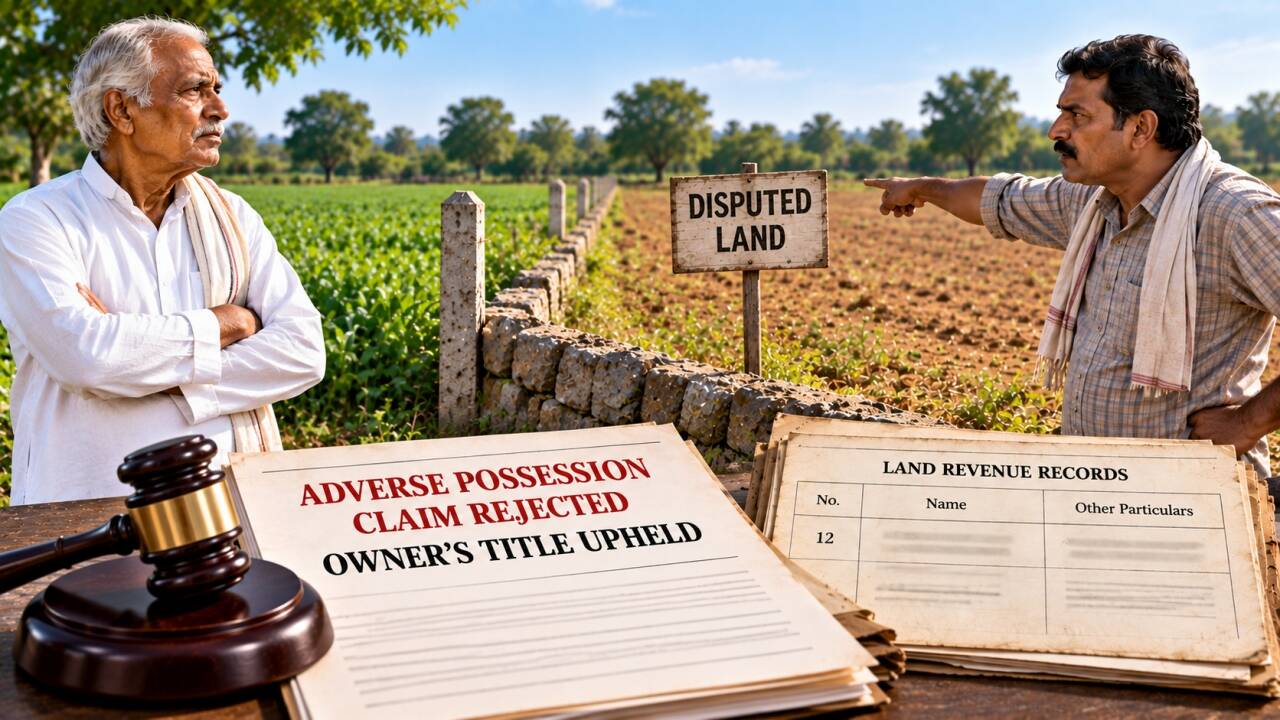
In a significant ruling, a court has restored the title of a property to its original owner, an 80-year-old man, after it was held by his neighbour for over 40 years. The neighbour had occupied 4.27 acres of land, but the court ruled that long-term occupation does not automatically amount to adverse possession.
The court's decision was based on the principle that adverse possession requires a clear assertion of hostile title, along with the necessary animus. In other words, the occupier must have explicitly demonstrated their intention to possess the property as their own, and not just occupied it without permission.
The original owner, now 80 years old, had been trying to regain control of his property for decades. The neighbour's occupation of the land had been a source of contention for many years, with the original owner claiming that he had never given up his rights to the property.
The court's ruling is a significant victory for the original owner, who can now reclaim his property after 40 years. The decision also serves as a reminder that adverse possession is not simply a matter of occupying a property for a long period of time, but requires a clear intention to possess the property as one's own.
The concept of adverse possession is often misunderstood, and this ruling highlights the importance of understanding the legal requirements for establishing such a claim. The court's decision is also a testament to the importance of upholding property rights and ensuring that individuals are not unfairly deprived of their assets.
The original owner's victory is a result of his perseverance and determination to regain control of his property. The court's ruling is a significant milestone in his journey, and he can now look forward to reclaiming his property after decades of dispute.
The ruling also has implications for property owners and occupiers in similar situations. It highlights the importance of establishing clear title and ensuring that occupation of a property is lawful and with the permission of the owner. The decision is a reminder that property rights are fundamental and must be respected and upheld.
In conclusion, the court's ruling in this case is a significant victory for the original owner and a reminder of the importance of upholding property rights. The decision highlights the complexities of adverse possession and the need for clear intention and hostile title to establish such a claim.
The case also raises awareness about the importance of property owners being vigilant and taking steps to protect their assets. It is essential for property owners to ensure that their title is clear and that they take steps to prevent unauthorized occupation of their property.
The court's decision is a significant contribution to the ongoing discussion about property rights and adverse possession in India. It provides clarity and guidance on the legal requirements for establishing adverse possession and highlights the importance of upholding property rights.
In the end, justice has been served, and the original owner can now reclaim his property after 40 years. The ruling is a testament to the importance of perseverance and determination in pursuing one's rights and a reminder that property rights are fundamental and must be respected and upheld.
Frequently asked questions
What is adverse possession?
Adverse possession is a legal concept where a person occupies a property without permission, with the intention of possessing it as their own.
What is required to establish adverse possession?
To establish adverse possession, there must be a clear assertion of hostile title, along with the necessary animus, and long-term occupation of the property.