Bhutan Unveils Mindfulness City to Stem Youth Exodus
Bhutan tackles youth emigration with Gelephu Mindfulness City. India supports the initiative.
'%3E%3Crect%20width%3D'96'%20height%3D'96'%20fill%3D'%234A235A'%2F%3E%3Ccircle%20cx%3D'30'%20cy%3D'24'%20r%3D'44'%20fill%3D'%23fff'%20opacity%3D'.12'%2F%3E%3Ccircle%20cx%3D'60'%20cy%3D'74'%20r%3D'40'%20fill%3D'%23000'%20opacity%3D'.10'%2F%3E%3C%2Fg%3E%3Cg%20fill%3D'none'%20stroke%3D'%23fff'%20stroke-width%3D'3'%3E%3Ccircle%20cx%3D'48'%20cy%3D'48'%20r%3D'16'%2F%3E%3Cellipse%20cx%3D'48'%20cy%3D'48'%20rx%3D'6.5'%20ry%3D'16'%2F%3E%3Cline%20x1%3D'32'%20y1%3D'42'%20x2%3D'64'%20y2%3D'42'%2F%3E%3Cline%20x1%3D'32'%20y1%3D'54'%20x2%3D'64'%20y2%3D'54'%2F%3E%3C%2Fg%3E%3C%2Fsvg%3E)
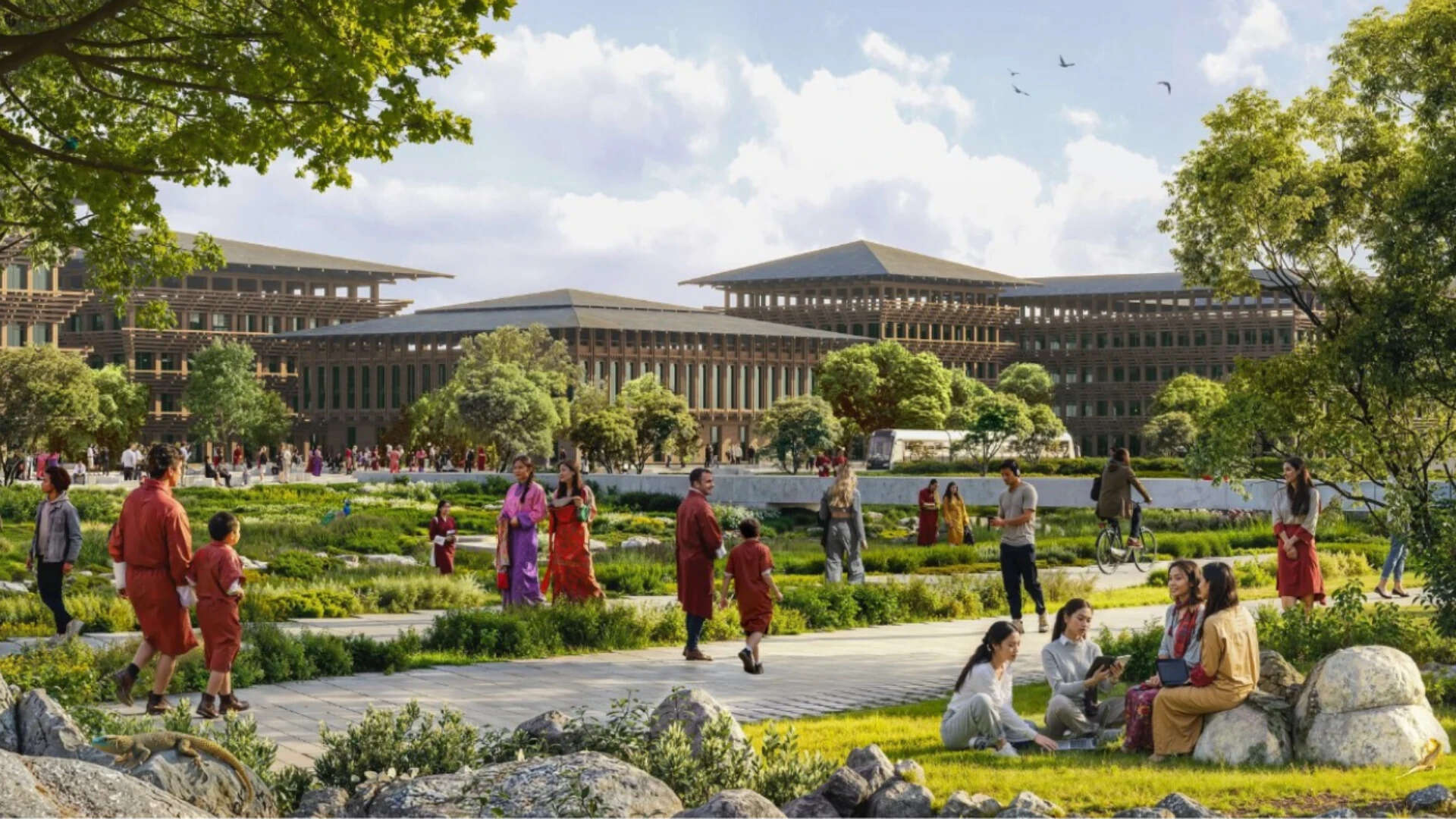
Bhutan, renowned for its distinctive approach to happiness, is grappling with a concerning trend of young people leaving the country. In a bid to address this issue, the Bhutanese government has launched the Gelephu Mindfulness City project, which seeks to balance economic growth with the preservation of cultural heritage and environmental sustainability.
This initiative is being supported by the Indian government, which is providing assistance in the development of infrastructure and enhancing rail connectivity. The goal of Gelephu Mindfulness City is to create an environment that encourages young Bhutanese to remain in their homeland and contribute to its development.
The concept of Gross National Happiness, which prioritizes the well-being of citizens over economic indicators, has been a cornerstone of Bhutan's philosophy. However, the exodus of young people poses a significant challenge to the country's ability to maintain its unique cultural identity and achieve sustainable development.
By integrating economic advancement with cultural preservation and ecological sustainability, Gelephu Mindfulness City aims to provide young Bhutanese with opportunities for personal and professional growth, while also allowing them to stay connected to their roots. The project's focus on mindfulness and sustainability is expected to appeal to the values and aspirations of the younger generation.
Bhutan's collaboration with India on this project is a significant aspect of the initiative. India's support in developing infrastructure and enhancing rail connectivity is expected to play a crucial role in the success of Gelephu Mindfulness City. The Indian government's involvement also underscores the strong bilateral ties between the two countries.
The launch of Gelephu Mindfulness City is a timely response to the challenges posed by youth emigration. By providing a unique and holistic approach to development, the project has the potential to inspire young Bhutanese to choose to stay and thrive in their country. If successful, this initiative could serve as a model for other countries facing similar challenges.
In the context of Bhutan's history and culture, the Gelephu Mindfulness City project is a significant step towards preserving the country's unique identity and achieving sustainable development. The project's emphasis on mindfulness, cultural preservation, and ecological sustainability reflects the values and principles that have guided Bhutan's development philosophy.
The success of Gelephu Mindfulness City will depend on its ability to provide young Bhutanese with meaningful opportunities for personal and professional growth, while also allowing them to stay connected to their cultural heritage. As the project moves forward, it will be important to monitor its progress and assess its impact on the lives of young people in Bhutan.
In conclusion, the launch of Gelephu Mindfulness City is a significant development in Bhutan's efforts to address the challenge of youth emigration. With its unique approach to development and its focus on mindfulness, cultural preservation, and ecological sustainability, the project has the potential to inspire young Bhutanese to stay and thrive in their country.
The implications of this project extend beyond Bhutan's borders, as it offers a unique perspective on how to balance economic growth with cultural preservation and environmental sustainability. As the world grapples with the challenges of sustainable development, Bhutan's approach to happiness and well-being provides a valuable lesson for other countries to learn from.