Sensex Plunges 900 Points, Nifty50 Below 23,800
Stock market crashes, Sensex down 900 points, Nifty50 below 23,800
'%3E%3Crect%20width%3D'96'%20height%3D'96'%20fill%3D'%230B6E4F'%2F%3E%3Ccircle%20cx%3D'30'%20cy%3D'24'%20r%3D'44'%20fill%3D'%23fff'%20opacity%3D'.12'%2F%3E%3Ccircle%20cx%3D'60'%20cy%3D'74'%20r%3D'40'%20fill%3D'%23000'%20opacity%3D'.10'%2F%3E%3C%2Fg%3E%3Cg%20fill%3D'none'%20stroke%3D'%23fff'%20stroke-width%3D'3.2'%20stroke-linecap%3D'round'%20stroke-linejoin%3D'round'%3E%3Cpolyline%20points%3D'31%2C59%2041%2C49%2049%2C54%2063%2C37'%2F%3E%3Cpolyline%20points%3D'55%2C37%2063%2C37%2063%2C45'%2F%3E%3C%2Fg%3E%3C%2Fsvg%3E)
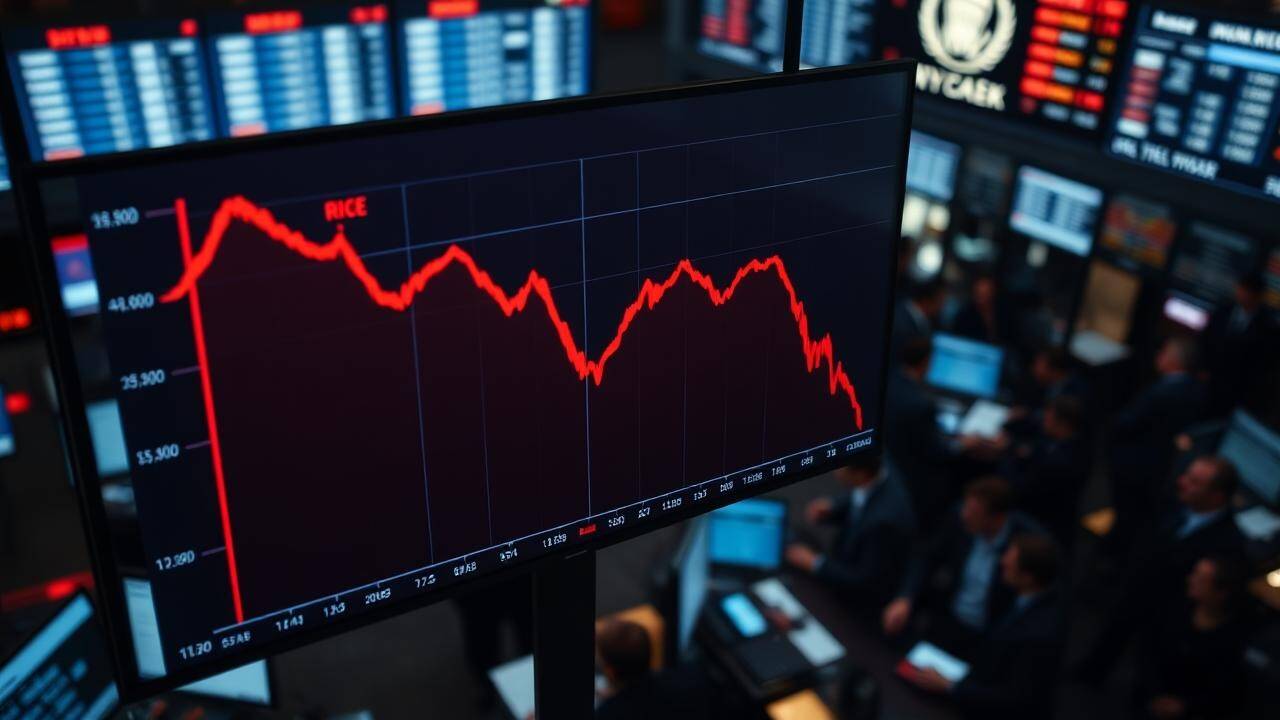
The Indian stock market experienced a significant downturn on Friday, with the Sensex plummeting 900 points and the Nifty50 closing below 23,800. This marks the fifth consecutive session of decline for the market.
The primary cause of this decline can be attributed to rising oil prices and escalating tensions in the Middle East, which have led to increased investor caution and market pressure.
Foreign institutional investors have continued their selling trend, negatively impacting market sentiment. Additionally, renewed concerns over US trade tariffs have also contributed to the overall market decline.
The selling of heavyweight stocks, such as Infosys and HDFC Bank, further added to the day's losses. The decline in these major stocks had a significant impact on the overall market performance.
The Indian stock market has been experiencing a period of volatility, with various factors contributing to the fluctuations. The rise in oil prices has been a major concern, as it can have a significant impact on the country's economy.
The Middle East tensions have also added to the uncertainty, making investors more cautious. The selling trend by foreign institutional investors has further exacerbated the situation, leading to a decline in market sentiment.
The US trade tariffs have been a major point of concern for the Indian economy, with the government taking various measures to mitigate their impact. However, the renewed concerns over these tariffs have still managed to affect the market.
The decline in the stock market can have significant implications for the Indian economy. A prolonged period of decline can lead to a decrease in investor confidence, which can have a ripple effect on the entire economy.
In conclusion, the Indian stock market experienced a significant decline on Friday, with the Sensex plunging 900 points and the Nifty50 closing below 23,800. The rise in oil prices, Middle East tensions, and renewed concerns over US trade tariffs were the primary causes of this decline. The selling trend by foreign institutional investors and the decline in heavyweight stocks further added to the losses.
The implications of this decline can be significant, and it is essential for investors and policymakers to closely monitor the situation and take necessary measures to mitigate the impact.
The Indian stock market is expected to remain volatile in the coming days, with various factors contributing to the fluctuations. It is crucial for investors to remain cautious and keep a close eye on the market trends.
The government and regulatory bodies are also expected to take measures to stabilize the market and boost investor confidence. The situation will be closely monitored, and any developments will be reported accordingly.
In the current scenario, it is essential for investors to remain informed and up-to-date with the latest market trends and developments. The Indian stock market has the potential to recover, but it will require a combination of positive factors and effective measures by the government and regulatory bodies.
The market decline has significant implications for the Indian economy, and it is crucial for policymakers to take necessary measures to mitigate the impact. The situation will be closely monitored, and any developments will be reported accordingly.
Frequently asked questions
Why did the Indian stock market decline today?
The decline was caused by rising oil prices, Middle East tensions, and renewed concerns over US trade tariffs.
What was the impact of foreign institutional investors on the market?
Foreign institutional investors continued their selling trend, negatively impacting market sentiment.