Dutch Cities Use Green Paving Blocks
Dutch cities adopt innovative paving blocks, reducing flood risk and heat islands.
'%3E%3Crect%20width%3D'96'%20height%3D'96'%20fill%3D'%23B3261E'%2F%3E%3Ccircle%20cx%3D'30'%20cy%3D'24'%20r%3D'44'%20fill%3D'%23fff'%20opacity%3D'.12'%2F%3E%3Ccircle%20cx%3D'60'%20cy%3D'74'%20r%3D'40'%20fill%3D'%23000'%20opacity%3D'.10'%2F%3E%3C%2Fg%3E%3Cg%20fill%3D'%23fff'%3E%3Crect%20x%3D'29'%20y%3D'49'%20width%3D'8'%20height%3D'19'%20rx%3D'1'%2F%3E%3Crect%20x%3D'39'%20y%3D'40'%20width%3D'9'%20height%3D'28'%20rx%3D'1'%2F%3E%3Crect%20x%3D'50'%20y%3D'45'%20width%3D'8'%20height%3D'23'%20rx%3D'1'%2F%3E%3Crect%20x%3D'60'%20y%3D'53'%20width%3D'7'%20height%3D'15'%20rx%3D'1'%2F%3E%3Crect%20x%3D'41'%20y%3D'34'%20width%3D'5'%20height%3D'6'%2F%3E%3C%2Fg%3E%3C%2Fsvg%3E)
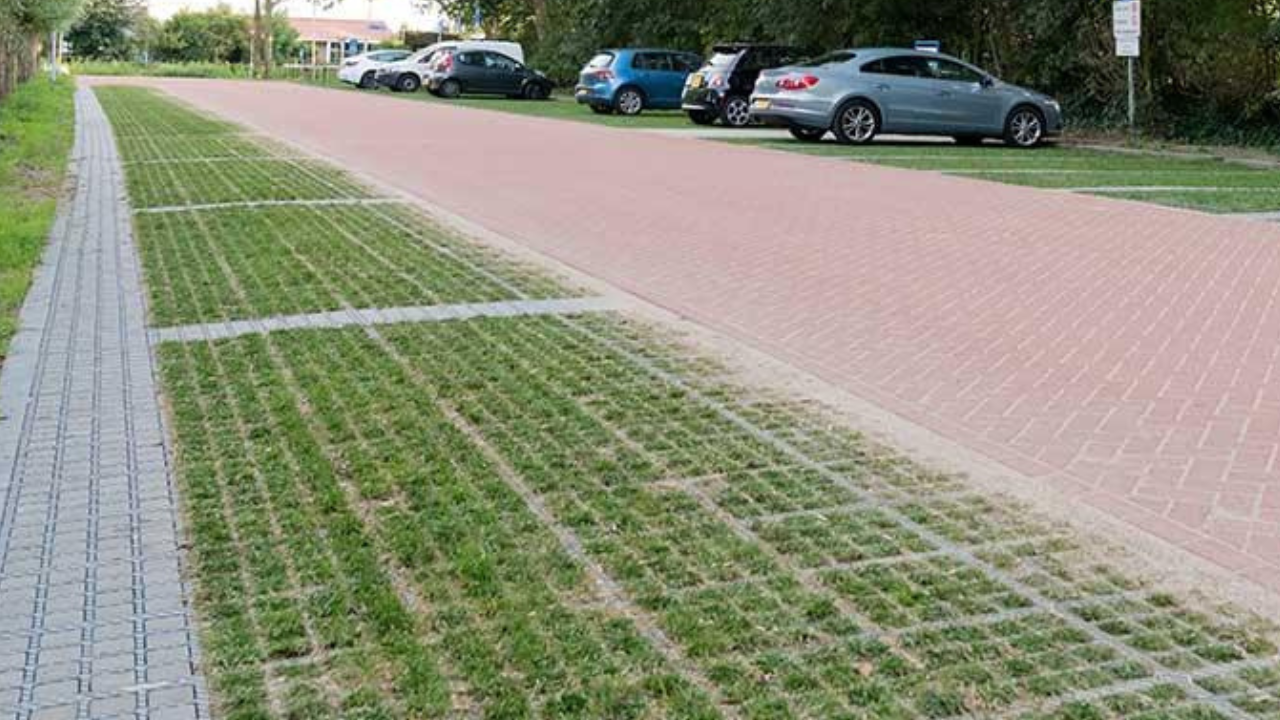
In a bid to mitigate the effects of heavy rainfall and urban heat islands, several Dutch cities have started using grass-filled paving blocks. This innovative approach aims to absorb rainwater and keep areas cooler.
The use of these green paving blocks is a significant step towards creating more sustainable urban environments. By allowing rainwater to permeate through the blocks, the risk of flooding is reduced, and the burden on urban drainage systems is alleviated.
The concept of using grass-filled paving blocks is not new, but its application in Dutch cities has gained significant attention in recent years. The blocks are designed to be durable and require minimal maintenance, making them an attractive option for urban planners.
One of the primary benefits of these blocks is their ability to absorb rainwater, reducing the amount of stormwater that enters drainage systems. This, in turn, helps to prevent flooding and reduces the risk of waterborne diseases.
In addition to their practical applications, the green paving blocks also contribute to a reduction in urban heat islands. By providing a natural, grassy surface, the blocks help to cool the surrounding area, making cities more livable, especially during hot summer months.
The adoption of green paving blocks in Dutch cities is part of a broader effort to create more sustainable and resilient urban environments. As cities around the world grapple with the challenges of climate change, the use of innovative materials and designs, such as these blocks, is likely to become increasingly important.
The success of this initiative in Dutch cities could serve as a model for other urban areas, demonstrating the potential for simple, yet effective, solutions to complex environmental problems.
The use of green paving blocks is a testament to the Dutch commitment to sustainability and innovation, and it will be interesting to see how this concept evolves in the future.
In the context of urban planning, the use of green paving blocks highlights the importance of considering the environmental impact of construction materials and designs. As cities continue to grow and develop, it is essential to prioritize sustainability and resilience, and the adoption of green paving blocks is a step in the right direction.
The significance of this initiative extends beyond the Netherlands, as it demonstrates the potential for innovative solutions to address urban environmental challenges. As the world's cities continue to urbanize, the need for sustainable and resilient infrastructure will only continue to grow, making the use of green paving blocks an important consideration for urban planners and policymakers.
In conclusion, the use of grass-filled paving blocks in Dutch cities is a significant step towards creating more sustainable urban environments. By reducing flood risk, mitigating urban heat islands, and promoting innovative design, these blocks have the potential to make a positive impact on cities around the world.