Thane Saptaparni Trees Bloom Early, Sparking Climate Concerns
Saptaparni trees in Thane bloom 2 months early, raising climate change concerns. Local botanists and environmental researchers study the anomaly.
'%3E%3Crect%20width%3D'96'%20height%3D'96'%20fill%3D'%23B3261E'%2F%3E%3Ccircle%20cx%3D'30'%20cy%3D'24'%20r%3D'44'%20fill%3D'%23fff'%20opacity%3D'.12'%2F%3E%3Ccircle%20cx%3D'60'%20cy%3D'74'%20r%3D'40'%20fill%3D'%23000'%20opacity%3D'.10'%2F%3E%3C%2Fg%3E%3Cg%20fill%3D'%23fff'%3E%3Crect%20x%3D'29'%20y%3D'49'%20width%3D'8'%20height%3D'19'%20rx%3D'1'%2F%3E%3Crect%20x%3D'39'%20y%3D'40'%20width%3D'9'%20height%3D'28'%20rx%3D'1'%2F%3E%3Crect%20x%3D'50'%20y%3D'45'%20width%3D'8'%20height%3D'23'%20rx%3D'1'%2F%3E%3Crect%20x%3D'60'%20y%3D'53'%20width%3D'7'%20height%3D'15'%20rx%3D'1'%2F%3E%3Crect%20x%3D'41'%20y%3D'34'%20width%3D'5'%20height%3D'6'%2F%3E%3C%2Fg%3E%3C%2Fsvg%3E)
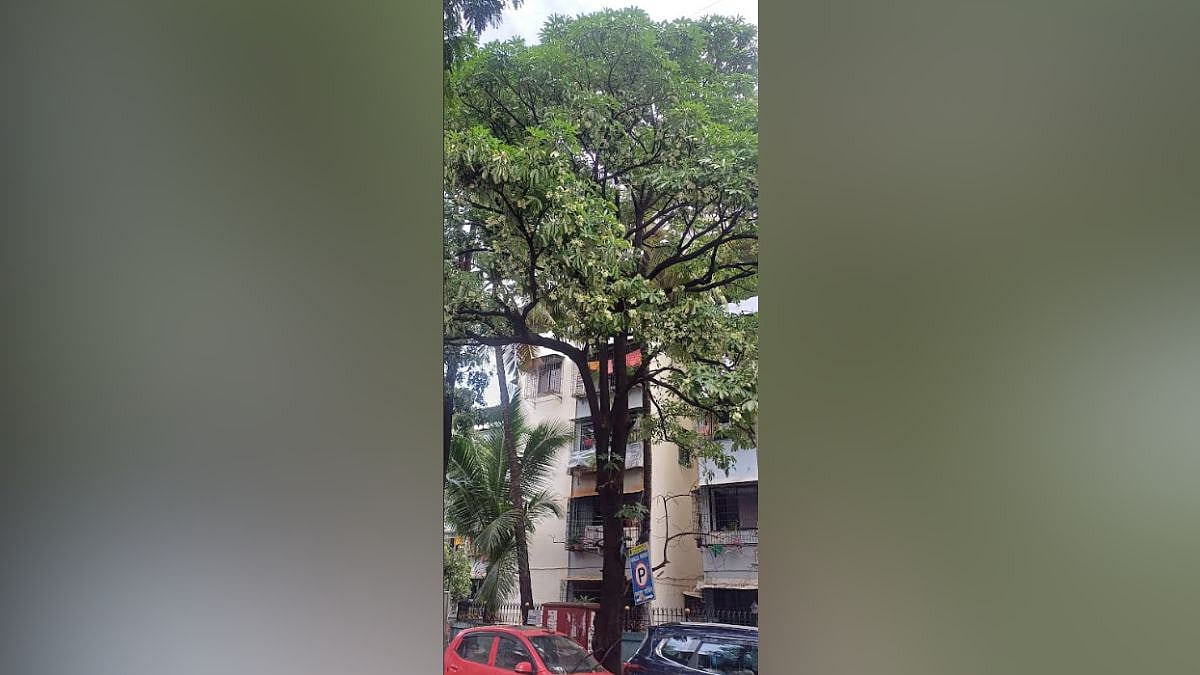
A unusual phenomenon has been observed in Thane, where Saptaparni trees have started blooming in late July, nearly two months earlier than their typical flowering window of October-November. This premature blooming has caught the attention of local botanists and environmental researchers, who view it as a warning sign of climate disruption.
The Saptaparni tree, also known as the Scholar Tree or Devil Tree, is a common sight in Thane. However, its early blooming has raised concerns among environmental experts. The study of periodic plant and animal life cycle events, known as phenology, is a reliable benchmark for tracking environmental shifts. Deviations in leafing, flowering, and fruiting timelines often signal underlying alterations in regional climate patterns.
Historically, the peak bloom period for Alstonia scholaris, the scientific name for the Saptaparni tree, occurred between October and November. This was triggered by the temperature drop following the monsoon season within a microclimate of moderate heat absorption. However, field observations show that the trees are now flowering as early as late July to early August.
This unseasonal development is driven by high mid-monsoon humidity combined with ambient heat, further amplified by the local Urban Heat Island (UHI) effect. The UHI effect refers to the phenomenon where dense concrete infrastructure, asphalt roads, and heavy vehicular density retain localized heat, raising microclimate temperatures above surrounding rural baselines. This disrupts the tree's internal circadian rhythms and presents a serious risk of creating an ecological mismatch with the life cycles of native pollinators.
Environmental experts suggest that several interacting factors are behind the premature flowering. These include the Urban Heat Island effect, fluctuating humidity and rainfall patterns, and elevated atmospheric CO2 levels. The UHI effect raises microclimate temperatures, while irregular rainfall spurts and sustained high humidity mimic post-monsoon climatic transitions, deceiving trees into triggering early reproductive phases. Higher carbon dioxide concentrations can also accelerate photosynthetic activity and growth hormone synthesis, inducing premature bud development.
The premature blooming of Saptaparni trees in Thane is a cause for concern, as it signals a disruption in the natural seasonal rhythms. This anomaly should not be viewed merely as a natural curiosity, but as a data point requiring systematic scientific documentation. Correlating multi-year phenological records with local temperature, rainfall, and humidity trends is essential for future environmental policy decisions.
The study of phenology is crucial in understanding the impact of climate change on plant and animal life cycles. By monitoring these changes, scientists can gain insights into the underlying alterations in regional climate patterns. This information can be used to inform environmental policy decisions and mitigate the effects of climate change.
In conclusion, the premature blooming of Saptaparni trees in Thane is a warning sign of climate disruption. It highlights the need for systematic scientific documentation and correlation of phenological records with local environmental trends. By understanding these changes, we can work towards mitigating the effects of climate change and preserving the natural balance of our ecosystem.
The early blooming of Saptaparni trees in Thane is a significant event that requires attention and action. It is essential to continue monitoring the trees and studying the factors that contribute to their premature flowering. This will help us better understand the impact of climate change on our environment and take necessary steps to address it.
As the world grapples with the challenges of climate change, it is crucial to pay attention to the subtle yet critical biological warning signs. The premature blooming of Saptaparni trees in Thane is one such sign, and it is essential to take it seriously. By doing so, we can work towards creating a more sustainable and environmentally conscious future.
In the context of Mumbai and its surrounding areas, the premature blooming of Saptaparni trees is a significant concern. The city's urban heat island effect, combined with fluctuating humidity and rainfall patterns, makes it an ideal location for studying the impact of climate change on plant and animal life cycles. By understanding these changes, we can work towards creating a more sustainable and environmentally conscious future for the city and its inhabitants.
The premature blooming of Saptaparni trees in Thane is a wake-up call for the city's residents and policymakers. It highlights the need for urgent action to address the challenges of climate change and mitigate its effects on the environment. By working together, we can create a more sustainable future for ourselves and for generations to come.
In the end, the premature blooming of Saptaparni trees in Thane is a reminder of the importance of paying attention to the subtle yet critical biological warning signs of climate change. By taking these signs seriously and working towards creating a more sustainable and environmentally conscious future, we can mitigate the effects of climate change and preserve the natural balance of our ecosystem.
The significance of the premature blooming of Saptaparni trees in Thane cannot be overstated. It is a warning sign that requires attention and action, and it is essential to continue monitoring the trees and studying the factors that contribute to their premature flowering. By doing so, we can work towards creating a more sustainable and environmentally conscious future for the city and its inhabitants.
In conclusion, the premature blooming of Saptaparni trees in Thane is a significant event that requires attention and action. It highlights the need for systematic scientific documentation and correlation of phenological records with local environmental trends. By understanding these changes, we can work towards mitigating the effects of climate change and preserving the natural balance of our ecosystem.
What it means for Mumbai is that the city needs to take urgent action to address the challenges of climate change. The premature blooming of Saptaparni trees in Thane is a warning sign that requires attention and action, and it is essential to continue monitoring the trees and studying the factors that contribute to their premature flowering. By doing so, we can work towards creating a more sustainable and environmentally conscious future for the city and its inhabitants.
The city's residents and policymakers need to work together to address the challenges of climate change and mitigate its effects on the environment. By understanding the impact of climate change on plant and animal life cycles, we can work towards creating a more sustainable future for ourselves and for generations to come.
In the end, the premature blooming of Saptaparni trees in Thane is a reminder of the importance of paying attention to the subtle yet critical biological warning signs of climate change. By taking these signs seriously and working towards creating a more sustainable and environmentally conscious future, we can mitigate the effects of climate change and preserve the natural balance of our ecosystem.
Frequently asked questions
What is the typical flowering window for Saptaparni trees in Thane?
The typical flowering window for Saptaparni trees in Thane is between October and November.
What is the Urban Heat Island effect and how does it contribute to premature blooming?
The Urban Heat Island effect refers to the phenomenon where dense concrete infrastructure, asphalt roads, and heavy vehicular density retain localized heat, raising microclimate temperatures above surrounding rural baselines, which can contribute to premature blooming.