Jio Completes 10 Years, Data Consumption Jumps 128-Fold
Jio turns 10, data prices drop, internet speeds surge. Mobile data consumption rises sharply.
'%3E%3Crect%20width%3D'96'%20height%3D'96'%20fill%3D'%23B3261E'%2F%3E%3Ccircle%20cx%3D'30'%20cy%3D'24'%20r%3D'44'%20fill%3D'%23fff'%20opacity%3D'.12'%2F%3E%3Ccircle%20cx%3D'60'%20cy%3D'74'%20r%3D'40'%20fill%3D'%23000'%20opacity%3D'.10'%2F%3E%3C%2Fg%3E%3Cg%20fill%3D'%23fff'%3E%3Crect%20x%3D'29'%20y%3D'49'%20width%3D'8'%20height%3D'19'%20rx%3D'1'%2F%3E%3Crect%20x%3D'39'%20y%3D'40'%20width%3D'9'%20height%3D'28'%20rx%3D'1'%2F%3E%3Crect%20x%3D'50'%20y%3D'45'%20width%3D'8'%20height%3D'23'%20rx%3D'1'%2F%3E%3Crect%20x%3D'60'%20y%3D'53'%20width%3D'7'%20height%3D'15'%20rx%3D'1'%2F%3E%3Crect%20x%3D'41'%20y%3D'34'%20width%3D'5'%20height%3D'6'%2F%3E%3C%2Fg%3E%3C%2Fsvg%3E)
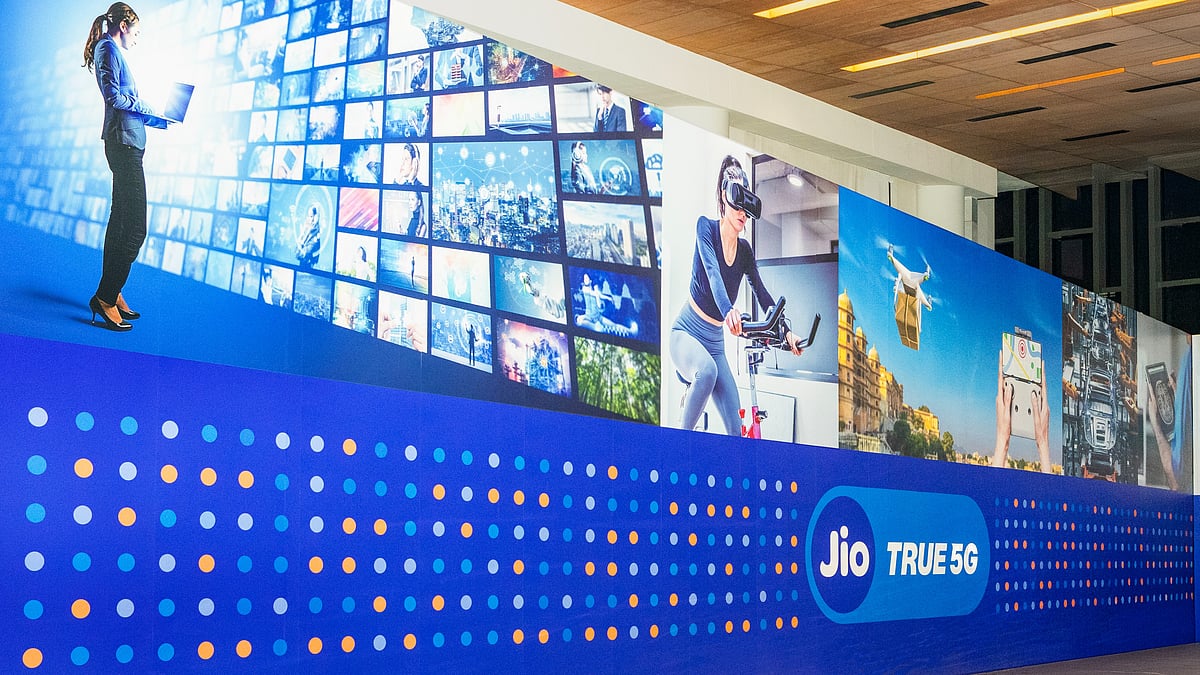
Reliance Jio is completing 10 years since its launch on September 5, marking a decade of significant changes in India's telecom market. The average price of 1GB of data has dropped from ₹228 in 2016 to ₹7.9, making mobile data nearly 29 times cheaper.
According to an Analysys Mason assessment, India's average mobile download speed has increased more than 27 times to over 68 Mbps by December 2025. Monthly data consumption per wireless data subscriber has also risen from less than 0.2GB to 25.7GB during the period, an increase of more than 128 times.
The latest data from the Telecom Regulatory Authority of India (TRAI) shows that average monthly wireless data consumption per subscriber has increased further to 26.7GB in the quarter ended March 2026. Meanwhile, average revenue realisation per GB has declined to ₹7.51.
Jio's network has seen significantly higher data consumption than the national average. An average Jio subscriber consumed 43.7GB of data per month during the April-June 2026 quarter. The company's total data traffic during the quarter stood at 69.4 billion GB, up 26.9 per cent from a year earlier.
As of June, Jio had around 285 million 5G subscribers, with 5G data traffic on its network at about one-and-a-half times the volume of 4G traffic. According to the Analysys Mason report, India was the world's second-largest consumer of mobile data traffic as of March 2026.
The Ericsson Mobility Report has forecast that 5G subscriptions in India will exceed 1.1 billion by 2031, accounting for around 81 per cent of total mobile subscriptions. Average monthly mobile data consumption per smartphone is projected to rise from 37GB currently to 70GB over the next five years.
The sharp fall in data prices and rise in consumption over the past decade have transformed mobile usage in India. Phones are increasingly being used for video calls, digital payments, OTT streaming, online education, work, and shopping.
Jio's subscriber base reached 533.3 million by the end of June, solidifying its position in the Indian telecom market. The company's impact on the market has been significant, and its continued growth is expected to shape the future of mobile usage in India.
In conclusion, Jio's 10-year milestone marks a significant achievement in India's telecom history. The company's efforts to increase internet speeds and reduce data prices have led to a surge in mobile data consumption, transforming the way Indians use their phones. As the Indian telecom market continues to evolve, Jio is likely to play a major role in shaping its future.
The growth of mobile data consumption in India has also had a significant impact on the economy. With more people using their phones for online transactions, education, and work, the demand for digital services is expected to increase. This, in turn, is likely to create new opportunities for businesses and individuals alike.
Overall, Jio's 10-year anniversary is a testament to the company's commitment to providing affordable and high-quality digital services to Indians. As the company continues to grow and expand its services, it is likely to have a profound impact on the country's digital landscape.
The future of mobile usage in India looks promising, with 5G subscriptions expected to exceed 1.1 billion by 2031. As the Indian telecom market continues to evolve, it will be interesting to see how Jio and other players adapt to changing consumer needs and preferences.
In the end, Jio's success is a reflection of the company's ability to innovate and adapt to changing market conditions. As the company looks to the future, it is likely to continue playing a major role in shaping the Indian telecom market.
Frequently asked questions
What is the current average price of 1GB of data in India?
The current average price of 1GB of data in India is ₹7.9.
How much has monthly data consumption per wireless data subscriber risen in the past decade?
Monthly data consumption per wireless data subscriber has risen from less than 0.2GB to 25.7GB, an increase of more than 128 times.