Manual Scavenging Claims Lives, Families Wait Years for Relief
Families of manual scavenging victims wait years for compensation.
'%3E%3Crect%20width%3D'96'%20height%3D'96'%20fill%3D'%23B3261E'%2F%3E%3Ccircle%20cx%3D'30'%20cy%3D'24'%20r%3D'44'%20fill%3D'%23fff'%20opacity%3D'.12'%2F%3E%3Ccircle%20cx%3D'60'%20cy%3D'74'%20r%3D'40'%20fill%3D'%23000'%20opacity%3D'.10'%2F%3E%3C%2Fg%3E%3Cg%20fill%3D'%23fff'%3E%3Crect%20x%3D'29'%20y%3D'49'%20width%3D'8'%20height%3D'19'%20rx%3D'1'%2F%3E%3Crect%20x%3D'39'%20y%3D'40'%20width%3D'9'%20height%3D'28'%20rx%3D'1'%2F%3E%3Crect%20x%3D'50'%20y%3D'45'%20width%3D'8'%20height%3D'23'%20rx%3D'1'%2F%3E%3Crect%20x%3D'60'%20y%3D'53'%20width%3D'7'%20height%3D'15'%20rx%3D'1'%2F%3E%3Crect%20x%3D'41'%20y%3D'34'%20width%3D'5'%20height%3D'6'%2F%3E%3C%2Fg%3E%3C%2Fsvg%3E)
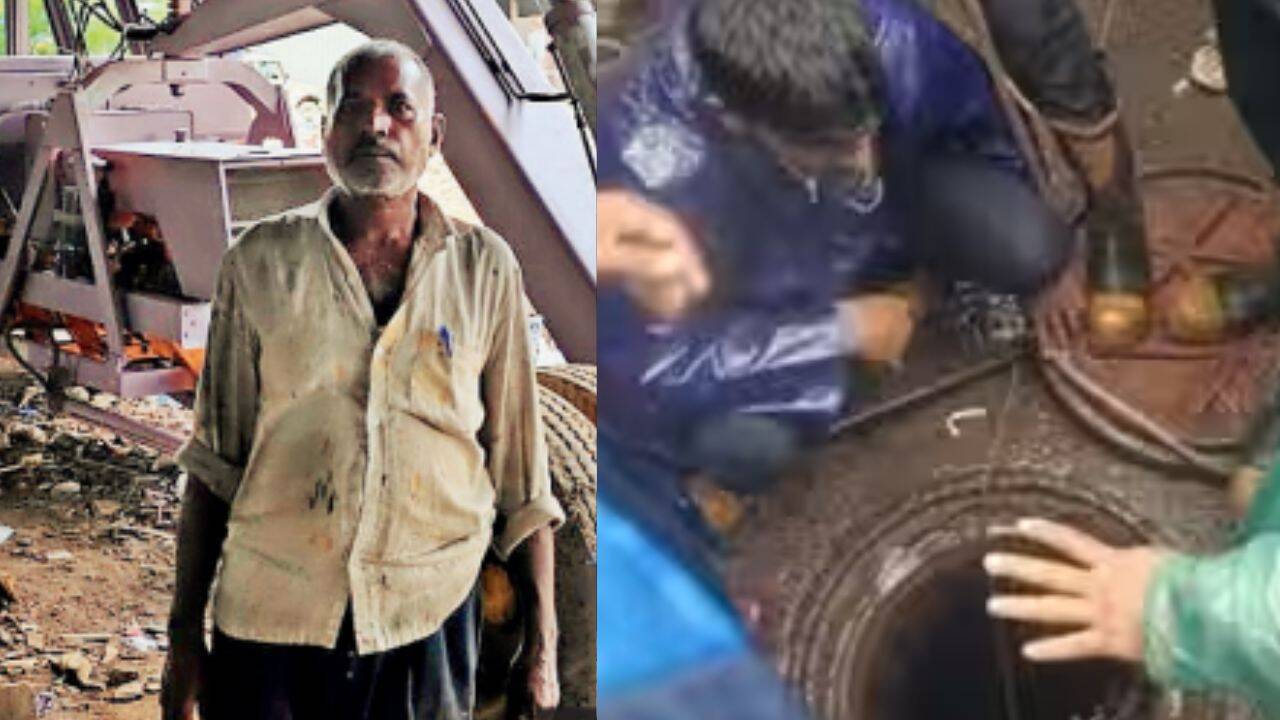
Manual scavenging, a hazardous practice, continues to claim lives in India despite being banned. Workers like Arjun Chauhan risk their lives daily to enter septic tanks for meager wages.
The families of these workers face a prolonged and agonizing wait for statutory compensation of Rs 30 lakh, which severely impacts their livelihoods.
Activists argue that official data underestimates the prevalence of manual scavenging, highlighting a disconnect between the government's records and the reality on the ground.
The government's delayed response to this issue underscores a systemic failure to address the problem of manual scavenging.
Manual scavenging is a practice that involves the manual removal of human waste from sewers and septic tanks, often without proper safety equipment.
This practice is not only hazardous to the workers' health but also poses a significant risk to their lives.
The Prohibition of Employment as Manual Scavengers and their Rehabilitation Act, 2013, prohibits the employment of manual scavengers and provides for the rehabilitation of those engaged in this practice.
However, the implementation of this act remains inadequate, and the practice continues to thrive in many parts of the country.
The wait for compensation is a significant challenge for the families of deceased workers, who often struggle to make ends meet.
The delay in providing relief not only exacerbates the financial difficulties of these families but also underscores the government's lack of urgency in addressing this critical issue.
In recent years, there have been efforts to mechanize sewer cleaning and provide safety equipment to workers, but more needs to be done to eradicate this practice.
The issue of manual scavenging is a complex one, requiring a multi-faceted approach that involves not only the government but also civil society and the private sector.
Ultimately, it is the responsibility of the government to ensure that the ban on manual scavenging is enforced, and workers are provided with safe working conditions and fair compensation.
The prolonged wait for relief for the families of manual scavenging victims is a stark reminder of the need for urgent action to address this critical issue.
The government must take immediate steps to address the issue of manual scavenging and provide relief to the families of deceased workers.
This will not only help to alleviate the suffering of these families but also contribute to the eradication of this hazardous practice.
In conclusion, the issue of manual scavenging is a pressing concern that requires immediate attention and action from the government and civil society.
The wait for relief for the families of manual scavenging victims is a reminder of the need for a concerted effort to address this critical issue and ensure that workers are provided with safe working conditions and fair compensation.
Frequently asked questions
What is manual scavenging and why is it hazardous?
Manual scavenging involves the manual removal of human waste from sewers and septic tanks, often without proper safety equipment, posing a significant risk to workers' health and lives.
How much compensation do families of deceased manual scavenging workers receive?
Families of deceased manual scavenging workers are entitled to receive statutory compensation of Rs 30 lakh.