Amit Shah: Vande Mataram Restored After 80 Years
Amit Shah talks language promotion, cultural nationalism and NEP
'%3E%3Crect%20width%3D'96'%20height%3D'96'%20fill%3D'%231A5276'%2F%3E%3Ccircle%20cx%3D'30'%20cy%3D'24'%20r%3D'44'%20fill%3D'%23fff'%20opacity%3D'.12'%2F%3E%3Ccircle%20cx%3D'60'%20cy%3D'74'%20r%3D'40'%20fill%3D'%23000'%20opacity%3D'.10'%2F%3E%3C%2Fg%3E%3Cg%20fill%3D'%23fff'%3E%3Cpath%20d%3D'M31%2041%20L48%2031%20L65%2041%20Z'%2F%3E%3Crect%20x%3D'33'%20y%3D'43'%20width%3D'4'%20height%3D'17'%2F%3E%3Crect%20x%3D'41'%20y%3D'43'%20width%3D'4'%20height%3D'17'%2F%3E%3Crect%20x%3D'51'%20y%3D'43'%20width%3D'4'%20height%3D'17'%2F%3E%3Crect%20x%3D'59'%20y%3D'43'%20width%3D'4'%20height%3D'17'%2F%3E%3Crect%20x%3D'30'%20y%3D'62'%20width%3D'36'%20height%3D'4'%20rx%3D'1'%2F%3E%3C%2Fg%3E%3C%2Fsvg%3E)
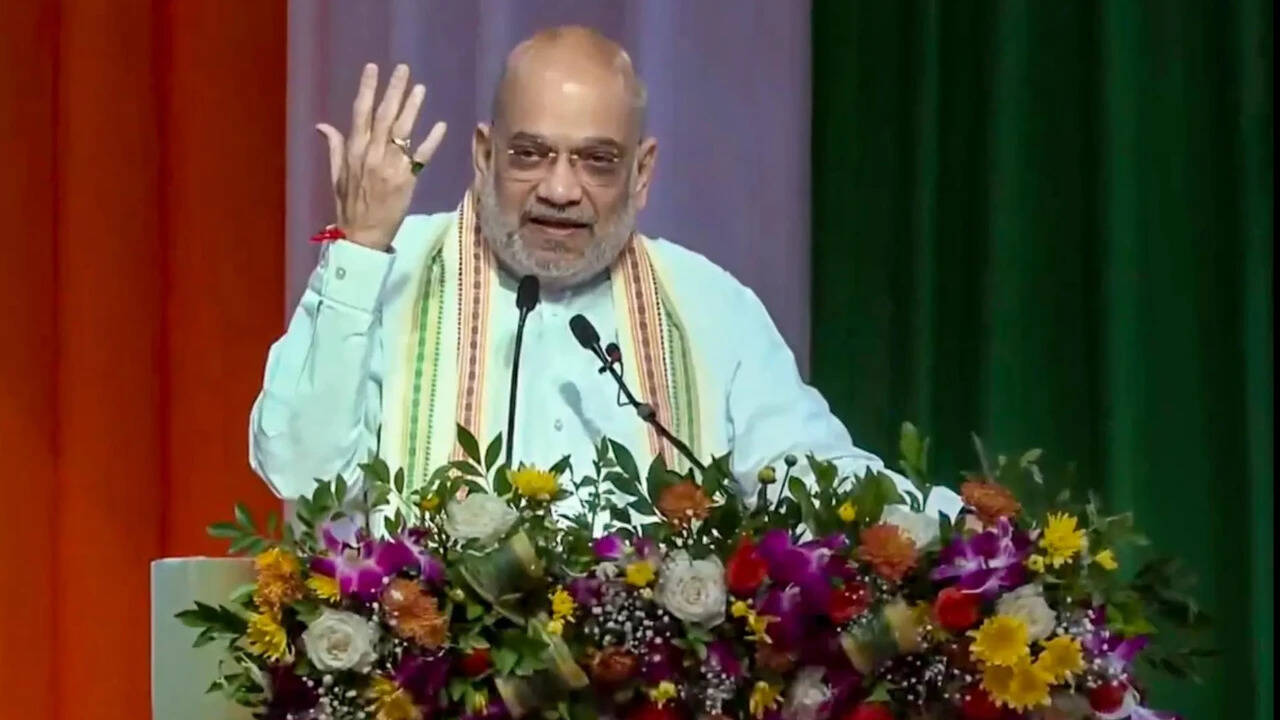
Union Home Minister Amit Shah has stated that it took 80 years to restore the full glory of Vande Mataram, India's national song. Shah linked the promotion of Indian languages to cultural nationalism, emphasizing the importance of linguistic diversity in strengthening the country's rich culture and history.
He defended the National Education Policy's (NEP) multilingualism provisions, stating that they are essential for fostering familiarity with diverse Indian languages and cultures. The policy aims to promote the use of multiple languages in education, allowing students to learn and appreciate different languages and cultures.
Shah highlighted Maharashtra as a prime example of a multilingual state, where multiple languages are spoken and valued. He stressed that the promotion of Indian languages is crucial for preserving the country's cultural heritage and promoting national unity.
The National Education Policy has been designed to promote India's linguistic diversity and cultural richness. The policy aims to encourage the use of mother tongues and regional languages in education, while also promoting the learning of other Indian languages.
Amit Shah's statement comes at a time when there is a growing emphasis on promoting Indian languages and cultures. The government has launched several initiatives to promote the use of Indian languages in education and other fields, and to preserve the country's cultural heritage.
The promotion of Indian languages is seen as an important aspect of cultural nationalism, which emphasizes the importance of preserving and promoting a nation's cultural heritage. Shah's statement highlights the significance of linguistic diversity in strengthening India's cultural identity and promoting national unity.
In conclusion, Amit Shah's statement on the restoration of Vande Mataram's glory and the importance of linguistic diversity highlights the government's commitment to promoting Indian languages and cultures. The National Education Policy's multilingualism provisions are an important step towards fostering familiarity with diverse Indian languages and cultures, and promoting national unity.
The emphasis on linguistic diversity and cultural nationalism is expected to have a significant impact on India's cultural landscape, promoting a greater appreciation and understanding of the country's rich cultural heritage. As India continues to grow and develop, the promotion of Indian languages and cultures is likely to play an increasingly important role in shaping the country's identity and promoting national unity.
Overall, Amit Shah's statement highlights the importance of linguistic diversity and cultural nationalism in promoting India's rich cultural heritage and national unity. The government's initiatives to promote Indian languages and cultures are expected to have a positive impact on the country's cultural landscape, and to promote a greater appreciation and understanding of India's diverse languages and cultures.
Frequently asked questions
What is the significance of Vande Mataram in India?
Vande Mataram is India's national song and a symbol of national pride and unity.
What is the aim of the National Education Policy's multilingualism provisions?
The aim is to foster familiarity with diverse Indian languages and cultures, and to promote national unity.