NASA Launches First Communications Satellite in 1960
NASA's Echo 1A, a 100-foot balloon, was launched on August 12, 1960. It reflected signals between distant points on Earth.
'%3E%3Crect%20width%3D'96'%20height%3D'96'%20fill%3D'%23B3261E'%2F%3E%3Ccircle%20cx%3D'30'%20cy%3D'24'%20r%3D'44'%20fill%3D'%23fff'%20opacity%3D'.12'%2F%3E%3Ccircle%20cx%3D'60'%20cy%3D'74'%20r%3D'40'%20fill%3D'%23000'%20opacity%3D'.10'%2F%3E%3C%2Fg%3E%3Cg%20fill%3D'%23fff'%3E%3Crect%20x%3D'29'%20y%3D'49'%20width%3D'8'%20height%3D'19'%20rx%3D'1'%2F%3E%3Crect%20x%3D'39'%20y%3D'40'%20width%3D'9'%20height%3D'28'%20rx%3D'1'%2F%3E%3Crect%20x%3D'50'%20y%3D'45'%20width%3D'8'%20height%3D'23'%20rx%3D'1'%2F%3E%3Crect%20x%3D'60'%20y%3D'53'%20width%3D'7'%20height%3D'15'%20rx%3D'1'%2F%3E%3Crect%20x%3D'41'%20y%3D'34'%20width%3D'5'%20height%3D'6'%2F%3E%3C%2Fg%3E%3C%2Fsvg%3E)
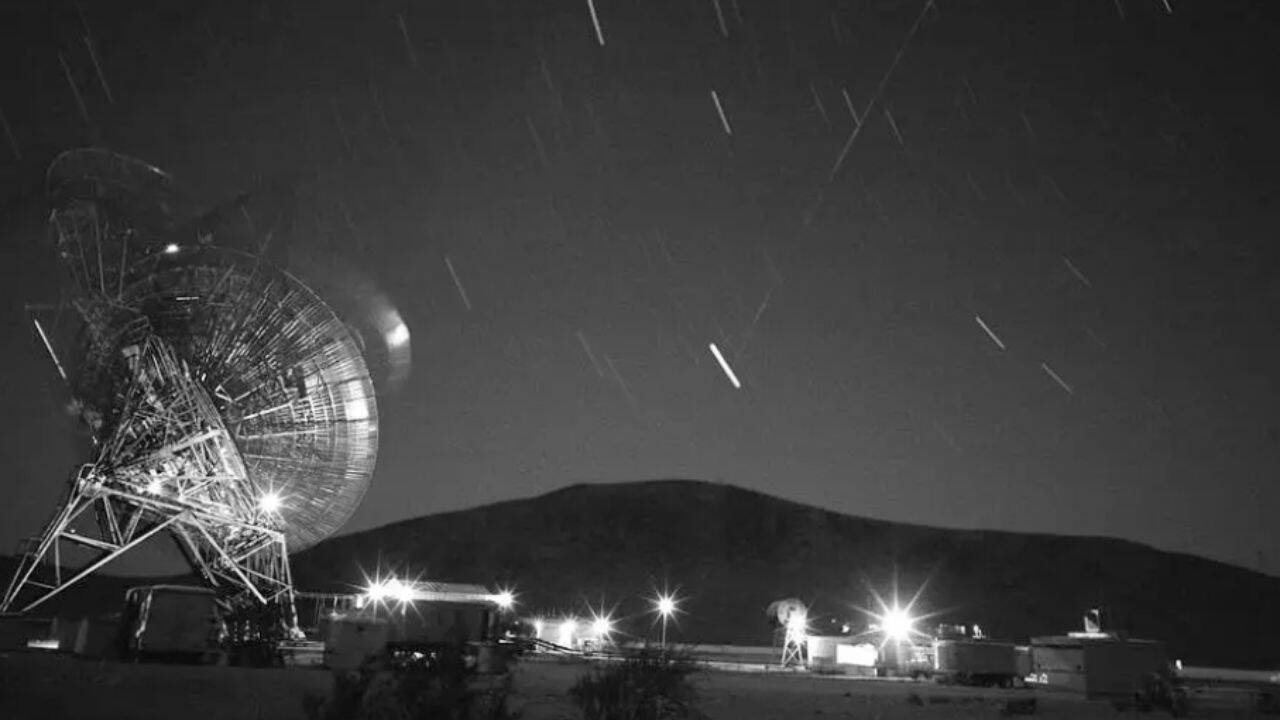
On August 12, 1960, NASA made history by launching its first successful communications satellite, Echo 1A. The satellite was a 100-foot balloon that played a crucial role in reflecting telephone, radio, and television signals between distant points on Earth.
The Echo 1A was a passive spacecraft, meaning it did not transmit signals itself but instead reflected the signals it received. This technology was groundbreaking at the time and paved the way for modern communications satellites.
In addition to its communications capabilities, the Echo 1A also helped NASA study various aspects of space, including atmospheric density, solar pressure, and satellite triangulation. These studies provided valuable insights into the behavior of spacecraft in orbit and helped NASA develop more advanced technologies.
The Echo 1A operated for nearly eight years before re-entering Earth's atmosphere in 1968. During its time in orbit, it demonstrated the feasibility of using satellites for long-distance communications and paved the way for the development of more advanced communications satellites.
The launch of Echo 1A marked an important milestone in the history of space exploration. It showed that satellites could be used for practical purposes, such as communications, and helped establish the United States as a leader in space technology.
The success of Echo 1A also sparked further research and development in the field of communications satellites. It led to the creation of more advanced satellites that could transmit signals directly, rather than simply reflecting them.
Today, communications satellites play a vital role in modern life, enabling global communications, navigation, and weather forecasting. The launch of Echo 1A on August 12, 1960, was an important step towards the development of these technologies.
In conclusion, the launch of Echo 1A was a significant event in the history of space exploration. It marked the beginning of a new era in communications technology and paved the way for the development of more advanced satellites.
The impact of Echo 1A can still be felt today, with communications satellites playing a crucial role in modern life. As technology continues to evolve, it will be interesting to see how the legacy of Echo 1A shapes the future of space exploration and communications.
The launch of Echo 1A is a reminder of the importance of innovation and experimentation in the field of space exploration. It shows that even the simplest ideas can have a profound impact on the development of new technologies.
As we look back on the launch of Echo 1A, we are reminded of the power of human ingenuity and the importance of continued investment in space research and development. The legacy of Echo 1A will continue to inspire new generations of scientists and engineers as they push the boundaries of what is possible in space.
The significance of Echo 1A extends beyond its technical achievements. It represents a major milestone in the history of space exploration and a testament to the power of human innovation. As we continue to explore and develop new technologies, we would do well to remember the importance of the Echo 1A and its role in shaping the course of space history.
In the end, the launch of Echo 1A on August 12, 1960, was a pivotal moment in the history of space exploration. It marked the beginning of a new era in communications technology and paved the way for the development of more advanced satellites. As we look to the future, we can only imagine the incredible advancements that will be made in the field of space exploration and communications.
Frequently asked questions
What was the purpose of the Echo 1A satellite?
The Echo 1A satellite was launched to reflect telephone, radio, and television signals between distant points on Earth.
When did the Echo 1A satellite re-enter Earth's atmosphere?
The Echo 1A satellite re-entered Earth's atmosphere in 1968.