
Hindus Avoid Rice On Ekadashi
Ekadashi marks Lord Vishnu's rest. Hindus skip rice due to cosmic energies.
'%3E%3Crect%20width%3D'96'%20height%3D'96'%20fill%3D'%236A1B9A'%2F%3E%3Ccircle%20cx%3D'30'%20cy%3D'24'%20r%3D'44'%20fill%3D'%23fff'%20opacity%3D'.12'%2F%3E%3Ccircle%20cx%3D'60'%20cy%3D'74'%20r%3D'40'%20fill%3D'%23000'%20opacity%3D'.10'%2F%3E%3C%2Fg%3E%3Cg%20fill%3D'%23fff'%3E%3Cpath%20d%3D'M56%2033%20a16%2016%200%201%200%201%2030%20a12.5%2012.5%200%201%201%20-1%20-30%20z'%2F%3E%3Cpath%20d%3D'M39%2040%20l1.1%202.4%202.6%20.2%20-2%201.8%20.6%202.6%20-2.3%20-1.3%20-2.3%201.3%20.6%20-2.6%20-2%20-1.8%202.6%20-.2%20z'%2F%3E%3C%2Fg%3E%3C%2Fsvg%3E)
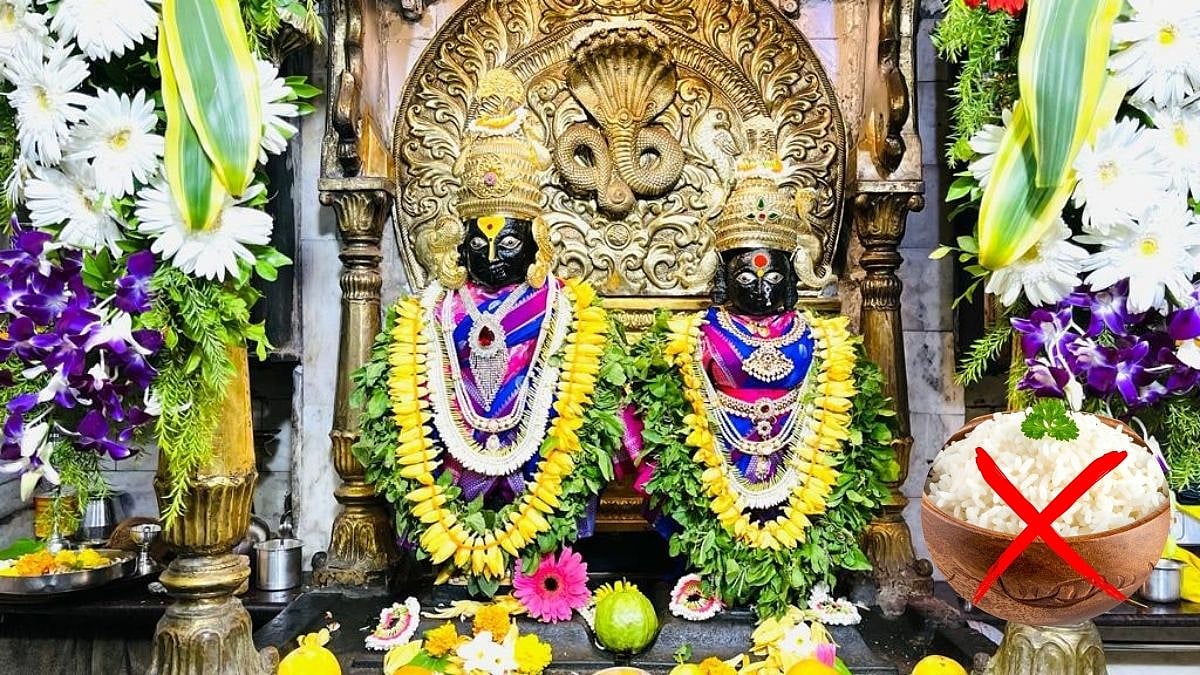
Ekadashi, the 11th lunar day of each Hindu calendar month, is a significant observance dedicated to Lord Vishnu. It occurs twice a month, in Shukla Paksha and Krishna Paksha, resulting in 24 Ekadashis in a regular Hindu year and 26 in a leap year.
On Ekadashi, Lord Vishnu is believed to enter his divine rest upon Shesha Naag in the celestial Kshirsagar. This sacred day marks the beginning of Chaturmas, four blessed months of devotion, prayer, fasting, and spiritual growth.
One of the most significant Ekadashis is Devshayani Ekadashi, which falls on Saturday, July 25, 2026. It marks the start of Chaturmas and the time when Lord Vishnu begins his four-month cosmic slumber.
During Ekadashi, eating rice is generally avoided. According to Hindu scriptures and popular beliefs, rice is believed to absorb negative cosmic energies and impurities on this specific lunar day more easily than other foods.
The Bhavishya Purana states that a drop of sweat from Lord Brahma transformed into a demon, which Lord Vishnu instructed to reside in the rice eaten by humans on Ekadashi. This demon is believed to turn the rice into worms in the stomach.
In addition to the mythological significance, the position of the moon during Ekadashi is believed to affect water dynamics in the human body. Rice has a high water content, and eating it can increase the level of water, creating restlessness.
In Ayurveda, rice is classified as tamasic (heavy) food. Avoiding heavy grains like rice promotes lightness and mental clarity, which is essential for spiritual growth and purification.
Ashadi Ekadashi, also known as Devshayani Ekadashi, is a significant Hindu festival observed in the month of Ashadha. It holds great spiritual importance for Hindus and is mostly celebrated across India, especially in the states of Maharashtra, Gujarat, Karnataka, and Andhra Pradesh.
The avoidance of rice on Ekadashi is a traditional belief that has been passed down through generations. It is a way for Hindus to observe the sacred day and seek spiritual purification.
In conclusion, the avoidance of rice on Ekadashi is rooted in Hindu scriptures, mythology, astrology, and Ayurveda. It is a significant aspect of the observance and is believed to promote spiritual growth and purification.
The celebration of Ekadashi and the avoidance of rice are an integral part of Hindu tradition and culture. It is a way for Hindus to connect with their faith and seek spiritual enlightenment.
As Hindus observe Ekadashi and avoid rice, they are reminded of the significance of the sacred day and the importance of spiritual purification. It is a time for reflection, prayer, and devotion, and the avoidance of rice is a way to observe the day with reverence and dedication.
Frequently asked questions
Why do Hindus avoid rice on Ekadashi?
Hindus avoid rice on Ekadashi because it is believed to absorb negative cosmic energies and impurities.
What is the significance of Ekadashi?
Ekadashi is a significant Hindu observance dedicated to Lord Vishnu, marking the beginning of Chaturmas and the time when Lord Vishnu begins his four-month cosmic slumber.