India's Retail Inflation Hits 4.82%
India's inflation rises, wholesale inflation nears double digits.
'%3E%3Crect%20width%3D'96'%20height%3D'96'%20fill%3D'%230B6E4F'%2F%3E%3Ccircle%20cx%3D'30'%20cy%3D'24'%20r%3D'44'%20fill%3D'%23fff'%20opacity%3D'.12'%2F%3E%3Ccircle%20cx%3D'60'%20cy%3D'74'%20r%3D'40'%20fill%3D'%23000'%20opacity%3D'.10'%2F%3E%3C%2Fg%3E%3Cg%20fill%3D'none'%20stroke%3D'%23fff'%20stroke-width%3D'3.2'%20stroke-linecap%3D'round'%20stroke-linejoin%3D'round'%3E%3Cpolyline%20points%3D'31%2C59%2041%2C49%2049%2C54%2063%2C37'%2F%3E%3Cpolyline%20points%3D'55%2C37%2063%2C37%2063%2C45'%2F%3E%3C%2Fg%3E%3C%2Fsvg%3E)
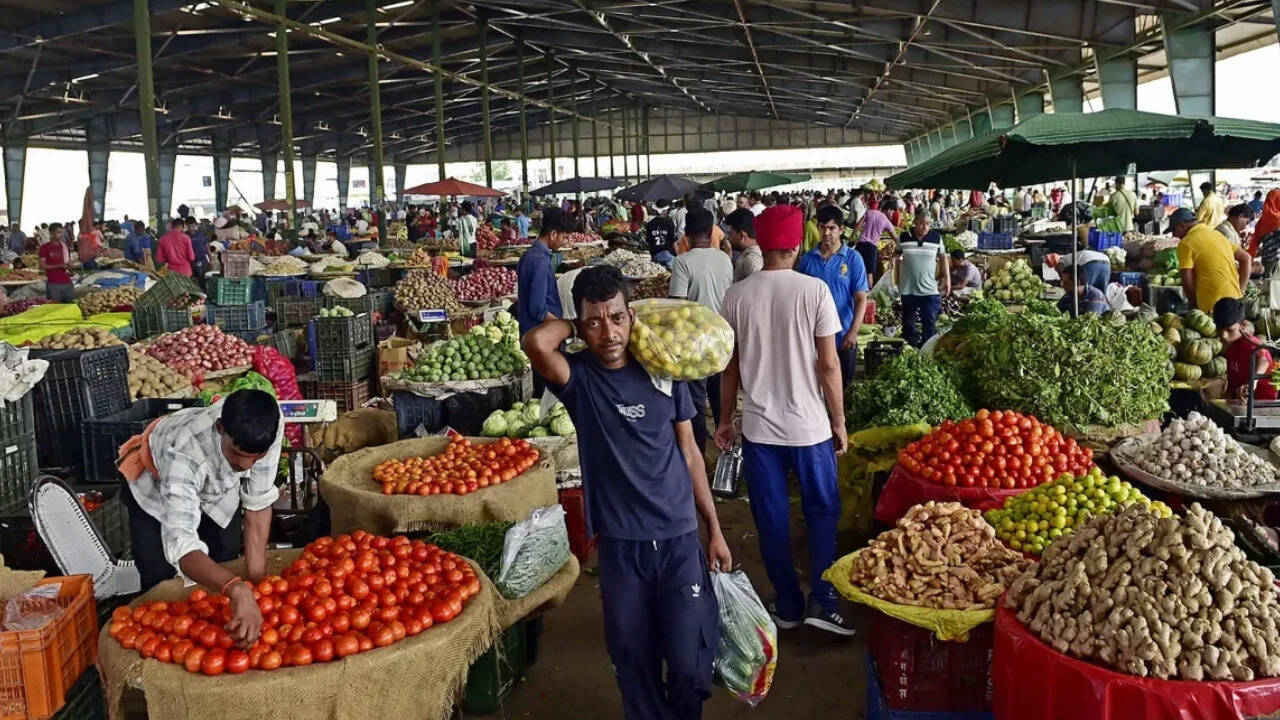
India's retail inflation rose to 4.82% in August, indicating a surge in consumer prices. This increase was accompanied by a significant rise in wholesale inflation, which climbed to 9.92% for the same period.
The main driver of this inflationary trend was food inflation, which increased to 5.95% at the consumer level and 7.05% at the wholesale level. Fuel and power inflation also saw a sharp surge, reaching over 22% on the wholesale price index.
Economists attribute this upward trend in inflation to global factors, which are likely to continue exerting pressure on prices. The Reserve Bank of India's monetary policy outlook is being closely watched, as it will play a crucial role in shaping the country's economic trajectory.
The rise in inflation has significant implications for India's economy, as it can impact consumer spending and business investment. The government and the Reserve Bank of India will need to carefully balance their policies to control inflation while promoting economic growth.
In recent months, India has experienced a steady increase in inflation, driven by a combination of domestic and global factors. The country's economic growth has been robust, but the rising inflation poses a challenge to sustaining this growth.
The Reserve Bank of India has been monitoring the inflation situation closely and has taken steps to control it. However, the global economic environment remains uncertain, and the impact of external factors on India's inflation cannot be ignored.
As the Indian economy continues to evolve, it is essential to keep a close eye on inflation trends and their implications for economic growth and stability. The government and the Reserve Bank of India must work together to develop policies that promote sustainable economic growth while controlling inflation.
The inflation data for August suggests that the Reserve Bank of India may need to reassess its monetary policy stance to address the rising inflation. The central bank's decision will have a significant impact on the country's economic outlook, and it is crucial to strike a balance between controlling inflation and promoting economic growth.
In conclusion, the rise in India's retail and wholesale inflation is a significant development that warrants close attention. The government and the Reserve Bank of India must work together to develop policies that address the root causes of inflation and promote sustainable economic growth.
Frequently asked questions
What is the current retail inflation rate in India?
The current retail inflation rate in India is 4.82%.
What is the main driver of the current inflationary trend in India?
The main driver of the current inflationary trend in India is food inflation, which has increased to 5.95% at the consumer level and 7.05% at the wholesale level.