Thousands Protest in Pune-Nashik Over Railway Route Change
Protesters demand original route, police detain activists. Protests held in Chakan and Narayangaon.
'%3E%3Crect%20width%3D'96'%20height%3D'96'%20fill%3D'%231A5276'%2F%3E%3Ccircle%20cx%3D'30'%20cy%3D'24'%20r%3D'44'%20fill%3D'%23fff'%20opacity%3D'.12'%2F%3E%3Ccircle%20cx%3D'60'%20cy%3D'74'%20r%3D'40'%20fill%3D'%23000'%20opacity%3D'.10'%2F%3E%3C%2Fg%3E%3Cg%20fill%3D'%23fff'%3E%3Cpath%20d%3D'M31%2041%20L48%2031%20L65%2041%20Z'%2F%3E%3Crect%20x%3D'33'%20y%3D'43'%20width%3D'4'%20height%3D'17'%2F%3E%3Crect%20x%3D'41'%20y%3D'43'%20width%3D'4'%20height%3D'17'%2F%3E%3Crect%20x%3D'51'%20y%3D'43'%20width%3D'4'%20height%3D'17'%2F%3E%3Crect%20x%3D'59'%20y%3D'43'%20width%3D'4'%20height%3D'17'%2F%3E%3Crect%20x%3D'30'%20y%3D'62'%20width%3D'36'%20height%3D'4'%20rx%3D'1'%2F%3E%3C%2Fg%3E%3C%2Fsvg%3E)
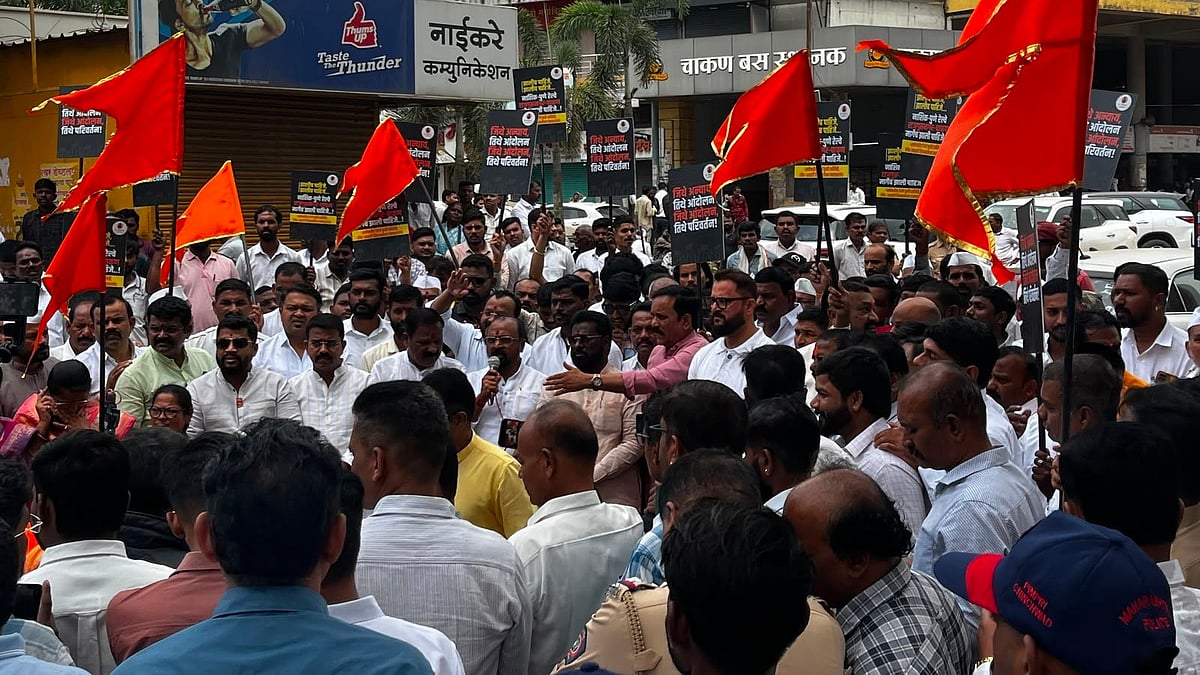
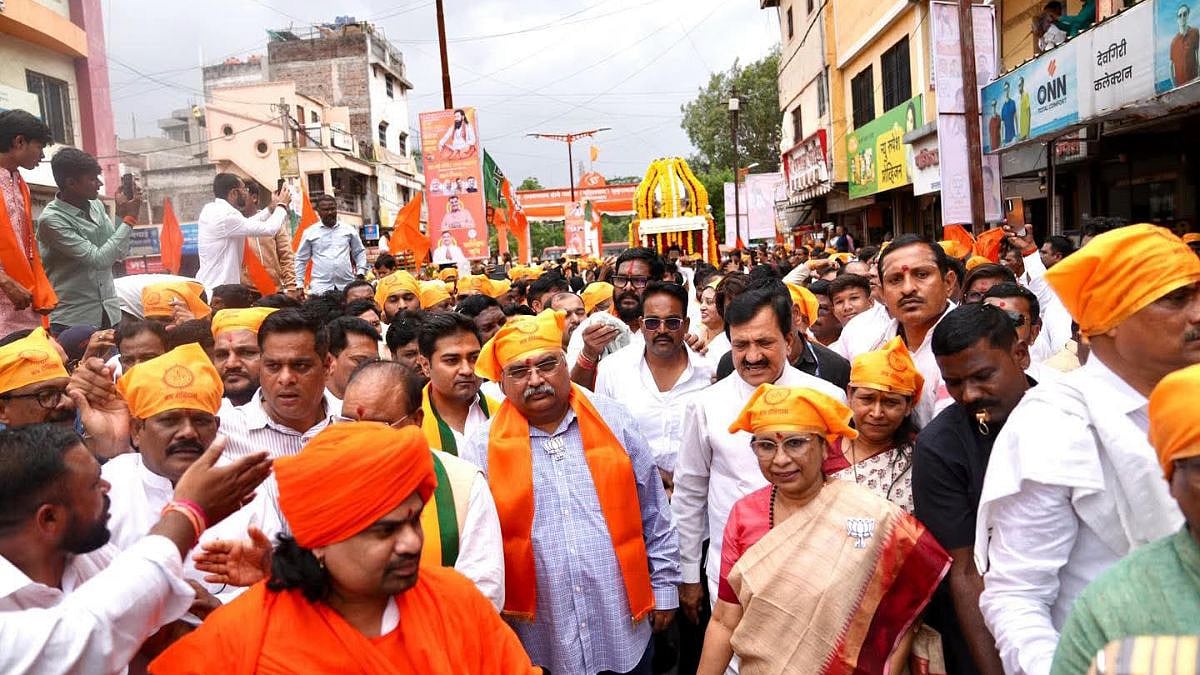
On Sunday, August 9, thousands of protesters gathered across North Pune to demand the restoration of the original route of the Pune-Nashik semi-high-speed railway project. The protests, held on the occasion of Kranti Din, were attended by workers and office-bearers of various political parties, including the BJP, Shiv Sena, Congress, NCP, and Vanchit Bahujan Aghadi.
The protests were held at Chakan and Narayangaon on the Pune-Nashik Highway, with protesters attempting to block the road. In Chakan, a scuffle broke out between police and protesters, resulting in several activists being detained. The police used force to stop the protesters from blocking the road, and later cleared them from the highway to restore traffic movement.
The protest in Chakan was led by Khed MLA Babaji Kale, who addressed the protesters and criticized Union Railway Minister Ashwini Vaishnaw and the Centre over the proposed change in the original route. The original route was planned through Pune, Chakan, Rajgurunagar, Manchar, Narayangaon, Ale Phata, Sangamner, Sinnar, and Nashik.
According to Kale, the project is estimated to cost around Rs 16,000 crore. However, the Ministry of Railways decided to reconsider the original route due to concerns that the railway line could affect the Giant Metrewave Radio Telescope (GMRT) at Khodad in Junnar. The railways have since surveyed an alternative route through Nashik, Shirdi, Puntamba, Ahilyanagar, and Chakan.
The proposed change has led to opposition from residents and political leaders in Khed, Ambegaon, Junnar, Sangamner, and Sinnar. The protesters are demanding that the original route be retained, and have raised slogans such as “Retain the original route of the Pune-Nashik Railway”.
A similar all-party protest was held at Bus Stand Chowk in Narayangaon on Sunday morning, with leaders, activists, farmers, and students gathering in large numbers to demand that the original route be retained. The protests highlight the concerns of local residents and political leaders over the proposed change in the railway route.
The Pune-Nashik semi-high-speed railway project is a significant infrastructure development project in the region, and the proposed change in the route has sparked controversy. The project is expected to improve connectivity between Pune and Nashik, but the change in route has raised concerns among local residents and political leaders.
The protests in Chakan and Narayangaon demonstrate the strong opposition to the proposed change in the railway route. The protesters are demanding that the original route be retained, and have called for the government to reconsider the proposed change.
In conclusion, the protests in Pune-Nashik over the railway route change highlight the concerns of local residents and political leaders over the proposed change. The government must consider the demands of the protesters and reconsider the proposed change to ensure that the project benefits the local community.
The controversy over the railway route change is a significant issue in the region, and the government must address the concerns of the protesters. The protests demonstrate the importance of community involvement in infrastructure development projects, and the need for the government to consider the concerns of local residents and political leaders.
The Pune-Nashik semi-high-speed railway project is a significant infrastructure development project in the region, and the government must ensure that it benefits the local community. The protests in Chakan and Narayangaon highlight the need for the government to reconsider the proposed change in the railway route and to involve the local community in the decision-making process.
Frequently asked questions
What is the estimated cost of the Pune-Nashik semi-high-speed railway project?
The project is estimated to cost around Rs 16,000 crore.
Why did the Ministry of Railways decide to reconsider the original route?
The Ministry of Railways decided to reconsider the original route due to concerns that the railway line could affect the Giant Metrewave Radio Telescope (GMRT) at Khodad in Junnar.