Norway Coach Questions England's Equaliser In World Cup Clash
Norway coach Stale Solbakken disputes England's equaliser, FIFA says ball sensor found no contact. England won 2-1 after extra time.


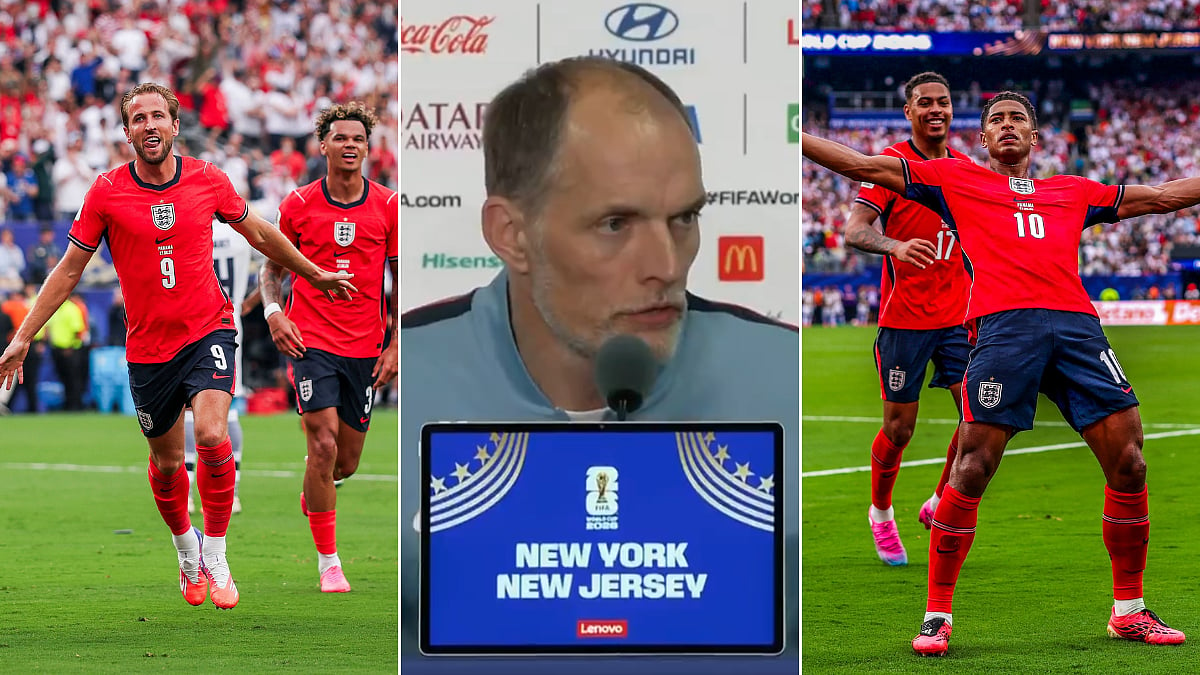
Norway's head coach Stale Solbakken has raised concerns over the build-up to England's equalising goal in their FIFA World Cup 2026 quarter-final match. The match, which took place in Miami, saw England come from behind to defeat Norway 2-1 after extra time, with Jude Bellingham scoring twice to send the Three Lions into the semi-finals.
The controversy surrounds England's first goal, scored in first-half stoppage time. Solbakken believes that Norway goalkeeper Orjan Nyland's clearance struck an overhead camera cable before dropping to an England player, who initiated the move that ended with Bellingham's equaliser. According to Solbakken, the ball changed direction after allegedly hitting the cable, causing confusion among Norwegian players.
Solbakken expressed his concerns after the match, stating that the ball fell straight down from the sky, changing its direction. He also mentioned that Norwegian players and coaching staff immediately raised the issue with match officials during the interval but were informed that the referee had not seen the incident and that there had been no intervention from VAR.
FIFA, however, released a statement explaining that the 'Connected Ball' technology found no evidence of any contact before England's goal. The statement said that the sensor in the 'Connected Ball' showed no peak in the 'heartbeat of the ball' when in the air. Despite this, Solbakken insisted that his players remained convinced that the ball had changed direction after hitting the cable.
The Norway coach acknowledged FIFA's explanation but maintained that the ball's unusual movement was evident to everyone on the bench. He said that he did not want the incident to overshadow his team's historic World Cup campaign, which saw them reach the quarter-finals for the first time since 1998 after eliminating Brazil in the Round of 16.
Solbakken's concerns highlight the ongoing debate over the use of technology in football. While the 'Connected Ball' technology is designed to provide accurate information, it is not foolproof. The incident has sparked discussion about the potential for external factors to influence the game, and the need for referees and officials to be vigilant in monitoring such situations.
The match itself was a thrilling encounter, with England coming from behind to win 2-1 after extra time. Jude Bellingham's two goals were enough to overturn Andreas Schjelderup's opener and send the Three Lions into the semi-finals, where they will face defending champions Argentina.
In the end, Solbakken's concerns over the equalising goal may not change the outcome of the match, but they do highlight the importance of accuracy and fairness in the game. As the World Cup continues, it will be interesting to see how this incident is remembered and whether it will have any impact on future matches.
The World Cup has been full of surprises, and Norway's historic campaign is a testament to the team's determination and skill. Despite their quarter-final exit, the Norwegian team has won the hearts of many fans, and their performance will be remembered for years to come.
In the semi-finals, England will face a tough challenge against defending champions Argentina. The match promises to be an exciting encounter, with both teams looking to advance to the final. As the tournament reaches its climax, fans around the world will be eagerly watching to see who will emerge victorious.
The incident has also sparked a debate about the use of technology in football, and whether it is reliable enough to make accurate decisions. While the 'Connected Ball' technology is a significant innovation, it is not perfect, and there may be cases where it fails to detect external factors that influence the game.
In conclusion, the controversy surrounding England's equalising goal in their World Cup clash with Norway has highlighted the importance of accuracy and fairness in the game. While the incident may not change the outcome of the match, it has sparked a debate about the use of technology in football and the need for referees and officials to be vigilant in monitoring external factors that may influence the game.