India Launches Vikram-1 Rocket
India's private sector reaches orbit, Vikram-1 rocket launch successful
'%3E%3Crect%20width%3D'96'%20height%3D'96'%20fill%3D'%230B6E4F'%2F%3E%3Ccircle%20cx%3D'30'%20cy%3D'24'%20r%3D'44'%20fill%3D'%23fff'%20opacity%3D'.12'%2F%3E%3Ccircle%20cx%3D'60'%20cy%3D'74'%20r%3D'40'%20fill%3D'%23000'%20opacity%3D'.10'%2F%3E%3C%2Fg%3E%3Cg%20fill%3D'none'%20stroke%3D'%23fff'%20stroke-width%3D'3.2'%20stroke-linecap%3D'round'%20stroke-linejoin%3D'round'%3E%3Cpolyline%20points%3D'31%2C59%2041%2C49%2049%2C54%2063%2C37'%2F%3E%3Cpolyline%20points%3D'55%2C37%2063%2C37%2063%2C45'%2F%3E%3C%2Fg%3E%3C%2Fsvg%3E)
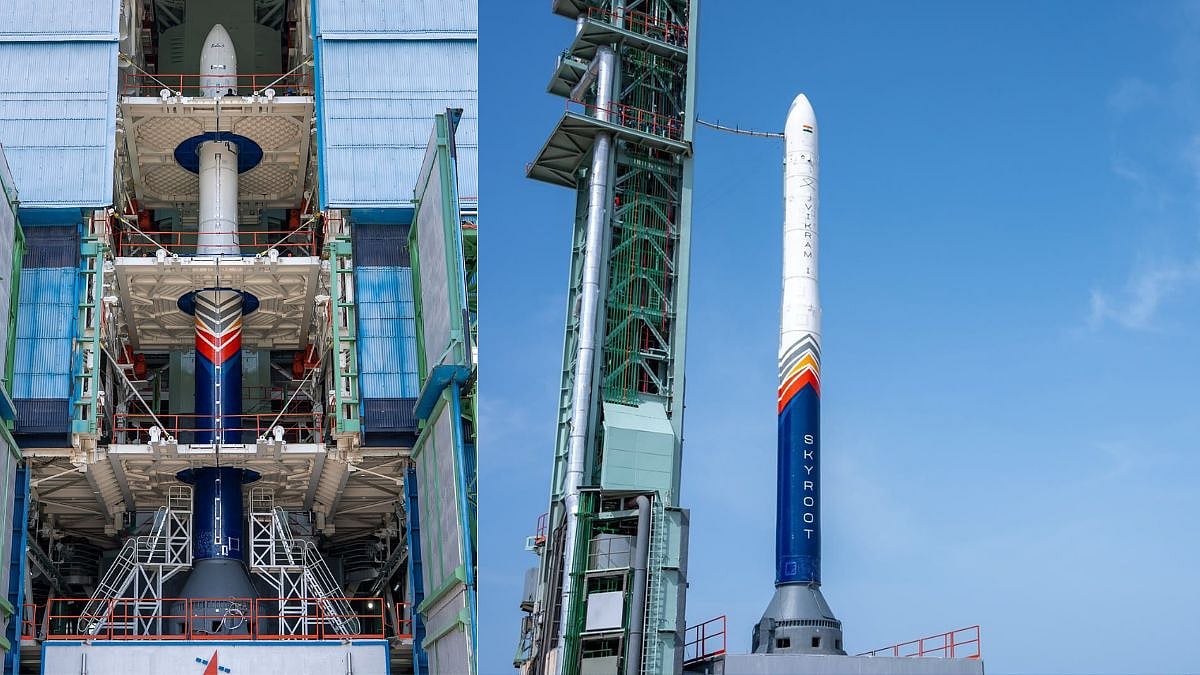
India has successfully launched the Vikram-1 rocket, marking a new era in the country's space journey. The rocket, conceived and launched by a Hyderabad-based start-up, carried commercial payloads into orbit, including those of foreign customers.
The launch of Vikram-1 is a significant achievement, as it demonstrates the capability of India's private sector to design and launch orbital rockets. This puts India in the league of countries like the United States and China, where private companies possess indigenous orbital rocket-making capability.
The Vikram-1 mission was a textbook success, with the rocket carrying a payload capacity of 350 kilograms into orbit. The start-up behind the project, led by young professionals, has shown that India's scientific talent is no longer confined to government laboratories.
The philosophy behind the Vikram-1 rocket is to provide a simpler and more economical design without compromising reliability. This approach can redefine the economics of space access, making it more affordable for countries and companies to launch satellites into orbit.
The global satellite launch market is worth billions of US dollars, with demand expected to grow steadily as communication, navigation, climate monitoring, agriculture, education, and defence applications multiply. India enjoys a unique competitive advantage, with the ability to deliver high-quality launch services at a fraction of the cost charged elsewhere.
The success of Vikram-1 is a declaration that India's start-up revolution has reached the launch pad. It marks the arrival of a new, confident, and competitive India, where private enterprise stands shoulder to shoulder with public institutions in pushing the frontiers of science and technology.
Prime Minister Narendra Modi has praised the achievement, noting that many of the professionals behind the project are still in their late twenties. The launch of Vikram-1 is a significant chapter in India's inspiring space journey, which began modestly in the 1960s from the fishing village of Thumba in Kerala.
India's space journey has come a long way since its humble beginnings, with the country launching missions to the Moon and Mars, earning global respect for its scientific ingenuity and cost-effective engineering. The success of Vikram-1 is a testament to the country's growing capabilities in space technology and its potential to become a major player in the global space industry.
In the future, the payload capacity of Vikram-1 is expected to increase, expanding its commercial appeal. The rocket's success has opened up new opportunities for India's space industry, with the potential to launch more commercial satellites into orbit and provide launch services to countries and companies around the world.
The launch of Vikram-1 is a significant milestone in India's space journey, marking the arrival of a new era in which private enterprise plays a major role in pushing the frontiers of science and technology. It is a declaration that India has arrived on the global stage, ready to compete with confidence and competence.
The success of Vikram-1 has far-reaching implications for India's economy and its position in the global space industry. It has the potential to create new opportunities for employment, investment, and growth, and to establish India as a major player in the global space industry.
In conclusion, the launch of Vikram-1 is a significant achievement that marks the arrival of a new, confident, and competitive India. It is a testament to the country's growing capabilities in space technology and its potential to become a major player in the global space industry.
Frequently asked questions
What is the significance of the Vikram-1 rocket launch?
The launch of Vikram-1 marks a new era in India's space journey, demonstrating the capability of the private sector to design and launch orbital rockets.
What is the payload capacity of the Vikram-1 rocket?
The Vikram-1 rocket has a payload capacity of 350 kilograms, which is expected to increase in future versions.