Ravens use memory, not just wolf tracking, to find food in Yellowstone
A new GPS study reveals that ravens in Yellowstone National Park are smarter than previously thought. Rather than simply following wolves, these birds create detailed mental maps of hunting zones to locate food efficiently.

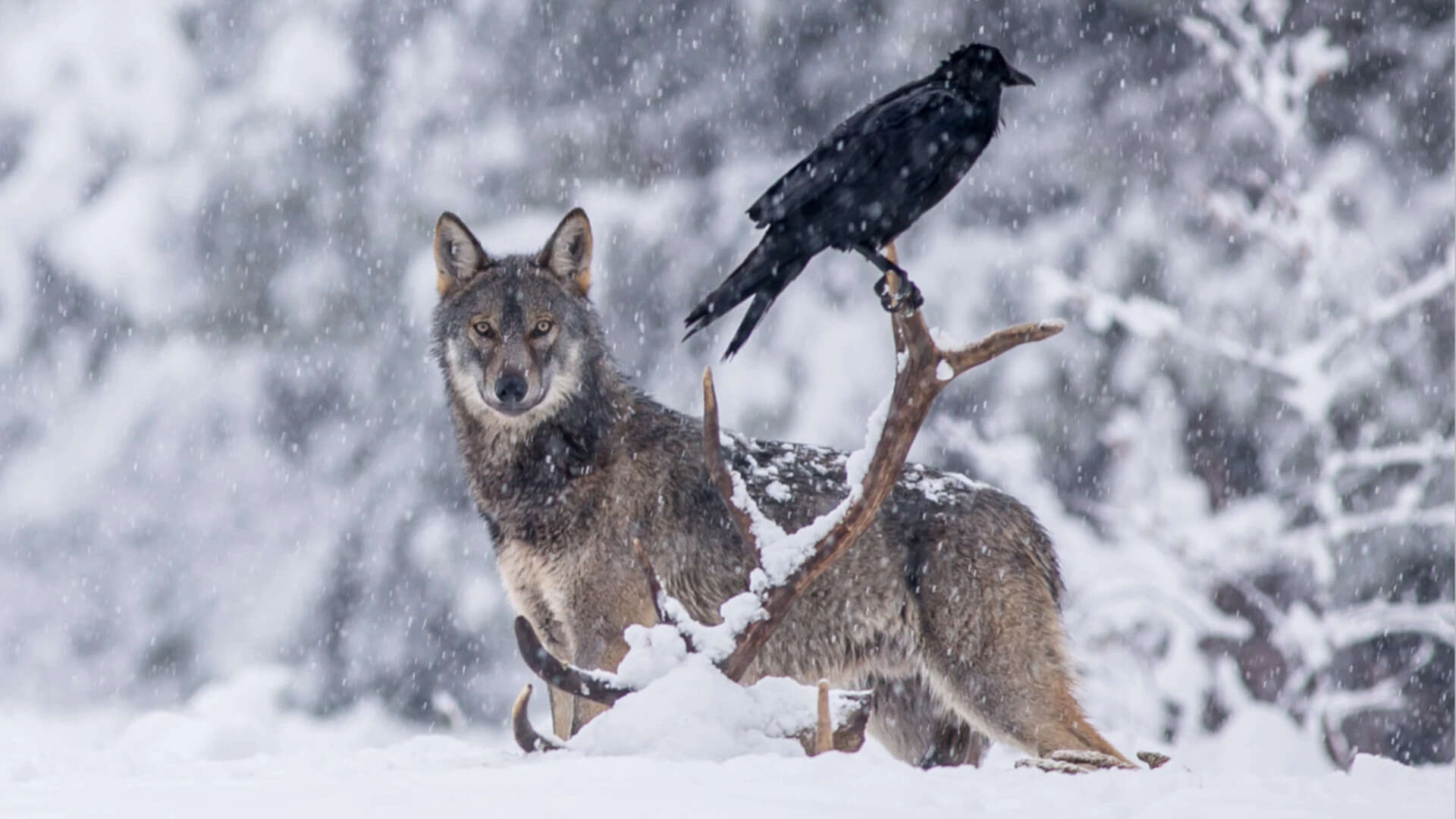
Ravens in Yellowstone National Park have demonstrated a level of intelligence far greater than scientists previously believed, according to new research using GPS tracking technology. The study reveals that these birds do not simply follow wolves to scavenge on leftover kills. Instead, they employ a sophisticated memory-based navigation system to pinpoint areas where wolves have successfully hunted, allowing them to travel directly to feeding sites without constant visual tracking.
Researchers equipped ravens with GPS devices to monitor their movement patterns throughout Yellowstone. The data collected showed that the birds created mental maps of productive hunting zones across the park's vast landscape. This cognitive ability enables them to navigate efficiently across significant distances and arrive at locations with high probability of finding wolf kills, even when the wolves themselves are not immediately visible.
The findings challenge long-held assumptions about raven behaviour and their relationship with wolves. Previously, scientists believed ravens relied primarily on following wolves visually to locate food sources. This new evidence suggests a more complex strategy rooted in spatial memory and learned experience. The ravens appear to remember which areas have historically provided successful feeding opportunities, then return to these zones based on their internal understanding of the landscape.
This discovery has important implications for understanding raven cognition and ecological interactions in Yellowstone. The birds play a meaningful role in the ecosystem by scavenging wolf kills, which affects nutrient distribution across the park. Their intelligent foraging behaviour demonstrates that ravens rank among the most cognitively advanced bird species, capable of abstract thinking and problem-solving comparable to primates in some respects.
The research adds to growing evidence that ravens possess exceptional intelligence, including tool use, social learning, and complex communication. Their ability to create and utilise mental maps of their environment reveals yet another layer of cognitive sophistication. Future studies may explore how ravens acquire this geographical knowledge and whether they share information with other members of their community, further expanding our understanding of bird intelligence and wilderness ecology.
Source: TOI India