Bombay HC Allows Amazon To Destroy Expired Food Stock
Amazon Retail India can destroy expired food under FDA supervision. The company's food licence was cancelled due to alleged improper disposal.
'%3E%3Crect%20width%3D'96'%20height%3D'96'%20fill%3D'%23B3261E'%2F%3E%3Ccircle%20cx%3D'30'%20cy%3D'24'%20r%3D'44'%20fill%3D'%23fff'%20opacity%3D'.12'%2F%3E%3Ccircle%20cx%3D'60'%20cy%3D'74'%20r%3D'40'%20fill%3D'%23000'%20opacity%3D'.10'%2F%3E%3C%2Fg%3E%3Cg%20fill%3D'%23fff'%3E%3Crect%20x%3D'29'%20y%3D'49'%20width%3D'8'%20height%3D'19'%20rx%3D'1'%2F%3E%3Crect%20x%3D'39'%20y%3D'40'%20width%3D'9'%20height%3D'28'%20rx%3D'1'%2F%3E%3Crect%20x%3D'50'%20y%3D'45'%20width%3D'8'%20height%3D'23'%20rx%3D'1'%2F%3E%3Crect%20x%3D'60'%20y%3D'53'%20width%3D'7'%20height%3D'15'%20rx%3D'1'%2F%3E%3Crect%20x%3D'41'%20y%3D'34'%20width%3D'5'%20height%3D'6'%2F%3E%3C%2Fg%3E%3C%2Fsvg%3E)
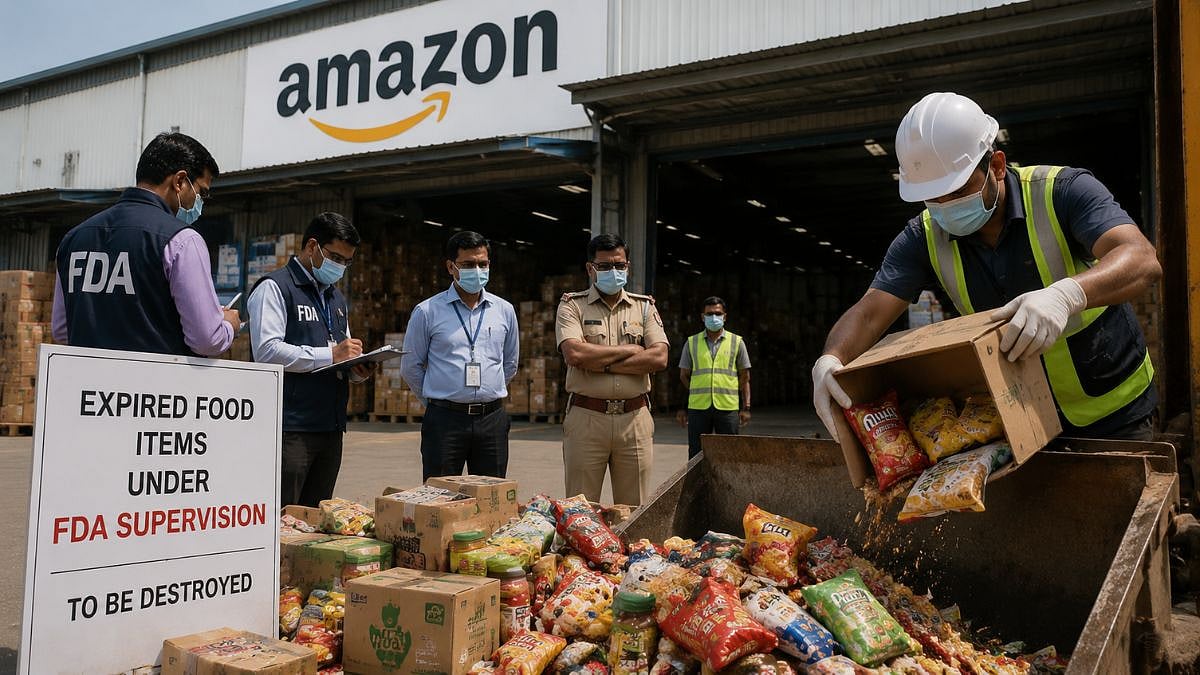
The Bombay High Court has permitted Amazon Retail India to destroy its expired food stock under the supervision of the Food and Drug Administration (FDA). This decision was made on Monday, August 10, 2026, as the company challenged the cancellation of its food licence.
The court directed Amazon to prepare an inventory of all expired goods within a day and hand it over to the FDA for verification. The expired food items will then be destroyed according to the FDA's advisory issued on November 3, 2025.
The FDA had taken action against Amazon's Bhiwandi warehouse after alleging that expired food products meant for disposal were being sent into the retail market. Amazon has denied these allegations and challenged the suspension and subsequent cancellation of its food licence.
During the hearing, the Government Pleader stated that the FDA had issued notices after finding that the disposal was not being carried out as per prescribed norms. The court suggested that the expired stock could be destroyed under the FDA's supervision, which was agreed to by both parties.
The court had earlier criticised the FDA's approach, saying that while the regulator's efforts were appreciated, it had to act systematically and follow due procedure. The bench observed that the FDA's approach was like trying to kill a mosquito with a sword.
The court has posted the matter for August 27 and directed the respondents to file their affidavit in reply by August 20. Amazon's lawyer argued that the dispute concerned the disposal of expired food products and not the overall functioning of the warehouse. He also questioned the FDA's decision to cancel the licence while Amazon's appeal against the suspension was pending.
The Bombay High Court's decision allows Amazon to destroy its expired food stock while the case is still being heard. The company's food licence was cancelled due to alleged improper disposal, but Amazon has denied any wrongdoing.
The case highlights the importance of proper food disposal and the need for regulators to follow due procedure. The FDA's actions were aimed at ensuring public safety, but the court's criticism suggests that the regulator must balance its efforts with a systematic approach.
The outcome of this case will be significant for Amazon and the FDA, as it will determine the fate of Amazon's food licence and the future of its operations in India. The court's decision will also have implications for the food industry as a whole, as it will set a precedent for how regulators handle cases of alleged improper food disposal.
In conclusion, the Bombay High Court's decision to allow Amazon to destroy its expired food stock under FDA supervision is a significant development in the case. The court's criticism of the FDA's approach highlights the need for regulators to follow due procedure and act systematically. The outcome of this case will have important implications for Amazon, the FDA, and the food industry as a whole.
The case is a reminder of the importance of proper food disposal and the need for regulators to ensure public safety. The Bombay High Court's decision will be closely watched as the case continues to unfold.
The FDA's actions in this case demonstrate the regulator's commitment to ensuring public safety and enforcing food safety regulations. However, the court's criticism suggests that the regulator must balance its efforts with a systematic approach.
The Bombay High Court's decision is a significant step towards resolving the dispute between Amazon and the FDA. The case will continue to be heard on August 27, and the outcome will have important implications for all parties involved.
Frequently asked questions
Why was Amazon's food licence cancelled?
Amazon's food licence was cancelled due to alleged improper disposal of expired food products.
What is the next step in the case?
The case will be heard on August 27, and the respondents are directed to file their affidavit in reply by August 20.