India Introduces Plastic Notes
India to replace soiled notes, RBI floats tender
'%3E%3Crect%20width%3D'96'%20height%3D'96'%20fill%3D'%230B6E4F'%2F%3E%3Ccircle%20cx%3D'30'%20cy%3D'24'%20r%3D'44'%20fill%3D'%23fff'%20opacity%3D'.12'%2F%3E%3Ccircle%20cx%3D'60'%20cy%3D'74'%20r%3D'40'%20fill%3D'%23000'%20opacity%3D'.10'%2F%3E%3C%2Fg%3E%3Cg%20fill%3D'none'%20stroke%3D'%23fff'%20stroke-width%3D'3.2'%20stroke-linecap%3D'round'%20stroke-linejoin%3D'round'%3E%3Cpolyline%20points%3D'31%2C59%2041%2C49%2049%2C54%2063%2C37'%2F%3E%3Cpolyline%20points%3D'55%2C37%2063%2C37%2063%2C45'%2F%3E%3C%2Fg%3E%3C%2Fsvg%3E)
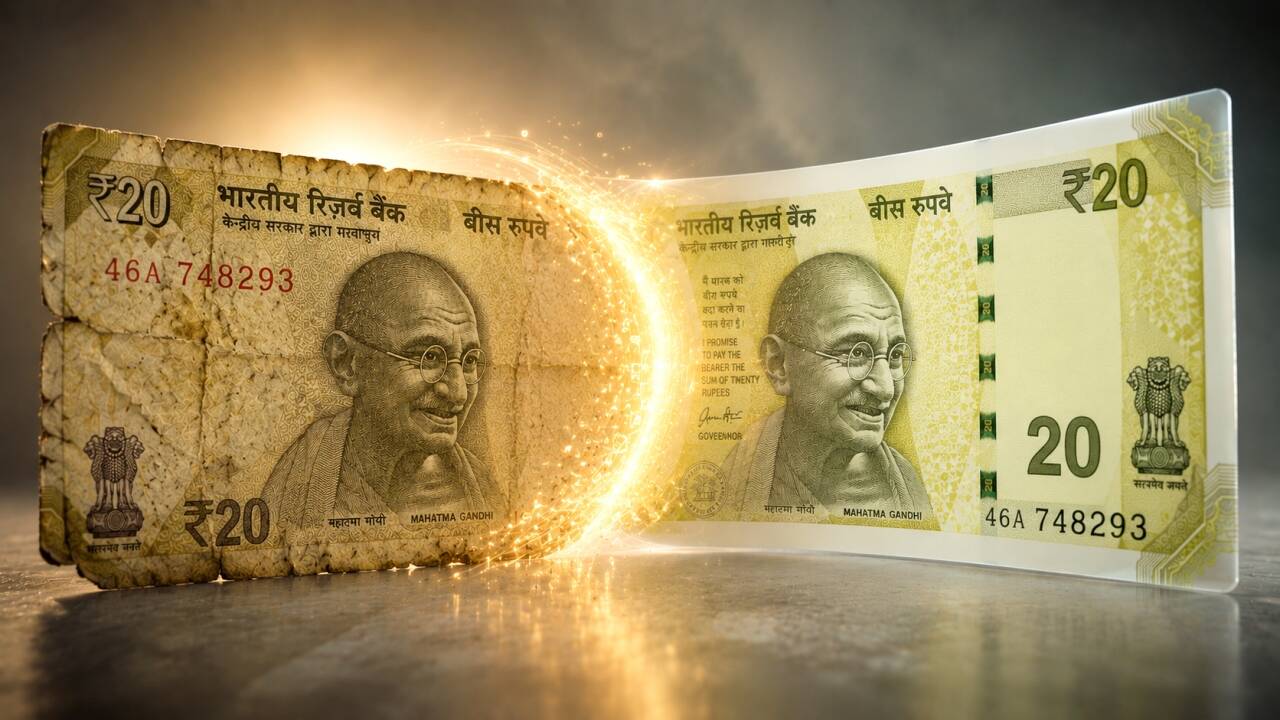
The Reserve Bank of India (RBI) has taken a significant step towards introducing plastic notes in the country. The central bank has floated a tender to source materials for the polymer notes through its currency printing arm, Bharatiya Reserve Bank Note Mudran Pvt Ltd. This move is expected to reduce the massive amount of soiled notes that are discarded every year.
According to reports, India has discarded around Rs 50 trillion worth of soiled notes in the last decade. This is a significant amount, and the introduction of plastic notes is expected to bring down this number. The RBI has invited global expressions of interest for the supply of polymer notes, which will be more durable and long-lasting than the current paper notes.
The introduction of plastic notes is a significant development in the country's currency management system. It is expected to improve the overall quality of currency in circulation and reduce the need for frequent replacement of soiled notes. The move is also expected to help in reducing the cost of printing and distributing new notes.
The use of polymer notes is not new, and several countries have already adopted this technology. The notes are made of a plastic material that is more resistant to wear and tear, and they can withstand rough handling. They are also more secure than paper notes, as they have advanced security features that make them difficult to counterfeit.
The RBI's decision to introduce plastic notes is a welcome move, and it is expected to have a positive impact on the country's economy. The reduction in soiled notes will help in reducing the cost of printing and distributing new notes, and it will also help in improving the overall quality of currency in circulation.
The introduction of plastic notes is also expected to help in reducing the environmental impact of currency production. The production of paper notes requires large amounts of water and energy, and it generates a significant amount of waste. The use of polymer notes will help in reducing this waste and minimizing the environmental impact of currency production.
In conclusion, the introduction of plastic notes in India is a significant development that is expected to have a positive impact on the country's economy and environment. The move is expected to improve the overall quality of currency in circulation, reduce the cost of printing and distributing new notes, and minimize the environmental impact of currency production.
Frequently asked questions
Why is RBI introducing plastic notes?
The RBI is introducing plastic notes to reduce the massive amount of soiled notes that are discarded every year, which is around Rs 50 trillion in the last decade.
What are the benefits of plastic notes?
Plastic notes are more durable, secure, and environmentally friendly than paper notes, and they can help in reducing the cost of printing and distributing new notes.