Supreme Court Seeks Bihar Minister's Appointment Records
Bihar minister's appointment under scrutiny. Supreme Court requests records.
'%3E%3Crect%20width%3D'96'%20height%3D'96'%20fill%3D'%231A5276'%2F%3E%3Ccircle%20cx%3D'30'%20cy%3D'24'%20r%3D'44'%20fill%3D'%23fff'%20opacity%3D'.12'%2F%3E%3Ccircle%20cx%3D'60'%20cy%3D'74'%20r%3D'40'%20fill%3D'%23000'%20opacity%3D'.10'%2F%3E%3C%2Fg%3E%3Cg%20fill%3D'%23fff'%3E%3Cpath%20d%3D'M31%2041%20L48%2031%20L65%2041%20Z'%2F%3E%3Crect%20x%3D'33'%20y%3D'43'%20width%3D'4'%20height%3D'17'%2F%3E%3Crect%20x%3D'41'%20y%3D'43'%20width%3D'4'%20height%3D'17'%2F%3E%3Crect%20x%3D'51'%20y%3D'43'%20width%3D'4'%20height%3D'17'%2F%3E%3Crect%20x%3D'59'%20y%3D'43'%20width%3D'4'%20height%3D'17'%2F%3E%3Crect%20x%3D'30'%20y%3D'62'%20width%3D'36'%20height%3D'4'%20rx%3D'1'%2F%3E%3C%2Fg%3E%3C%2Fsvg%3E)
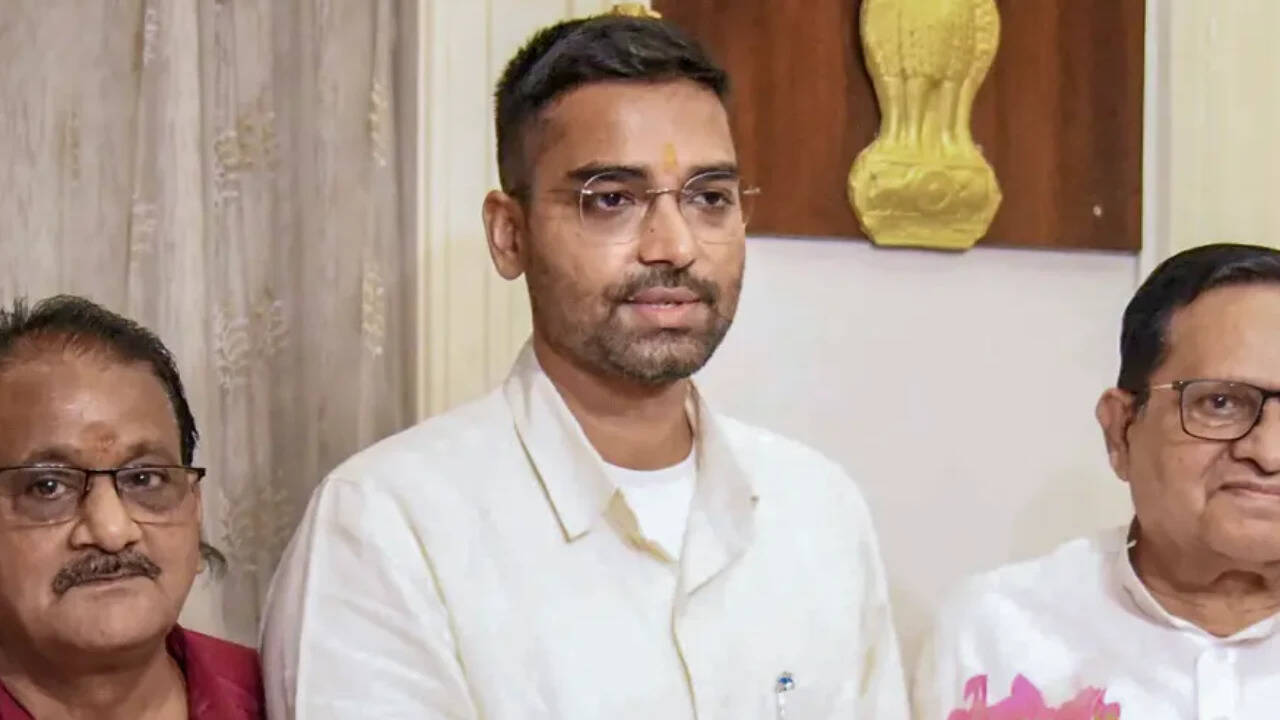
The Supreme Court has asked the Bihar government to provide records related to the appointment of one of its ministers. This minister, who was not a member of the state assembly, was initially appointed and faced a six-month deadline to become a member of the legislature.
To address this issue, the minister was later nominated as a Member of the Legislative Council (MLC). However, the government's move has been challenged in court, with the petitioner citing a 2001 judgment that deals with the re-appointment of ministers who are not legislators.
The petitioner's argument is based on the principle that a minister who is not a member of the legislature can only be re-appointed if they become a member within six months of their initial appointment. The Supreme Court has now sought documents from the Bihar government related to the minister's initial appointment and their subsequent re-induction into the cabinet after being nominated as an MLC.
The court's decision to seek these records indicates that it is taking a closer look at the minister's appointment and the government's decision to nominate them as an MLC. The Bihar government will have to provide the requested documents to the court, which will then examine them to determine whether the minister's appointment was in line with the law.
The 2001 judgment cited by the petitioner is a significant precedent in this case, as it clarifies the rules surrounding the appointment and re-appointment of ministers who are not members of the legislature. The Supreme Court's decision in this matter will have important implications for the interpretation of these rules and how they are applied in practice.
In the context of Indian politics, the issue of ministerial appointments and the requirements for eligibility is an important one. The Constitution and various laws govern the appointment of ministers, and courts have played a crucial role in interpreting these laws and ensuring that they are applied correctly.
The Supreme Court's request for records in this case is a reminder that the judiciary is an essential check on the power of the executive and that it will scrutinize decisions made by governments to ensure that they are in line with the law. As the court examines the records provided by the Bihar government, it will be closely watched by politicians, lawyers, and citizens alike, who are interested in the outcome of this important case.
The significance of this case extends beyond the specific facts of the minister's appointment, as it raises broader questions about the rule of law and the role of the judiciary in ensuring that governments act in accordance with the Constitution and other laws. The Supreme Court's decision will provide important guidance on these issues and will have implications for the functioning of state governments and the appointment of ministers in the future.
In conclusion, the Supreme Court's request for records related to the Bihar minister's appointment is an important development in a case that has significant implications for Indian politics and the rule of law. As the court examines the documents provided by the Bihar government, it will be considering not only the specific facts of the case but also the broader principles of law and governance that are at stake.
Frequently asked questions
What is the issue with the Bihar minister's appointment?
The minister was not a member of the state assembly and faced a six-month deadline to become a member of the legislature.
What judgment did the petitioner cite in their challenge?
The petitioner cited a 2001 judgment that deals with the re-appointment of ministers who are not legislators.