Asian Stocks Fall 2% on US-Iran Tensions
Asian stocks plummet, oil prices soar amid escalating US-Iran tensions.
'%3E%3Crect%20width%3D'96'%20height%3D'96'%20fill%3D'%230B6E4F'%2F%3E%3Ccircle%20cx%3D'30'%20cy%3D'24'%20r%3D'44'%20fill%3D'%23fff'%20opacity%3D'.12'%2F%3E%3Ccircle%20cx%3D'60'%20cy%3D'74'%20r%3D'40'%20fill%3D'%23000'%20opacity%3D'.10'%2F%3E%3C%2Fg%3E%3Cg%20fill%3D'none'%20stroke%3D'%23fff'%20stroke-width%3D'3.2'%20stroke-linecap%3D'round'%20stroke-linejoin%3D'round'%3E%3Cpolyline%20points%3D'31%2C59%2041%2C49%2049%2C54%2063%2C37'%2F%3E%3Cpolyline%20points%3D'55%2C37%2063%2C37%2063%2C45'%2F%3E%3C%2Fg%3E%3C%2Fsvg%3E)
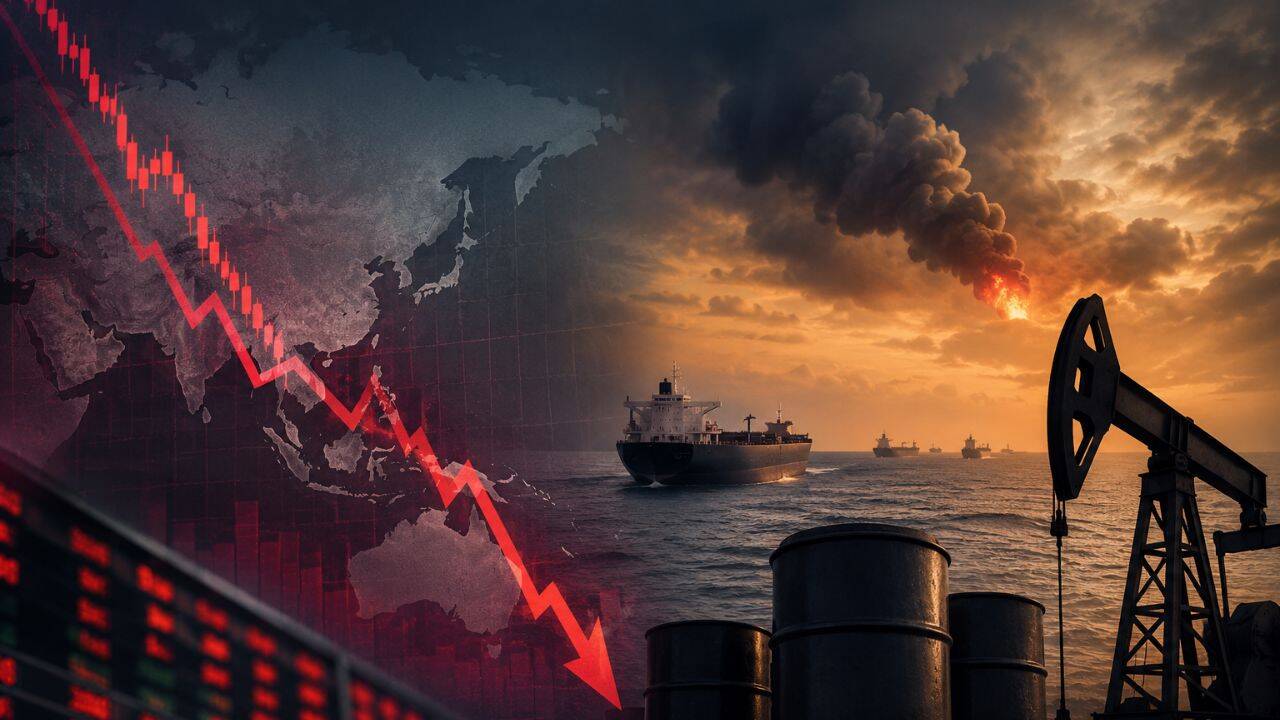
Asian stocks have fallen by over 2% as tensions between the US and Iran continue to escalate in the Hormuz region. This sudden decline in the market is largely attributed to the rising concerns over a potential conflict between the two nations.
The escalation of tensions in the Hormuz region has significant implications for global trade and economy. The region is a critical passage for oil tankers, and any disruption in the area could lead to a substantial increase in oil prices. As a result, oil prices have recorded a significant jump, further exacerbating the concerns of investors and traders.
The US-Iran tensions have been escalating over the past few weeks, with both nations engaging in a war of words and retaliatory measures. The situation has been further complicated by the involvement of other nations in the region, making it a highly volatile and unpredictable situation.
The fall in Asian stocks is a reflection of the growing concerns among investors about the potential impact of a conflict on the global economy. The rise in oil prices is also expected to have a significant impact on inflation and economic growth, making it a major concern for policymakers and investors alike.
The Hormuz region is a critical component of global trade, with a significant portion of the world's oil passing through the region. Any disruption in the area could have far-reaching consequences for the global economy, making it essential for nations to work towards a peaceful resolution of the conflict.
The current situation is a reminder of the complex and interconnected nature of global politics and economics. The escalation of tensions in one region can have significant implications for the entire world, making it essential for nations to work towards cooperation and diplomacy.
In conclusion, the fall in Asian stocks and the rise in oil prices are a direct result of the escalating US-Iran tensions in the Hormuz region. The situation is highly volatile and unpredictable, and it is essential for nations to work towards a peaceful resolution to avoid any further escalation.
The implications of this situation are far-reaching, and it is likely to have a significant impact on the global economy in the coming days and weeks. As the situation continues to unfold, it is essential for investors, policymakers, and nations to remain vigilant and work towards a peaceful resolution to avoid any further disruption to the global economy.
The rise in oil prices is also expected to have a significant impact on the Indian economy, which is heavily reliant on imported oil. The government will need to take measures to mitigate the impact of the rising oil prices on inflation and economic growth.
Overall, the current situation is a reminder of the complex and interconnected nature of global politics and economics. It is essential for nations to work towards cooperation and diplomacy to avoid any further escalation and to ensure a peaceful resolution to the conflict.