Navi Mumbai Sees Decline In Malaria And Dengue Cases
Navi Mumbai records 23 malaria cases and 194 suspected dengue cases. NS1 test does not confirm dengue.
'%3E%3Crect%20width%3D'96'%20height%3D'96'%20fill%3D'%23B3261E'%2F%3E%3Ccircle%20cx%3D'30'%20cy%3D'24'%20r%3D'44'%20fill%3D'%23fff'%20opacity%3D'.12'%2F%3E%3Ccircle%20cx%3D'60'%20cy%3D'74'%20r%3D'40'%20fill%3D'%23000'%20opacity%3D'.10'%2F%3E%3C%2Fg%3E%3Cg%20fill%3D'%23fff'%3E%3Crect%20x%3D'29'%20y%3D'49'%20width%3D'8'%20height%3D'19'%20rx%3D'1'%2F%3E%3Crect%20x%3D'39'%20y%3D'40'%20width%3D'9'%20height%3D'28'%20rx%3D'1'%2F%3E%3Crect%20x%3D'50'%20y%3D'45'%20width%3D'8'%20height%3D'23'%20rx%3D'1'%2F%3E%3Crect%20x%3D'60'%20y%3D'53'%20width%3D'7'%20height%3D'15'%20rx%3D'1'%2F%3E%3Crect%20x%3D'41'%20y%3D'34'%20width%3D'5'%20height%3D'6'%2F%3E%3C%2Fg%3E%3C%2Fsvg%3E)
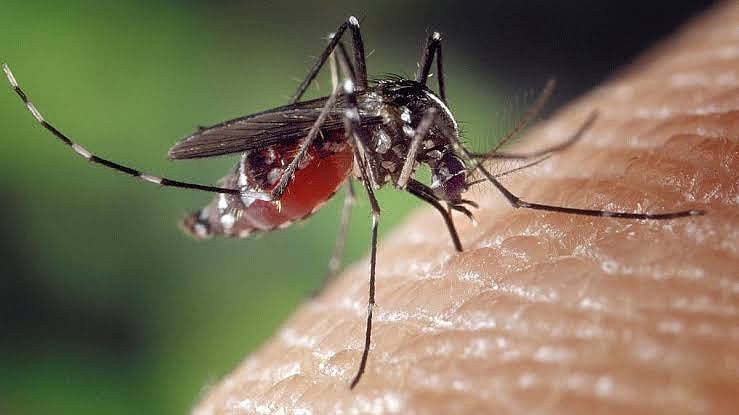
Navi Mumbai has recorded a decline in malaria and suspected dengue cases in 2026, with 23 malaria cases and 194 suspected dengue cases reported between January 1 and August 20. This is compared to 32 malaria cases and 669 suspected dengue cases during the same period in 2025, according to data from the Navi Mumbai Municipal Corporation (NMMC).
The civic health officials have clarified that a positive NS1 test does not automatically confirm dengue. The NS1 test is an antigen test that indicates a viral infection, but it is not a definitive confirmation of dengue. Suspected samples are sent to the National Institute of Virology (NIV) in Pune for confirmation, and only cases confirmed by NIV are officially counted as dengue.
According to NMMC data, 1,19,883 blood smears were collected between January and August 20 this year, compared to 1,21,834 during the same period in 2025. Of the samples collected this year, 23 tested positive for malaria. The suspected dengue cases recorded a substantial decline compared to last year, with 194 suspected cases in 2026 against 669 in 2025.
The month-wise figures show an increase in vector-borne diseases during the monsoon. Malaria cases in 2026 rose from one in January to 10 in July, with three cases reported up to August 20. Suspected dengue cases stood at 16 in January, 12 in February, 15 in March, 10 in April, 14 in May, 12 in June, 69 in July, and 46 up to August 20.
In comparison, 2025 recorded three malaria cases in January, one in February, one in March, one in April, two in May, nine in June, 12 in July, and three up to August 20. Suspected dengue cases in 2025 stood at 23 in January, 21 in February, 20 in March, 24 in April, 17 in May, 57 in June, 199 in July, and 308 up to August 20.
The civic body has stepped up blood smear collection during the monsoon. In 2026, 20,720 blood smears were collected in July and 16,576 up to August 20. In comparison, 24,839 samples were collected in July 2025 and 15,625 up to August 20.
NMMC officials have emphasized the importance of understanding the difference between NS1 and confirmed dengue. Many people consider NS1 to be confirmation of dengue, which is not correct. NS1 is basically an indication of a viral infection and should not be considered dengue on its own.
The decline in malaria and suspected dengue cases in Navi Mumbai is a positive trend, but the civic body must continue to take measures to prevent the spread of vector-borne diseases. The monsoon season is a critical period for the prevention of such diseases, and the civic body must ensure that all necessary steps are taken to prevent their spread.
In conclusion, the decline in malaria and suspected dengue cases in Navi Mumbai is a welcome trend, but it is essential to understand the difference between NS1 and confirmed dengue. The civic body must continue to take measures to prevent the spread of vector-borne diseases, especially during the monsoon season.
Frequently asked questions
What is the difference between NS1 and confirmed dengue?
NS1 is an antigen test that indicates a viral infection, but it is not a definitive confirmation of dengue. Only cases confirmed by the National Institute of Virology (NIV) are officially counted as dengue.
How many malaria and suspected dengue cases were reported in Navi Mumbai in 2026?
23 malaria cases and 194 suspected dengue cases were reported between January 1 and August 20, 2026.