India Gains Freedom at Midnight on August 15, 1947
India celebrates liberation from British rule, Nehru delivers 'Tryst with Destiny' speech, faces governance challenges.
'%3E%3Crect%20width%3D'96'%20height%3D'96'%20fill%3D'%231A5276'%2F%3E%3Ccircle%20cx%3D'30'%20cy%3D'24'%20r%3D'44'%20fill%3D'%23fff'%20opacity%3D'.12'%2F%3E%3Ccircle%20cx%3D'60'%20cy%3D'74'%20r%3D'40'%20fill%3D'%23000'%20opacity%3D'.10'%2F%3E%3C%2Fg%3E%3Cg%20fill%3D'%23fff'%3E%3Cpath%20d%3D'M31%2041%20L48%2031%20L65%2041%20Z'%2F%3E%3Crect%20x%3D'33'%20y%3D'43'%20width%3D'4'%20height%3D'17'%2F%3E%3Crect%20x%3D'41'%20y%3D'43'%20width%3D'4'%20height%3D'17'%2F%3E%3Crect%20x%3D'51'%20y%3D'43'%20width%3D'4'%20height%3D'17'%2F%3E%3Crect%20x%3D'59'%20y%3D'43'%20width%3D'4'%20height%3D'17'%2F%3E%3Crect%20x%3D'30'%20y%3D'62'%20width%3D'36'%20height%3D'4'%20rx%3D'1'%2F%3E%3C%2Fg%3E%3C%2Fsvg%3E)

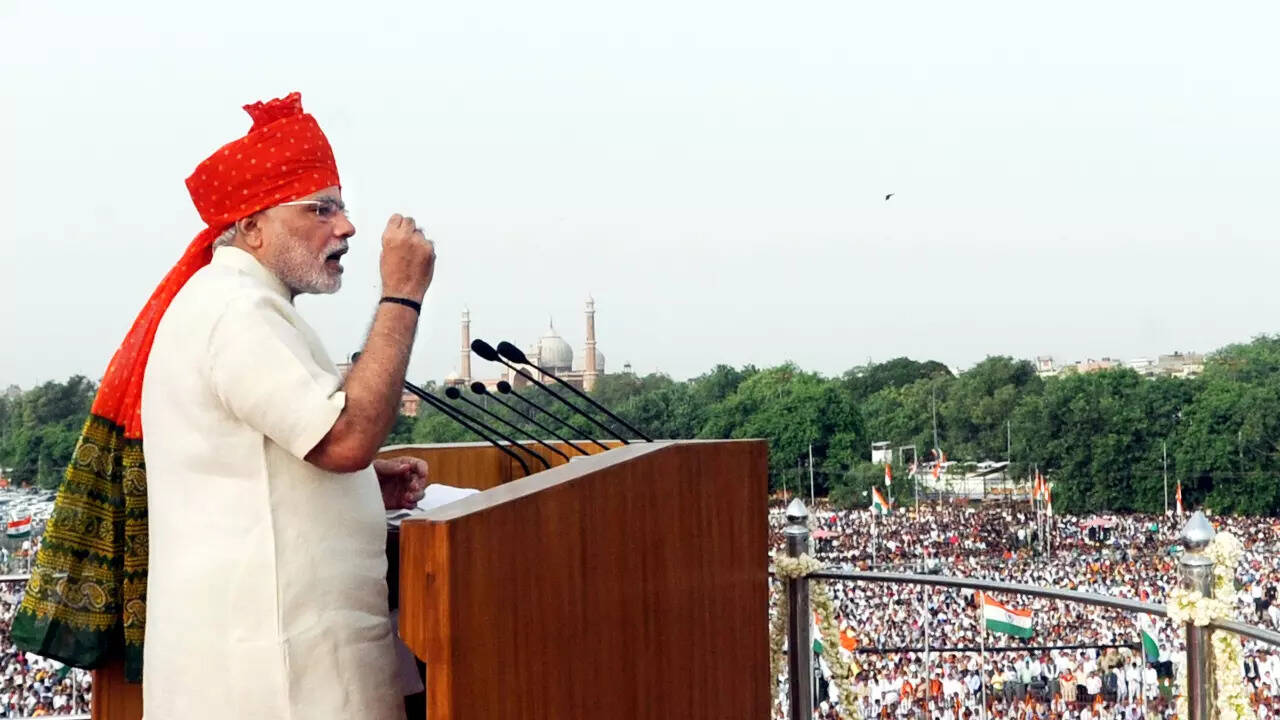
India's journey to independence culminated at midnight on August 15, 1947, when the country finally gained freedom from British rule. This historic moment was marked by Jawaharlal Nehru's iconic 'Tryst with Destiny' speech, which captivated the nation and set the tone for a new era.
The newly formed government, led by Nehru, faced numerous challenges in the aftermath of independence. The country was still reeling from the chaos of Partition, which had resulted in widespread violence and displacement. Despite these challenges, the government remained committed to building a new nation and establishing a stable governance system.
Lord Mountbatten, the last Viceroy of British India, took charge as the first Governor-General of independent India. His leadership played a crucial role in navigating the country through its early years, as India struggled to come to terms with its newfound freedom.
The 'Tryst with Destiny' speech, delivered by Nehru, is still remembered as a defining moment in Indian history. In it, he spoke of the country's long and difficult journey to independence, and the many challenges that lay ahead. He also emphasized the importance of unity and cooperation in building a strong and prosperous nation.
As India celebrates its independence, it is worth remembering the sacrifices made by those who fought for freedom. The country's struggle for independence was long and arduous, with many notable figures playing important roles. From Mahatma Gandhi's non-violent resistance to Subhas Chandra Bose's militant activism, India's independence movement was marked by diverse perspectives and approaches.
In the years that followed independence, India faced numerous challenges, from rebuilding its economy to establishing a stable governance system. However, the country also made significant progress, with major advancements in fields such as education, healthcare, and infrastructure.
Today, India is a thriving democracy, with a strong and diverse economy. The country continues to face challenges, but its progress over the years is a testament to the resilience and determination of its people.
The story of India's first hours of freedom is a reminder of the country's complex and often tumultuous history. It is a story of struggle, sacrifice, and ultimately, triumph. As India continues to grow and evolve, it is essential to remember the lessons of the past and to work towards building a brighter future for all its citizens.
In conclusion, India's independence at midnight on August 15, 1947, marked the beginning of a new era for the country. It was a moment of great joy and celebration, but also of significant challenge and uncertainty. As the country continues to navigate its way through the complexities of the modern world, it is worth remembering the sacrifices and struggles of those who fought for its freedom.
The significance of August 15, 1947, extends beyond India's borders, as it marked a major turning point in world history. The end of British rule in India had far-reaching implications, shaping the course of global politics and international relations. As India continues to play an increasingly important role on the world stage, its independence remains an important milestone in the country's journey towards becoming a major global power.
Frequently asked questions
Why did India celebrate its independence at midnight on August 15, 1947?
India celebrated its independence at midnight on August 15, 1947, to mark the transfer of power from British rule to Indian leadership.
Who was the first Governor-General of independent India?
Lord Mountbatten was the first Governor-General of independent India, playing a crucial role in navigating the country through its early years.