Lord Jagannath Begins Sacred Journey to Gundicha Temple
Millions gather for Rath Yatra, Lord Jagannath visits Goddess Gundicha's temple, a 3km journey from Jagannath Temple.
'%3E%3Crect%20width%3D'96'%20height%3D'96'%20fill%3D'%23B3261E'%2F%3E%3Ccircle%20cx%3D'30'%20cy%3D'24'%20r%3D'44'%20fill%3D'%23fff'%20opacity%3D'.12'%2F%3E%3Ccircle%20cx%3D'60'%20cy%3D'74'%20r%3D'40'%20fill%3D'%23000'%20opacity%3D'.10'%2F%3E%3C%2Fg%3E%3Cg%20fill%3D'%23fff'%3E%3Crect%20x%3D'29'%20y%3D'49'%20width%3D'8'%20height%3D'19'%20rx%3D'1'%2F%3E%3Crect%20x%3D'39'%20y%3D'40'%20width%3D'9'%20height%3D'28'%20rx%3D'1'%2F%3E%3Crect%20x%3D'50'%20y%3D'45'%20width%3D'8'%20height%3D'23'%20rx%3D'1'%2F%3E%3Crect%20x%3D'60'%20y%3D'53'%20width%3D'7'%20height%3D'15'%20rx%3D'1'%2F%3E%3Crect%20x%3D'41'%20y%3D'34'%20width%3D'5'%20height%3D'6'%2F%3E%3C%2Fg%3E%3C%2Fsvg%3E)
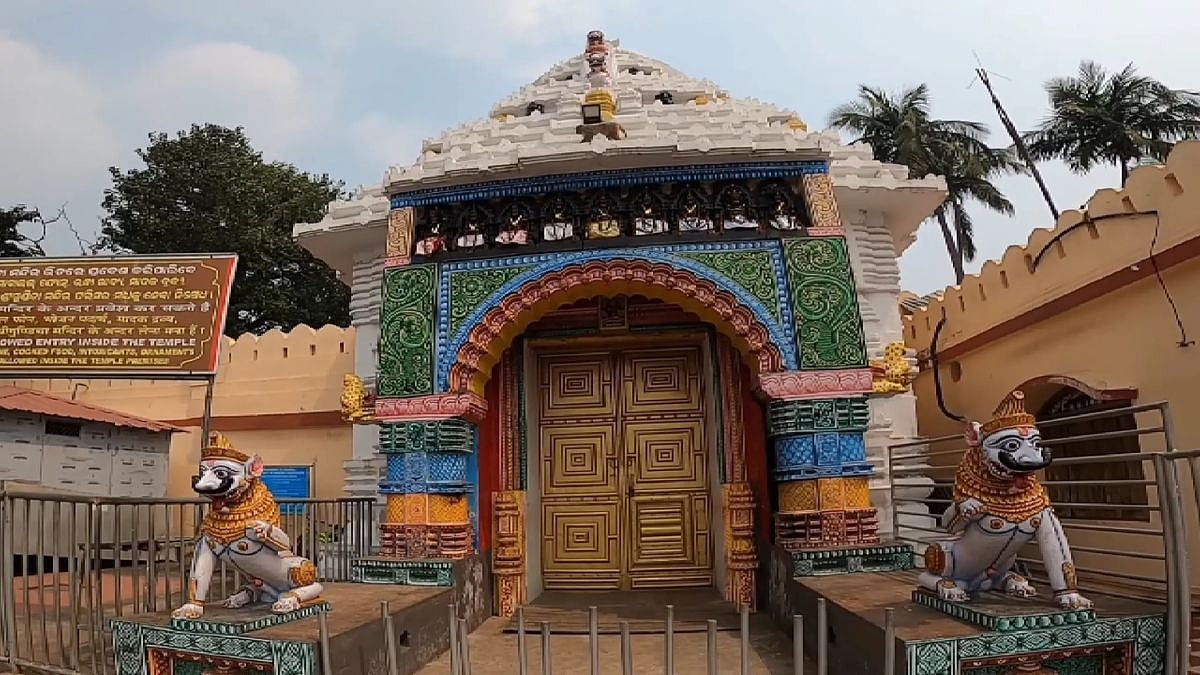
The annual Jagannath Rath Yatra in Puri, Odisha, is one of India's most revered festivals, celebrated every year with great fervour. On July 16, 2026, the vibrant festival commenced, drawing millions of devotees from across the world.
The festival marks the sacred journey of Lord Jagannath, Lord Balabhadra, and Goddess Subhadra from the Jagannath Temple to the Gundicha Temple. This journey is a significant tradition of the Jagannath Rath Yatra, deeply rooted in mythology.
But who is Goddess Gundicha, to whom Lord Jagannath visits every year with his siblings? According to Hindu tradition, Queen Gundicha was the wife of King Indradyumna, who established the original Jagannath Temple in Puri. She was a devoted worshipper of Lord Jagannath, and pleased with her devotion, the Lord promised to visit her temple once every year.
During the Rath Yatra, Lord Jagannath, accompanied by his elder brother Lord Balabhadra and sister Devi Subhadra, leaves his main temple and travels nearly three kilometres to Gundicha Temple. The deities stay there for about seven days before returning to the Jagannath Temple during the Bahuda Yatra.
Another popular belief describes the Gundicha Temple as the maternal aunt's home (Mausi Bari) of Lord Jagannath. Just as people visit their relatives during festivals, the Lord's annual journey symbolises love, family bonds, and divine affection. On the return journey, the deities also stop at the Mausi Maa Temple, where Lord Jagannath is traditionally offered Poda Pitha, a baked Odia delicacy believed to be his favourite.
The Rath Yatra is a celebration of the divine bond between Lord Jagannath and his devotees. The festival showcases the rich cultural heritage of Odisha and is an important part of India's spiritual landscape. As millions of devotees gather to witness the sacred journey, the festival becomes a testament to the power of faith and devotion.
The significance of the Rath Yatra extends beyond the festival itself, representing the values of love, family, and devotion that are deeply ingrained in Indian culture. As the deities make their way to the Gundicha Temple, they embody the spirit of togetherness and celebration that defines the festival.
In the context of Indian festivals, the Rath Yatra stands out as a unique and vibrant celebration that showcases the country's rich cultural diversity. The festival is a reminder of the importance of preserving and promoting India's cultural heritage, and its significance extends beyond the state of Odisha to the entire country.
As the Rath Yatra comes to a close, the devotees will eagerly await the return journey of the deities, marking the end of the festival. However, the significance of the Rath Yatra will continue to be felt, inspiring devotion and faith in the hearts of millions of people across India.
The Rath Yatra is a celebration that transcends geographical boundaries, bringing people together in a shared experience of faith and devotion. As the festival becomes an integral part of India's cultural landscape, its significance will continue to grow, inspiring future generations to cherish and preserve the country's rich cultural heritage.
In conclusion, the Jagannath Rath Yatra is a festival that embodies the spirit of devotion, love, and family bonds. The sacred journey of Lord Jagannath to the Gundicha Temple is a testament to the power of faith and the importance of preserving India's cultural heritage. As the festival comes to a close, its significance will continue to be felt, inspiring devotion and faith in the hearts of millions of people across India.