Supreme Court Asks Centre To Consider AI Ethics Guidelines
Supreme Court asks Centre to consider plea on AI ethics, Centre to review guidelines
'%3E%3Crect%20width%3D'96'%20height%3D'96'%20fill%3D'%231A5276'%2F%3E%3Ccircle%20cx%3D'30'%20cy%3D'24'%20r%3D'44'%20fill%3D'%23fff'%20opacity%3D'.12'%2F%3E%3Ccircle%20cx%3D'60'%20cy%3D'74'%20r%3D'40'%20fill%3D'%23000'%20opacity%3D'.10'%2F%3E%3C%2Fg%3E%3Cg%20fill%3D'%23fff'%3E%3Cpath%20d%3D'M31%2041%20L48%2031%20L65%2041%20Z'%2F%3E%3Crect%20x%3D'33'%20y%3D'43'%20width%3D'4'%20height%3D'17'%2F%3E%3Crect%20x%3D'41'%20y%3D'43'%20width%3D'4'%20height%3D'17'%2F%3E%3Crect%20x%3D'51'%20y%3D'43'%20width%3D'4'%20height%3D'17'%2F%3E%3Crect%20x%3D'59'%20y%3D'43'%20width%3D'4'%20height%3D'17'%2F%3E%3Crect%20x%3D'30'%20y%3D'62'%20width%3D'36'%20height%3D'4'%20rx%3D'1'%2F%3E%3C%2Fg%3E%3C%2Fsvg%3E)
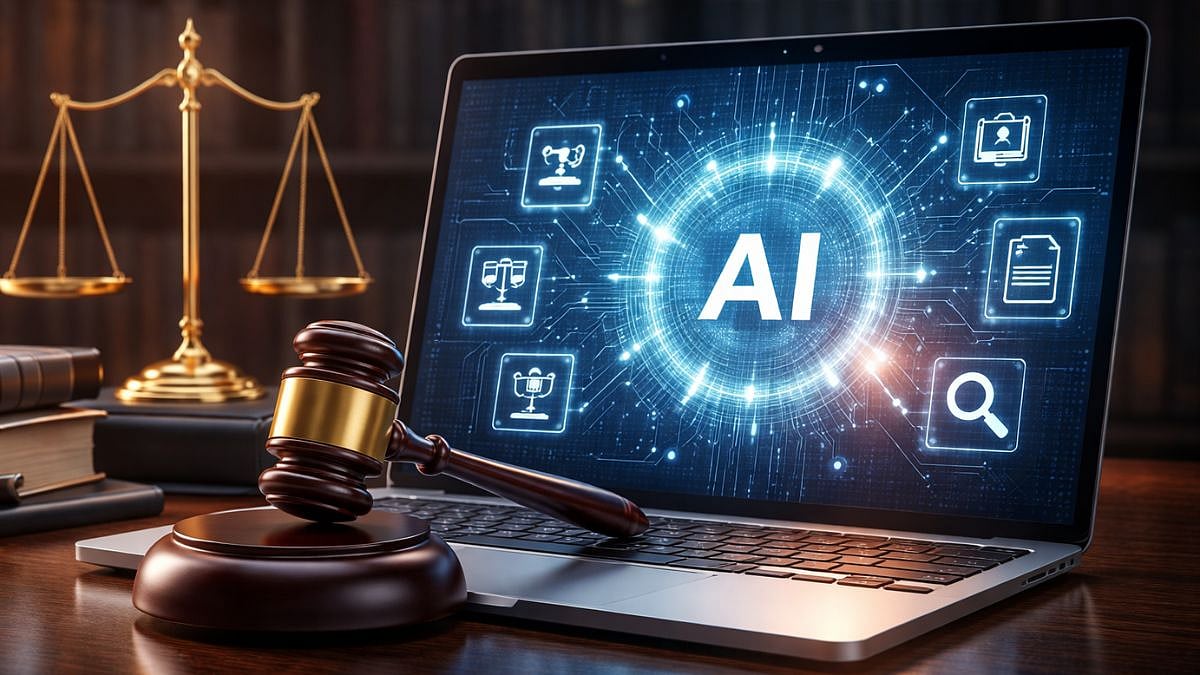
The Supreme Court of India has asked the Centre to consider a petition seeking binding guidelines on the use of Artificial Intelligence (AI) systems in public welfare, policing, surveillance, and content regulation.
The petition, filed by advocate Narendra Kumar Goswami, raised concerns over the lack of a comprehensive statutory framework governing the use of AI by government authorities. The plea sought a direction to the Centre to constitute a high-powered expert committee to frame guidelines on AI ethics, transparency, and safeguards.
A three-judge Bench, comprising Chief Justice of India Surya Kant and Justices Joymalya Bagchi and V Mohana, heard the petition and noted that the issue falls within the policy domain. The Bench observed that the issues raised in the petition required the formulation of an appropriate policy or regulation.
The petitioner sought transparency and safeguards in the use of AI systems, particularly in areas that can affect people's access to food, health benefits, wages, pensions, scholarships, and welfare subsidies. The plea also sought a direction to the Centre to file an affidavit disclosing all existing and proposed high-risk AI systems used by Union ministries or agencies.
The court disposed of the petition at this stage without expressing any opinion on its merits and asked the authorities to consider the suggestions and take appropriate measures. The petitioner was also given the liberty to supplement his representation.
The use of AI in government systems has raised concerns over transparency, accountability, and human oversight. The petition highlights the need for binding guidelines on AI ethics, mandatory algorithmic impact assessments, and bias audits. The issue of regulating AI in government systems is complex and requires careful consideration of technological, social, and economic factors.
The Supreme Court's decision to ask the Centre to consider the petition is a significant step towards addressing the concerns raised by the use of AI in public welfare. The Centre will now have to review the guidelines and take appropriate measures to ensure that the use of AI systems is transparent, accountable, and safe.
The issue of AI regulation is not unique to India, and many countries are grappling with similar challenges. The use of AI in government systems has the potential to improve efficiency, accuracy, and decision-making, but it also raises concerns over bias, transparency, and human oversight.
In conclusion, the Supreme Court's decision to ask the Centre to consider the petition on AI ethics guidelines is a significant step towards addressing the concerns raised by the use of AI in public welfare. The Centre will now have to review the guidelines and take appropriate measures to ensure that the use of AI systems is transparent, accountable, and safe.
The petition has highlighted the need for a comprehensive statutory framework governing the use of AI by government authorities. The Centre will have to consider the suggestions made in the petition and take appropriate measures to ensure that the use of AI systems is regulated in a way that protects the rights and interests of citizens.
The issue of AI regulation is complex and requires careful consideration of technological, social, and economic factors. The Supreme Court's decision is a significant step towards addressing the concerns raised by the use of AI in public welfare, and it is hoped that the Centre will take appropriate measures to ensure that the use of AI systems is transparent, accountable, and safe.
Frequently asked questions
What is the Supreme Court's decision on AI ethics guidelines?
The Supreme Court has asked the Centre to consider a petition seeking binding guidelines on the use of Artificial Intelligence (AI) systems in public welfare, policing, surveillance, and content regulation.
What are the concerns raised by the use of AI in public welfare?
The use of AI in government systems has raised concerns over transparency, accountability, and human oversight, particularly in areas that can affect people's access to food, health benefits, wages, pensions, scholarships, and welfare subsidies.