Modi Calls for Global Governance Reset at BRICS Summit
PM Modi pushes for Global South power, UN reforms, and BRICS dialogue continuity.
'%3E%3Crect%20width%3D'96'%20height%3D'96'%20fill%3D'%234A235A'%2F%3E%3Ccircle%20cx%3D'30'%20cy%3D'24'%20r%3D'44'%20fill%3D'%23fff'%20opacity%3D'.12'%2F%3E%3Ccircle%20cx%3D'60'%20cy%3D'74'%20r%3D'40'%20fill%3D'%23000'%20opacity%3D'.10'%2F%3E%3C%2Fg%3E%3Cg%20fill%3D'none'%20stroke%3D'%23fff'%20stroke-width%3D'3'%3E%3Ccircle%20cx%3D'48'%20cy%3D'48'%20r%3D'16'%2F%3E%3Cellipse%20cx%3D'48'%20cy%3D'48'%20rx%3D'6.5'%20ry%3D'16'%2F%3E%3Cline%20x1%3D'32'%20y1%3D'42'%20x2%3D'64'%20y2%3D'42'%2F%3E%3Cline%20x1%3D'32'%20y1%3D'54'%20x2%3D'64'%20y2%3D'54'%2F%3E%3C%2Fg%3E%3C%2Fsvg%3E)
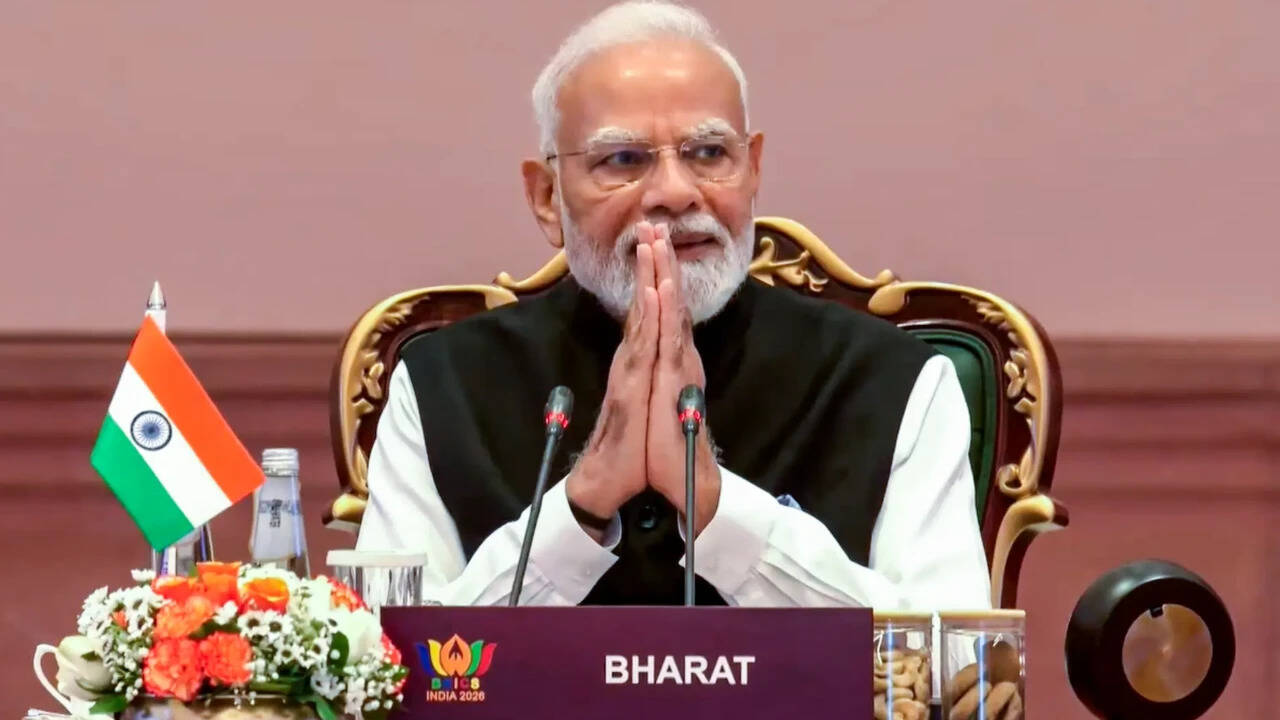
Prime Minister Narendra Modi has emphasized the need for a global governance reset, calling for increased decision-making power for the Global South.
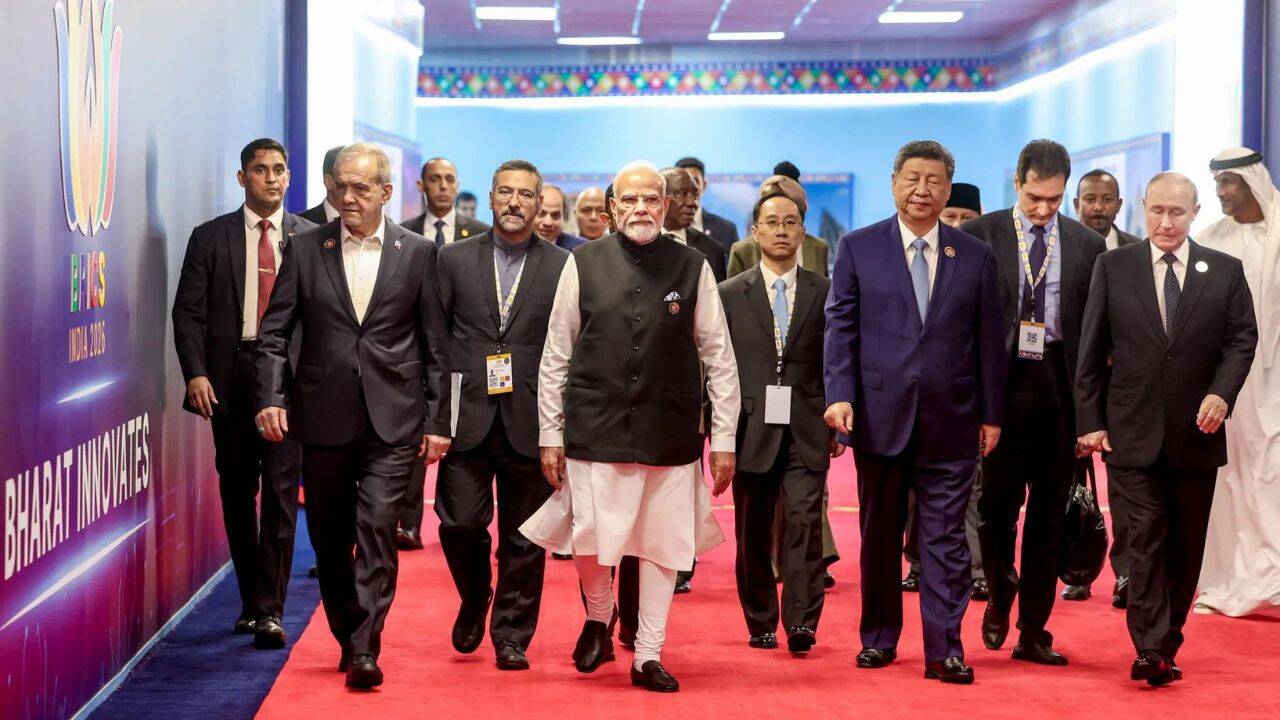
This statement was made during the recent BRICS summit, where Modi presented a comprehensive roadmap for future BRICS reforms. The Prime Minister highlighted the necessity of urgent changes to institutions like the UN Security Council, which have been criticized for their outdated representation.
Modi also proposed establishing a BRICS continuity mechanism to ensure ongoing dialogues and cooperation among member nations. This move is seen as an attempt to strengthen the alliance and promote the interests of the Global South.
The BRICS summit brings together major emerging economies, including Brazil, Russia, India, China, and South Africa. The grouping has been increasingly influential in global affairs, with its members accounting for a significant portion of the world's population and economic output.
Modi's call for a global governance reset is not surprising, given the growing dissatisfaction among emerging economies with the current international order. The Global South has long felt marginalized in global decision-making, with institutions like the UN Security Council dominated by Western powers.
The proposed BRICS continuity mechanism is also significant, as it would enable member nations to maintain regular dialogue and cooperation on key issues. This could help to promote greater coordination and cooperation among emerging economies, potentially challenging the dominance of Western powers in global affairs.
The UN Security Council has been criticized for its lack of representation from emerging economies. The council's permanent members, including the United States, China, France, Russia, and the United Kingdom, have veto power over key decisions. This has led to accusations that the council is undemocratic and unrepresentative of the global community.
Modi's push for UN reforms is likely to resonate with many emerging economies, which feel that their interests are not being adequately represented in global institutions. The success of these reforms will depend on the ability of BRICS nations to build a consensus and push for change.
In the context of global politics, Modi's statement is significant, as it reflects the growing assertiveness of emerging economies. The Global South is increasingly demanding a greater say in global affairs, and the BRICS summit provides a platform for these nations to articulate their interests and promote cooperation.
The implications of Modi's call for a global governance reset are far-reaching. If successful, it could lead to a more equitable and representative global order, with emerging economies playing a greater role in decision-making. However, the path to reform will be challenging, requiring cooperation and consensus among diverse nations and interests.
In conclusion, Modi's statement at the BRICS summit reflects the growing demand for a more inclusive and representative global order. The success of these reforms will depend on the ability of emerging economies to build a consensus and push for change, potentially leading to a more equitable distribution of power in global affairs.
Frequently asked questions
What is the main goal of PM Modi's global governance reset?
The main goal is to increase the decision-making power of the Global South in global institutions.
What is the proposed BRICS continuity mechanism?
The proposed mechanism aims to ensure ongoing dialogues and cooperation among BRICS member nations.