Amit Shah Pushes for Decolonising India's Knowledge
Amit Shah emphasizes authentic decolonization, preserving India's knowledge traditions and promoting Indology.
'%3E%3Crect%20width%3D'96'%20height%3D'96'%20fill%3D'%231A5276'%2F%3E%3Ccircle%20cx%3D'30'%20cy%3D'24'%20r%3D'44'%20fill%3D'%23fff'%20opacity%3D'.12'%2F%3E%3Ccircle%20cx%3D'60'%20cy%3D'74'%20r%3D'40'%20fill%3D'%23000'%20opacity%3D'.10'%2F%3E%3C%2Fg%3E%3Cg%20fill%3D'%23fff'%3E%3Cpath%20d%3D'M31%2041%20L48%2031%20L65%2041%20Z'%2F%3E%3Crect%20x%3D'33'%20y%3D'43'%20width%3D'4'%20height%3D'17'%2F%3E%3Crect%20x%3D'41'%20y%3D'43'%20width%3D'4'%20height%3D'17'%2F%3E%3Crect%20x%3D'51'%20y%3D'43'%20width%3D'4'%20height%3D'17'%2F%3E%3Crect%20x%3D'59'%20y%3D'43'%20width%3D'4'%20height%3D'17'%2F%3E%3Crect%20x%3D'30'%20y%3D'62'%20width%3D'36'%20height%3D'4'%20rx%3D'1'%2F%3E%3C%2Fg%3E%3C%2Fsvg%3E)
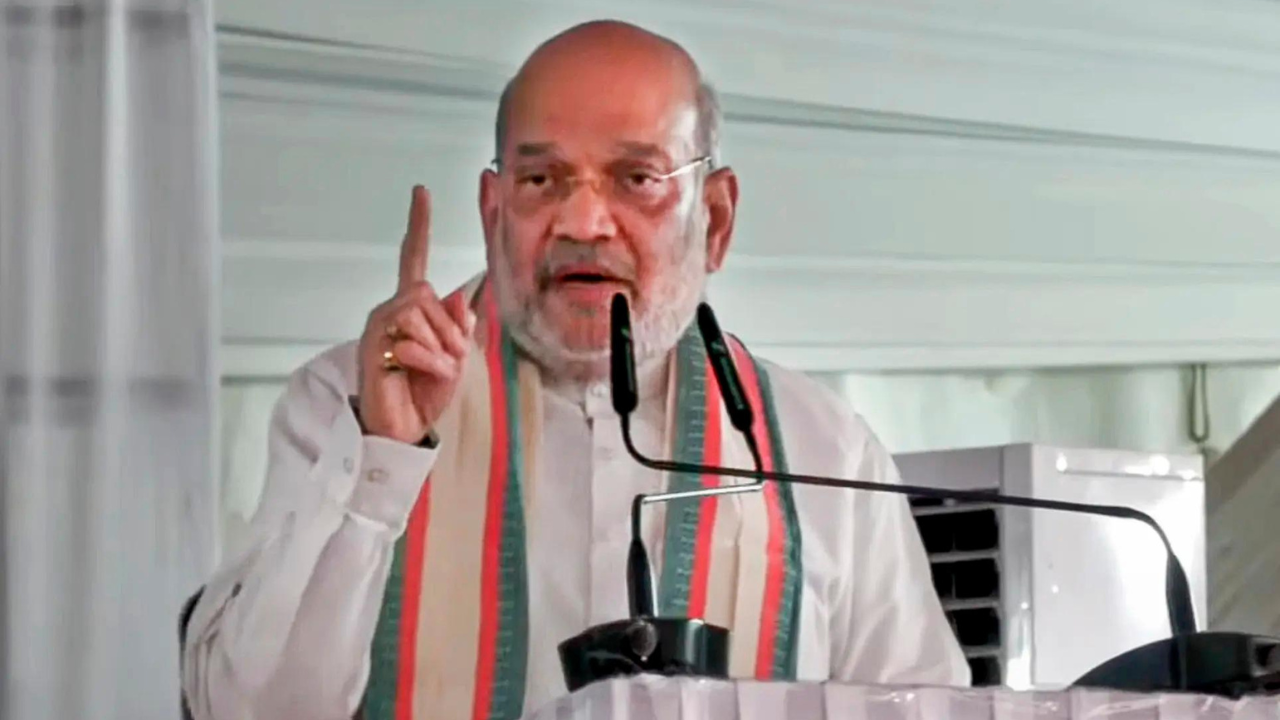
Union Home Minister Amit Shah has stressed the need to decolonize India's history and knowledge in an authentic manner. According to Shah, true knowledge should be free from any ideological constraints, allowing it to be presented in its purest form.
Shah highlighted the importance of preserving India's rich knowledge traditions and manuscripts, which are a vital part of the country's cultural heritage. He proposed creating a wider network for sharing heritage collections across India, which would facilitate greater access to these valuable resources.
The minister also urged the use of Indology, the study of India's history, culture, and traditions, for the welfare of the nation and the world. By promoting Indology, Shah aims to showcase India's rich cultural heritage and contribute to the global knowledge pool.
India has a long and complex history, with various colonial and foreign influences shaping its knowledge traditions. The process of decolonization is crucial in reclaiming and redefining India's cultural identity. By authenticating and preserving its knowledge traditions, India can reclaim its rightful place in the global cultural landscape.
The preservation of manuscripts and heritage collections is a critical aspect of decolonizing knowledge. These resources provide valuable insights into India's past, shedding light on its cultural, scientific, and philosophical achievements. By creating a network for sharing these collections, India can promote greater understanding and appreciation of its rich cultural heritage.
Amit Shah's emphasis on decolonizing knowledge is part of a broader effort to promote India's cultural and intellectual heritage. The government has launched various initiatives aimed at preserving and promoting India's knowledge traditions, including the digitization of manuscripts and the creation of cultural institutions.
The use of Indology for the nation's and world's welfare is a significant aspect of Shah's proposal. By promoting the study of India's history, culture, and traditions, India can contribute to the global knowledge pool and promote greater understanding and cooperation among nations.
In conclusion, Amit Shah's push for decolonizing India's knowledge is a significant step towards reclaiming and redefining the country's cultural identity. By preserving its knowledge traditions, promoting Indology, and creating a network for sharing heritage collections, India can promote greater understanding and appreciation of its rich cultural heritage, contributing to the nation's and world's welfare.
Frequently asked questions
What does decolonizing India's knowledge mean?
Decolonizing India's knowledge means reclaiming and redefining India's cultural identity by authenticating and preserving its knowledge traditions, free from any ideological constraints.
Why is preserving India's knowledge traditions important?
Preserving India's knowledge traditions is important because it allows the country to reclaim its cultural heritage and contribute to the global knowledge pool, promoting greater understanding and appreciation of its rich cultural heritage.