Mumbai Cab Drivers Challenge Marathi Rule
Cab drivers protest language requirement, feel like outsiders.
'%3E%3Crect%20width%3D'96'%20height%3D'96'%20fill%3D'%23B3261E'%2F%3E%3Ccircle%20cx%3D'30'%20cy%3D'24'%20r%3D'44'%20fill%3D'%23fff'%20opacity%3D'.12'%2F%3E%3Ccircle%20cx%3D'60'%20cy%3D'74'%20r%3D'40'%20fill%3D'%23000'%20opacity%3D'.10'%2F%3E%3C%2Fg%3E%3Cg%20fill%3D'%23fff'%3E%3Crect%20x%3D'29'%20y%3D'49'%20width%3D'8'%20height%3D'19'%20rx%3D'1'%2F%3E%3Crect%20x%3D'39'%20y%3D'40'%20width%3D'9'%20height%3D'28'%20rx%3D'1'%2F%3E%3Crect%20x%3D'50'%20y%3D'45'%20width%3D'8'%20height%3D'23'%20rx%3D'1'%2F%3E%3Crect%20x%3D'60'%20y%3D'53'%20width%3D'7'%20height%3D'15'%20rx%3D'1'%2F%3E%3Crect%20x%3D'41'%20y%3D'34'%20width%3D'5'%20height%3D'6'%2F%3E%3C%2Fg%3E%3C%2Fsvg%3E)
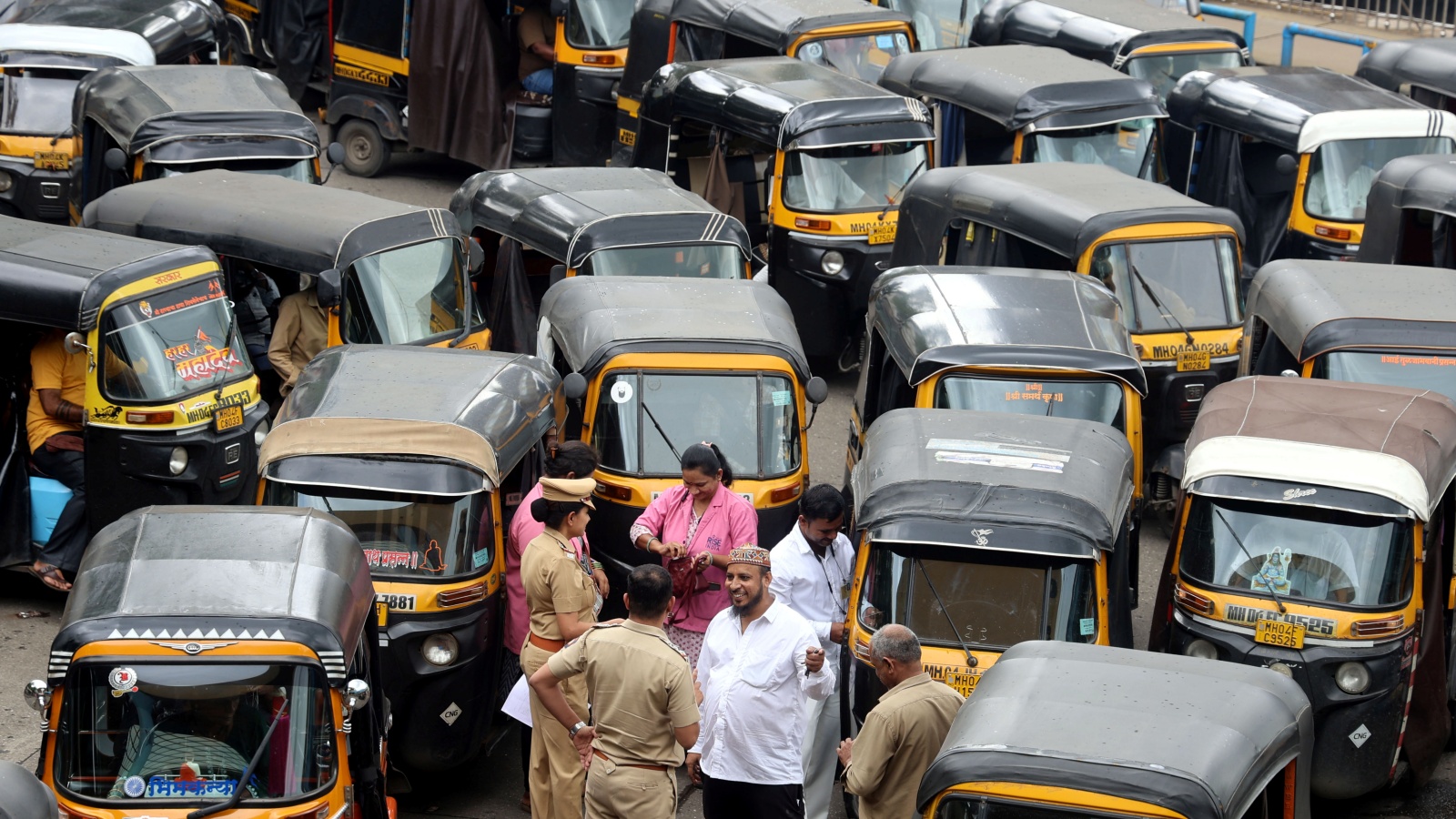
Mumbai cab drivers are challenging the rule that requires them to know Marathi to operate in the city. The drivers, who come from various parts of the country, feel that this rule makes them feel like outsiders in their own country.
The rule, which was introduced by the Maharashtra government, states that all cab drivers must have a basic knowledge of Marathi to be eligible for a permit. However, many drivers who have been operating in the city for years without any issues are now being forced to learn the language or face penalties.
The cab drivers have argued that the rule is unfair and discriminatory, as it targets drivers who are not from Maharashtra. They have also pointed out that many passengers in Mumbai do not speak Marathi, and that the rule does not take into account the diversity of the city.
The issue has sparked a debate about the role of language in defining identity and belonging. While some argue that knowing the local language is essential for integrating into the community, others see it as an attempt to impose a particular culture on outsiders.
The Maharashtra government has defended the rule, saying that it is necessary to ensure that cab drivers can communicate effectively with passengers and provide better services. However, the drivers have vowed to continue their protest until the rule is revoked.
The protest has also highlighted the struggles faced by migrant workers in Mumbai, who often face discrimination and prejudice. The drivers have said that they feel like they are being treated as second-class citizens, and that the rule is just another example of the bias they face.
The issue is likely to continue to be a point of contention in the city, with the cab drivers and the government locked in a stalemate. As the debate rages on, it remains to be seen whether the rule will be revoked or modified to take into account the concerns of the drivers.
In the meantime, the cab drivers will continue to operate without the required knowledge of Marathi, risking penalties and fines. However, they say that they are willing to take that risk in order to stand up for their rights and challenge a rule that they see as unfair.
The controversy has also raised questions about the impact of language rules on the livelihoods of migrant workers. With many drivers relying on their jobs to support their families, the rule has the potential to cause significant hardship and disruption.
As the situation continues to unfold, it is clear that the issue of language and identity in Mumbai is complex and multifaceted. While the government may see the rule as a way to promote the local language and culture, the cab drivers see it as an attack on their rights and freedoms.
In conclusion, the protest by Mumbai cab drivers against the Marathi rule highlights the tensions between language, identity, and belonging in the city. As the debate continues, it is essential to consider the perspectives of all stakeholders and to find a solution that balances the needs of the community with the rights of migrant workers.
The Maharashtra government needs to reconsider the rule and find a more inclusive solution that takes into account the diversity of the city. The cab drivers, on the other hand, need to continue to fight for their rights and challenge the rule in a peaceful and democratic manner.
Ultimately, the issue of language and identity in Mumbai is a complex one that requires a nuanced and thoughtful approach. By listening to the concerns of all stakeholders and working towards a solution that promotes inclusivity and diversity, the city can move forward in a positive and constructive way.
Frequently asked questions
What is the Marathi rule for cab drivers in Mumbai?
The rule requires cab drivers to have a basic knowledge of Marathi to be eligible for a permit.
Why are cab drivers protesting the Marathi rule?
Cab drivers are protesting because they feel the rule is unfair and discriminatory, and makes them feel like outsiders in their own country.