IMC Seminar Discusses Labour Code Wage Reforms
IMC Chamber of Commerce hosts seminar on wage reforms and taxation. Experts discuss implications of revised wage definition.
'%3E%3Crect%20width%3D'96'%20height%3D'96'%20fill%3D'%23B3261E'%2F%3E%3Ccircle%20cx%3D'30'%20cy%3D'24'%20r%3D'44'%20fill%3D'%23fff'%20opacity%3D'.12'%2F%3E%3Ccircle%20cx%3D'60'%20cy%3D'74'%20r%3D'40'%20fill%3D'%23000'%20opacity%3D'.10'%2F%3E%3C%2Fg%3E%3Cg%20fill%3D'%23fff'%3E%3Crect%20x%3D'29'%20y%3D'49'%20width%3D'8'%20height%3D'19'%20rx%3D'1'%2F%3E%3Crect%20x%3D'39'%20y%3D'40'%20width%3D'9'%20height%3D'28'%20rx%3D'1'%2F%3E%3Crect%20x%3D'50'%20y%3D'45'%20width%3D'8'%20height%3D'23'%20rx%3D'1'%2F%3E%3Crect%20x%3D'60'%20y%3D'53'%20width%3D'7'%20height%3D'15'%20rx%3D'1'%2F%3E%3Crect%20x%3D'41'%20y%3D'34'%20width%3D'5'%20height%3D'6'%2F%3E%3C%2Fg%3E%3C%2Fsvg%3E)
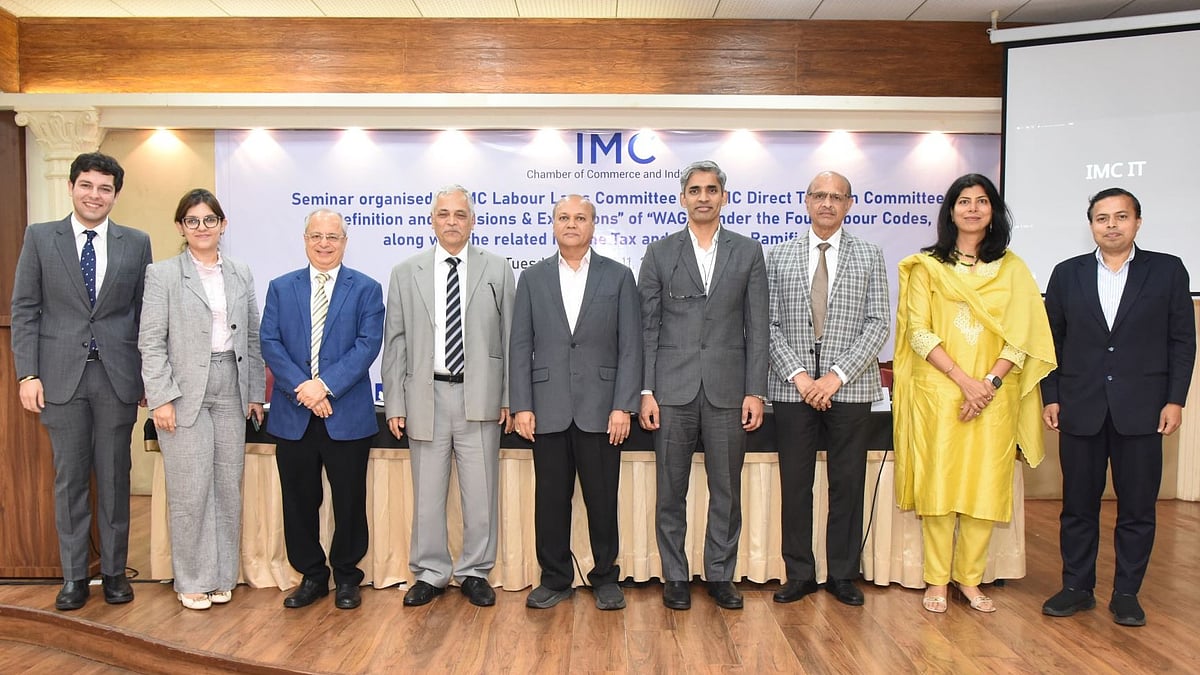
The IMC Chamber of Commerce recently organised a seminar to discuss the implications of the revised definition of 'wages' under the four Labour Codes. The seminar, titled 'Definition and Inclusions & Exclusions of 'WAGE' under the Four Labour Codes, along with the related Income Tax and Other Tax Ramifications', brought together experts to deliberate on the impact of the revised wage structure on employers, employees, taxation, and compliance.
The discussions highlighted the key aspects of the proposed framework, including the classification of employees based on the nature of duties performed, minimum wages, employee benefits, pension provisions, gratuity, and equal pay. The seminar also examined the need for organisations to review and restructure their compensation policies to ensure compliance and avoid potential financial liabilities.
The revised definition of 'wages' under the four Labour Codes has significant implications for payroll, employee benefits, and statutory compliance. The seminar discussed the tax and accounting implications arising from changes in wage structures, particularly with respect to gratuity and employee benefit costs. Experts explored the tax treatment of funded and unfunded gratuity schemes, deductibility under the Income-tax Act, accounting treatment of gratuity liabilities, contribution limits, judicial precedents, and financial reporting requirements.
The seminar provided a platform for participants to discuss the challenges and opportunities arising from the implementation of the four Labour Codes. The discussions were insightful, and the experts shared their knowledge and experience on the subject. The seminar was well-attended, and the participants appreciated the opportunity to engage with the experts and clarify their doubts.
The four Labour Codes, which include the Code on Wages, the Code on Social Security, the Code on Industrial Relations, and the Code on Occupational Safety, Health and Working Conditions, aim to simplify and consolidate the existing labour laws. The revised definition of 'wages' is a significant aspect of the Codes, and its implementation is expected to have a far-reaching impact on employers, employees, and the economy as a whole.
In the context of the Indian economy, the implementation of the four Labour Codes is a significant step towards labour law reform. The Codes aim to promote ease of doing business, improve worker welfare, and enhance compliance. The seminar organised by the IMC Chamber of Commerce is a timely initiative, as it provides a platform for stakeholders to discuss the implications of the revised definition of 'wages' and the related tax ramifications.
The seminar concluded with a call to action, urging organisations to review and restructure their compensation policies to ensure compliance with the four Labour Codes. The experts emphasized the need for organisations to be proactive and take steps to mitigate potential financial liabilities arising from non-compliance. The seminar was a success, and the participants left with a better understanding of the implications of the revised definition of 'wages' and the related tax ramifications.
In terms of significance, the seminar highlights the importance of labour law reform in India. The implementation of the four Labour Codes is expected to have a positive impact on the economy, promoting ease of doing business and improving worker welfare. The seminar organised by the IMC Chamber of Commerce is a step in the right direction, as it provides a platform for stakeholders to discuss the implications of the revised definition of 'wages' and the related tax ramifications.
Overall, the seminar was a valuable initiative, providing insights and expertise on the implications of the revised definition of 'wages' under the four Labour Codes. The discussions were informative, and the participants appreciated the opportunity to engage with the experts and clarify their doubts. The seminar is a testament to the importance of labour law reform in India and the need for organisations to be proactive in ensuring compliance with the four Labour Codes.
The implementation of the four Labour Codes is a significant development in the Indian labour law landscape. The revised definition of 'wages' is a critical aspect of the Codes, and its implementation is expected to have a far-reaching impact on employers, employees, and the economy as a whole. The seminar organised by the IMC Chamber of Commerce is a timely initiative, providing a platform for stakeholders to discuss the implications of the revised definition of 'wages' and the related tax ramifications.
In conclusion, the seminar on 'Definition and Inclusions & Exclusions of 'WAGE' under the Four Labour Codes, along with the related Income Tax and Other Tax Ramifications' was a success, providing valuable insights and expertise on the implications of the revised definition of 'wages'. The discussions were informative, and the participants appreciated the opportunity to engage with the experts and clarify their doubts. The seminar highlights the importance of labour law reform in India and the need for organisations to be proactive in ensuring compliance with the four Labour Codes.
The seminar's significance extends beyond the event itself, as it highlights the need for ongoing discussion and debate on labour law reform in India. The implementation of the four Labour Codes is a significant step towards promoting ease of doing business, improving worker welfare, and enhancing compliance. The seminar organised by the IMC Chamber of Commerce is a testament to the importance of labour law reform in India and the need for organisations to be proactive in ensuring compliance with the four Labour Codes.
In the final analysis, the seminar on 'Definition and Inclusions & Exclusions of 'WAGE' under the Four Labour Codes, along with the related Income Tax and Other Tax Ramifications' was a valuable initiative, providing insights and expertise on the implications of the revised definition of 'wages'. The discussions were informative, and the participants appreciated the opportunity to engage with the experts and clarify their doubts. The seminar highlights the importance of labour law reform in India and the need for organisations to be proactive in ensuring compliance with the four Labour Codes.
What it means for Mumbai is that the implementation of the four Labour Codes will have a significant impact on the city's economy and workforce. The revised definition of 'wages' will affect employers and employees in Mumbai, and organisations will need to review and restructure their compensation policies to ensure compliance. The seminar organised by the IMC Chamber of Commerce is a timely initiative, providing a platform for stakeholders to discuss the implications of the revised definition of 'wages' and the related tax ramifications.
In terms of the broader implications, the implementation of the four Labour Codes is expected to have a positive impact on the Indian economy, promoting ease of doing business and improving worker welfare. The seminar organised by the IMC Chamber of Commerce is a step in the right direction, as it provides a platform for stakeholders to discuss the implications of the revised definition of 'wages' and the related tax ramifications.
The seminar's impact will be felt in the months and years to come, as organisations in Mumbai and across India work to implement the four Labour Codes. The revised definition of 'wages' will require organisations to review and restructure their compensation policies, and the seminar provided valuable insights and expertise on the implications of this change.
In conclusion, the seminar on 'Definition and Inclusions & Exclusions of 'WAGE' under the Four Labour Codes, along with the related Income Tax and Other Tax Ramifications' was a success, providing valuable insights and expertise on the implications of the revised definition of 'wages'. The discussions were informative, and the participants appreciated the opportunity to engage with the experts and clarify their doubts. The seminar highlights the importance of labour law reform in India and the need for organisations to be proactive in ensuring compliance with the four Labour Codes.
Frequently asked questions
What is the revised definition of 'wages' under the Labour Codes?
The revised definition of 'wages' under the Labour Codes includes all remuneration paid to an employee, including basic pay, allowances, and benefits.
What are the tax ramifications of the revised definition of 'wages'?
The tax ramifications of the revised definition of 'wages' include changes to the tax treatment of gratuity and employee benefit costs, as well as the deductibility of these costs under the Income-tax Act.