Tarun Tejpal Convicted in 2013 Sexual Assault Case
Tarun Tejpal convicted, seeks leniency. Bombay High Court overturns acquittal.
'%3E%3Crect%20width%3D'96'%20height%3D'96'%20fill%3D'%23B3261E'%2F%3E%3Ccircle%20cx%3D'30'%20cy%3D'24'%20r%3D'44'%20fill%3D'%23fff'%20opacity%3D'.12'%2F%3E%3Ccircle%20cx%3D'60'%20cy%3D'74'%20r%3D'40'%20fill%3D'%23000'%20opacity%3D'.10'%2F%3E%3C%2Fg%3E%3Cg%20fill%3D'%23fff'%3E%3Crect%20x%3D'29'%20y%3D'49'%20width%3D'8'%20height%3D'19'%20rx%3D'1'%2F%3E%3Crect%20x%3D'39'%20y%3D'40'%20width%3D'9'%20height%3D'28'%20rx%3D'1'%2F%3E%3Crect%20x%3D'50'%20y%3D'45'%20width%3D'8'%20height%3D'23'%20rx%3D'1'%2F%3E%3Crect%20x%3D'60'%20y%3D'53'%20width%3D'7'%20height%3D'15'%20rx%3D'1'%2F%3E%3Crect%20x%3D'41'%20y%3D'34'%20width%3D'5'%20height%3D'6'%2F%3E%3C%2Fg%3E%3C%2Fsvg%3E)
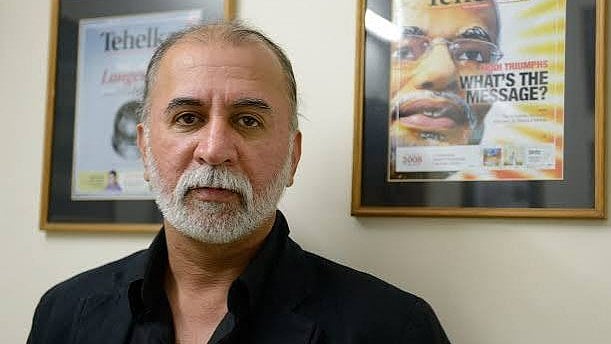
Tarun Tejpal, the former editor-in-chief of Tehelka, was convicted in the 2013 sexual assault case involving a junior colleague by the Goa bench of the Bombay High Court on Thursday.
The conviction comes after a division bench comprising Justice Neela Gokhale and Justice Amit Jamsandekar overturned a 2021 sessions court judgment that had acquitted Tejpal. He was found guilty under Sections 376(2)(f), 376(2)(k), 354A and 354B of the Indian Penal Code.
Tejpal, 62, personally addressed the court, considering himself 'a victim' and urging the bench to adopt a compassionate approach. He requested leniency, citing his wife and family.
Senior advocate Aabad Ponda, appearing for Tejpal, argued that the alleged offence took place over 13 years ago and emphasized that no other criminal case had been registered against his client. Ponda also sought an eight-week stay on the conviction to allow Tejpal to approach the Supreme Court.
However, Solicitor General Tushar Mehta, representing the Goa government, opposed the plea, arguing that the case warranted a strong judicial message. He stressed that the complainant had repeatedly refused Tejpal's advances and that 'No means no'.
The case stems from allegations made by a junior colleague who accused Tejpal of sexually assaulting her during an event in Goa in November 2013. Prosecutors argued that the trial court had overlooked key evidence, including an email in which Tejpal apologised for what he described as a 'shameful lapse of judgment'.
The High Court has adjourned the matter for further hearing on the sentence. The court separately heard arguments on the quantum of punishment.
The investigation in the case was conducted by Goa Police's Sunita Sawant, who said that the case investigation was conducted properly and all evidence was presented before the court.
The conviction of Tarun Tejpal is a significant development in the case, which has been ongoing for over 13 years. The case has sparked a wider conversation about sexual assault and consent in India.
The verdict is expected to have implications for the ongoing debate about sexual violence and the need for stronger laws and enforcement to protect victims. The case will now proceed to the sentencing phase, where the court will determine the appropriate punishment for Tejpal.
In conclusion, the conviction of Tarun Tejpal is a major development in the 2013 sexual assault case, and the court's decision will have significant implications for the ongoing conversation about sexual violence in India.
Frequently asked questions
What was Tarun Tejpal convicted of?
Tarun Tejpal was convicted of sexual assault under Sections 376(2)(f), 376(2)(k), 354A and 354B of the Indian Penal Code.
What is the next step in the case?
The case will now proceed to the sentencing phase, where the court will determine the appropriate punishment for Tejpal.