Solar Telescope Reveals Plasma Vortices on Sun
New discovery on Sun's surface, plasma vortices found, Sun's activity
'%3E%3Crect%20width%3D'96'%20height%3D'96'%20fill%3D'%23B3261E'%2F%3E%3Ccircle%20cx%3D'30'%20cy%3D'24'%20r%3D'44'%20fill%3D'%23fff'%20opacity%3D'.12'%2F%3E%3Ccircle%20cx%3D'60'%20cy%3D'74'%20r%3D'40'%20fill%3D'%23000'%20opacity%3D'.10'%2F%3E%3C%2Fg%3E%3Cg%20fill%3D'%23fff'%3E%3Crect%20x%3D'29'%20y%3D'49'%20width%3D'8'%20height%3D'19'%20rx%3D'1'%2F%3E%3Crect%20x%3D'39'%20y%3D'40'%20width%3D'9'%20height%3D'28'%20rx%3D'1'%2F%3E%3Crect%20x%3D'50'%20y%3D'45'%20width%3D'8'%20height%3D'23'%20rx%3D'1'%2F%3E%3Crect%20x%3D'60'%20y%3D'53'%20width%3D'7'%20height%3D'15'%20rx%3D'1'%2F%3E%3Crect%20x%3D'41'%20y%3D'34'%20width%3D'5'%20height%3D'6'%2F%3E%3C%2Fg%3E%3C%2Fsvg%3E)
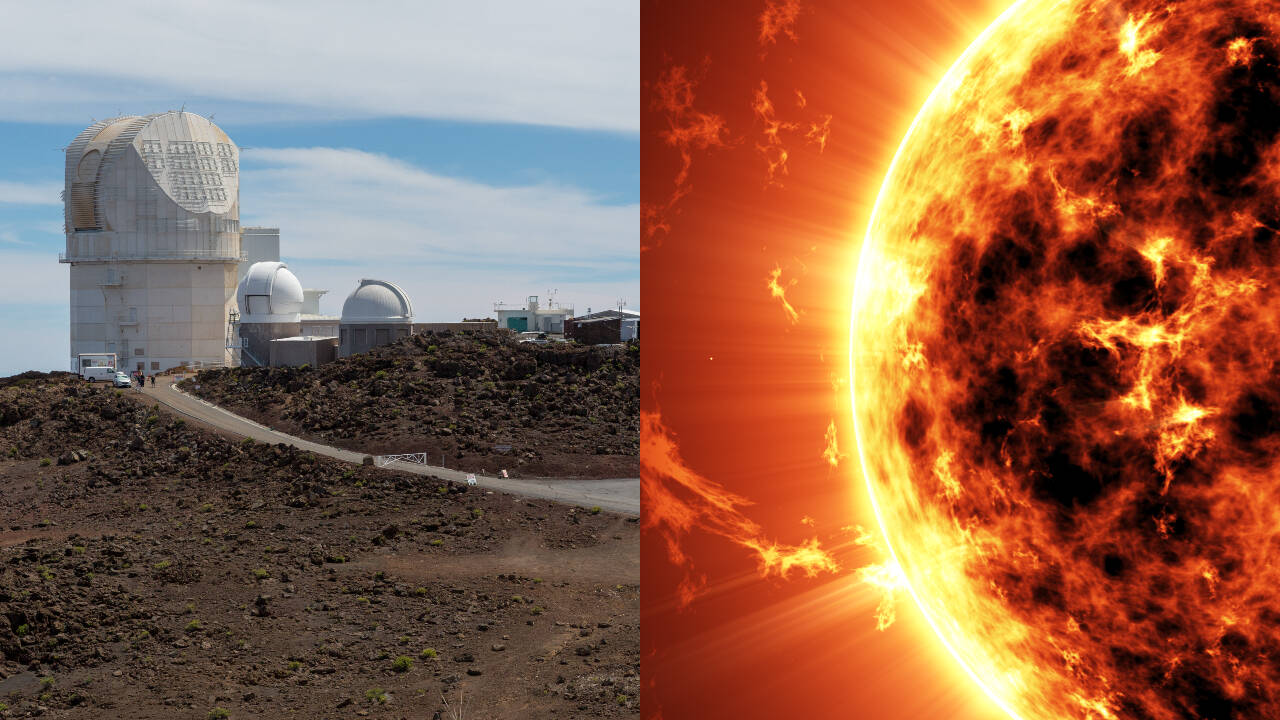
The world's largest solar telescope has made a groundbreaking discovery, revealing plasma vortices across the surface of the Sun. This finding provides new insights into the Sun's activity and its impact on the solar system.
The solar telescope, a state-of-the-art facility, has been observing the Sun's surface in unprecedented detail. By using advanced imaging techniques, scientists have been able to study the Sun's magnetic field and plasma flows. The discovery of plasma vortices is a significant breakthrough, as it sheds light on the complex dynamics of the Sun's surface.
Plasma vortices are rotating masses of hot, ionized gas that are thought to play a key role in the Sun's magnetic field and energy output. The vortices are formed when plasma flows interact with the Sun's magnetic field, creating complex patterns of rotation and turbulence. By studying these vortices, scientists can gain a better understanding of the Sun's internal dynamics and its impact on the solar system.
The discovery of plasma vortices has significant implications for our understanding of the Sun's activity and its effects on the Earth's magnetic field and climate. The Sun's energy output and magnetic field have a profound impact on the Earth's atmosphere and climate, and understanding the mechanisms that drive these processes is crucial for predicting and mitigating the effects of space weather.
The world's largest solar telescope is a powerful tool for studying the Sun and its activity. With its advanced imaging capabilities and sophisticated instrumentation, it is able to provide unprecedented insights into the Sun's surface and internal dynamics. The discovery of plasma vortices is just the beginning, and scientists are eager to continue exploring the Sun's secrets and unlocking its mysteries.
The study of the Sun and its activity is an ongoing area of research, with scientists continually seeking to improve our understanding of the Sun's internal dynamics and its impact on the solar system. The discovery of plasma vortices is a significant step forward in this endeavor, and it is likely to have a major impact on our understanding of the Sun and its role in the solar system.
In the coming years, scientists will continue to study the Sun and its activity, using advanced telescopes and instrumentation to gain a deeper understanding of the Sun's internal dynamics and its impact on the solar system. The discovery of plasma vortices is an exciting development, and it is likely to lead to new breakthroughs and discoveries in the field of solar physics.
The world's largest solar telescope has opened up new avenues for research and discovery, and its findings are likely to have a major impact on our understanding of the Sun and its role in the solar system. As scientists continue to explore the Sun's secrets, we can expect to learn more about the complex dynamics of the Sun's surface and its impact on the solar system.
The discovery of plasma vortices is a significant breakthrough, and it is likely to lead to new insights and discoveries in the field of solar physics. The world's largest solar telescope is a powerful tool for studying the Sun, and its findings are likely to have a major impact on our understanding of the Sun and its role in the solar system.
Frequently asked questions
What is the significance of plasma vortices on the Sun's surface?
Plasma vortices play a key role in the Sun's magnetic field and energy output, and understanding them can help scientists predict and mitigate the effects of space weather.
What is the world's largest solar telescope used for?
The world's largest solar telescope is used to study the Sun's surface and internal dynamics, providing unprecedented insights into the Sun's activity and its impact on the solar system.