Vijay Shekhar Sharma Drives Mobile Payments in India
Paytm founder Vijay Shekhar Sharma pioneers mobile payments. India adopts digital transactions.
'%3E%3Crect%20width%3D'96'%20height%3D'96'%20fill%3D'%23B3261E'%2F%3E%3Ccircle%20cx%3D'30'%20cy%3D'24'%20r%3D'44'%20fill%3D'%23fff'%20opacity%3D'.12'%2F%3E%3Ccircle%20cx%3D'60'%20cy%3D'74'%20r%3D'40'%20fill%3D'%23000'%20opacity%3D'.10'%2F%3E%3C%2Fg%3E%3Cg%20fill%3D'%23fff'%3E%3Crect%20x%3D'29'%20y%3D'49'%20width%3D'8'%20height%3D'19'%20rx%3D'1'%2F%3E%3Crect%20x%3D'39'%20y%3D'40'%20width%3D'9'%20height%3D'28'%20rx%3D'1'%2F%3E%3Crect%20x%3D'50'%20y%3D'45'%20width%3D'8'%20height%3D'23'%20rx%3D'1'%2F%3E%3Crect%20x%3D'60'%20y%3D'53'%20width%3D'7'%20height%3D'15'%20rx%3D'1'%2F%3E%3Crect%20x%3D'41'%20y%3D'34'%20width%3D'5'%20height%3D'6'%2F%3E%3C%2Fg%3E%3C%2Fsvg%3E)
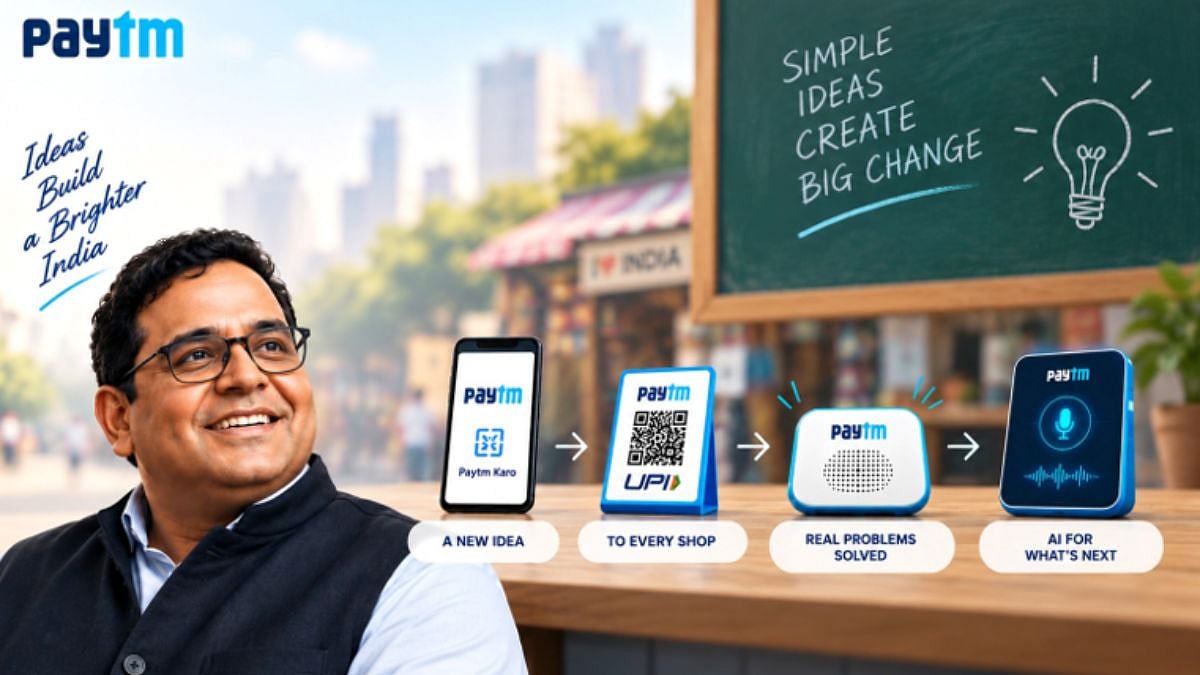
Vijay Shekhar Sharma, founder of Paytm, played a crucial role in popularizing mobile payments in India. Before the widespread adoption of digital transactions, Sharma's Paytm helped Indians understand that phones could be used to make payments, replacing cash. This shift in behavior was instrumental in making mobile payments a routine practice across various sectors, including shops, taxis, pharmacies, and petrol pumps.
The phrase 'Paytm karo' became synonymous with digital payments, and the company's efforts were later accelerated by the Government of India's push towards digitization and the creation of the Unified Payments Interface (UPI). Paytm built on this ecosystem by introducing QR-based payments, making it easier for merchants to accept digital transactions.
One of the key innovations by Paytm was the introduction of the Soundbox, a device that confirmed transactions through voice, eliminating the need for merchants to constantly check their phones. This simple yet effective solution became an integral part of everyday Indian retail and was later extended to card machines as well.
Paytm is now exploring the use of artificial intelligence (AI) to take its merchant devices to the next level. The company is designing AI-led devices that can provide businesses with transaction and business information through voice, including in Indian languages. Additionally, Paytm is leveraging AI across various aspects of its operations, including merchant onboarding, fraud prevention, collections, retention, and engineering.
The Paytm journey offers a valuable lesson in technology adoption, highlighting the importance of making complex technology simple and accessible to the masses. Sharma's efforts in driving mobile payments in India demonstrate that adoption happens when technology is made easy to use and understand.
The Government of India's initiatives, such as the creation of UPI, have also played a significant role in scaling up digital payments nationally. As India continues to evolve in its digital journey, the next chapter may be about leveraging AI to drive further adoption and innovation.
In conclusion, Vijay Shekhar Sharma's contributions to the mobile payments landscape in India have been instrumental in driving digital adoption. His efforts, combined with the government's initiatives, have paved the way for a more digital and cashless economy. As India celebrates Teachers' Day, the Paytm story serves as a reminder of the importance of making technology accessible and simple to use.
The impact of Paytm's innovations can be seen in the widespread adoption of digital payments across India. The company's focus on solving real-world problems has made it a leader in the digital payments space. As the company continues to explore new technologies, such as AI, it is likely to play an even more significant role in shaping India's digital landscape.
The success of Paytm also highlights the potential for Indian startups to drive innovation and adoption in the digital payments space. With the government's continued support and initiatives, such as UPI, India is likely to see further growth and innovation in the digital payments sector.
In the end, the Paytm story is a testament to the power of innovation and adoption in driving digital transformation. As India continues to evolve in its digital journey, it is likely that we will see more companies and entrepreneurs following in Paytm's footsteps, making complex technology simple and accessible to the masses.
The future of digital payments in India looks promising, with companies like Paytm continuing to innovate and drive adoption. With the use of AI and other emerging technologies, we can expect to see even more exciting developments in the digital payments space. As India celebrates Teachers' Day, the Paytm story serves as a reminder of the importance of innovation and adoption in driving digital transformation.
The Paytm journey is a shining example of how Indian entrepreneurs can drive innovation and adoption in the digital payments space. With the government's support and initiatives, such as UPI, India is likely to see further growth and innovation in the digital payments sector. As we look to the future, it is likely that we will see more companies and entrepreneurs following in Paytm's footsteps, making complex technology simple and accessible to the masses.
The impact of Paytm's innovations can be seen in the widespread adoption of digital payments across India. The company's focus on solving real-world problems has made it a leader in the digital payments space. As the company continues to explore new technologies, such as AI, it is likely to play an even more significant role in shaping India's digital landscape.
The success of Paytm also highlights the potential for Indian startups to drive innovation and adoption in the digital payments space. With the government's continued support and initiatives, such as UPI, India is likely to see further growth and innovation in the digital payments sector.
In the end, the Paytm story is a testament to the power of innovation and adoption in driving digital transformation. As India continues to evolve in its digital journey, it is likely that we will see more companies and entrepreneurs following in Paytm's footsteps, making complex technology simple and accessible to the masses.
The future of digital payments in India looks promising, with companies like Paytm continuing to innovate and drive adoption. With the use of AI and other emerging technologies, we can expect to see even more exciting developments in the digital payments space.
Frequently asked questions
Who is the founder of Paytm?
Vijay Shekhar Sharma is the founder of Paytm.
What is the significance of Paytm in India's digital payments landscape?
Paytm played a crucial role in popularizing mobile payments in India and making digital transactions a routine practice across various sectors.