Chandrakant Patil: Preserve JJ School of Art's Legacy
Minister visits exhibition, announces hostel plan, praises institution's contribution
'%3E%3Crect%20width%3D'96'%20height%3D'96'%20fill%3D'%23B3261E'%2F%3E%3Ccircle%20cx%3D'30'%20cy%3D'24'%20r%3D'44'%20fill%3D'%23fff'%20opacity%3D'.12'%2F%3E%3Ccircle%20cx%3D'60'%20cy%3D'74'%20r%3D'40'%20fill%3D'%23000'%20opacity%3D'.10'%2F%3E%3C%2Fg%3E%3Cg%20fill%3D'%23fff'%3E%3Crect%20x%3D'29'%20y%3D'49'%20width%3D'8'%20height%3D'19'%20rx%3D'1'%2F%3E%3Crect%20x%3D'39'%20y%3D'40'%20width%3D'9'%20height%3D'28'%20rx%3D'1'%2F%3E%3Crect%20x%3D'50'%20y%3D'45'%20width%3D'8'%20height%3D'23'%20rx%3D'1'%2F%3E%3Crect%20x%3D'60'%20y%3D'53'%20width%3D'7'%20height%3D'15'%20rx%3D'1'%2F%3E%3Crect%20x%3D'41'%20y%3D'34'%20width%3D'5'%20height%3D'6'%2F%3E%3C%2Fg%3E%3C%2Fsvg%3E)
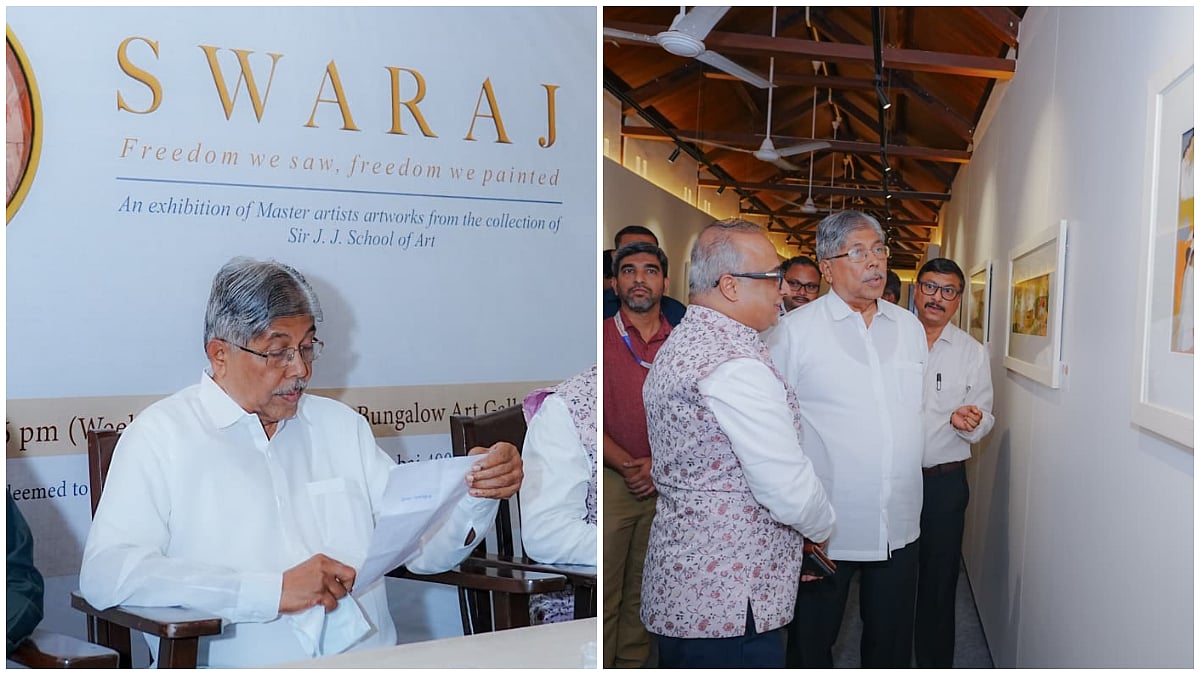
Higher and Technical Education Minister Chandrakant Patil visited the Sir J.J. School of Art in Mumbai on Wednesday, where he emphasized the importance of preserving the institution's legacy of nationalism and art education.
The minister visited a special exhibition titled “Swaraj: Seen and Painted Freedom”, which features rare paintings created by students of the institution between 1940 and 1960. The artworks provide a visual account of India's freedom movement, the Swadeshi movement, social transformation, and nation-building in the post-Independence period.
Patil announced that a hostel with a capacity of 1,000 students — 500 girls and 500 boys — would be opened soon to provide accommodation to students of the institution. He praised the institution's contribution to India's artistic and cultural heritage, saying that the exhibition was more than a display of artworks, but a living visual archive of India's freedom struggle, cultural consciousness, and the history of art education.
The exhibition showcases the works of noted artists, including Vasudeo Gaitonde, Laxman Pai, Jatin Das, and Dilip Ranade, as well as talented but lesser-known students. The minister appealed to art lovers, researchers, students, and citizens to visit the exhibition and experience the institution's historic artistic heritage.
Patil said that efforts would continue to preserve and showcase the valuable artistic legacy of Sir J.J. School of Art for coming generations. The institution's visual traditions reflect a rich legacy of nationalism, cultural identity, and art education, which must be preserved for future generations.
The Sir J.J. School of Art has a long history of contributing to India's artistic and cultural heritage, and the exhibition is a testament to this legacy. The institution has produced many notable artists, and its alumni have gone on to make significant contributions to the field of art.
The exhibition is a unique opportunity for visitors to experience the institution's historic artistic heritage and to learn about India's freedom movement and cultural consciousness. The minister's announcement of a new hostel is also a significant development, as it will provide much-needed accommodation for students of the institution.
In conclusion, the minister's visit to the Sir J.J. School of Art and his emphasis on preserving the institution's legacy are significant developments for the art community in Mumbai. The exhibition is a must-visit for anyone interested in art, history, and culture, and the institution's continued preservation is essential for future generations.
The legacy of the Sir J.J. School of Art is a valuable part of India's cultural heritage, and efforts to preserve and showcase it are crucial. The minister's appeal to art lovers, researchers, students, and citizens to visit the exhibition and experience the institution's historic artistic heritage is a call to action that should be taken seriously.
Overall, the minister's visit to the Sir J.J. School of Art and his announcement of a new hostel are positive developments for the institution and the art community in Mumbai. The preservation of the institution's legacy is essential, and the exhibition is a unique opportunity for visitors to experience the institution's historic artistic heritage.
Frequently asked questions
What is the significance of the Sir J.J. School of Art's legacy?
The institution's legacy reflects a rich history of nationalism, cultural identity, and art education, which must be preserved for future generations.
What is the theme of the exhibition at the Sir J.J. School of Art?
The exhibition, titled “Swaraj: Seen and Painted Freedom”, features rare paintings created by students of the institution between 1940 and 1960, showcasing India's freedom movement, the Swadeshi movement, social transformation, and nation-building in the post-Independence period.