Twinkle Khanna Faces Backlash For Mughal History Comment
Twinkle Khanna's remark on Mughal history sparks debate online. She linked Mughal era to popular Indian food.
'%3E%3Crect%20width%3D'96'%20height%3D'96'%20fill%3D'%23C2185B'%2F%3E%3Ccircle%20cx%3D'30'%20cy%3D'24'%20r%3D'44'%20fill%3D'%23fff'%20opacity%3D'.12'%2F%3E%3Ccircle%20cx%3D'60'%20cy%3D'74'%20r%3D'40'%20fill%3D'%23000'%20opacity%3D'.10'%2F%3E%3C%2Fg%3E%3Cpath%20fill%3D'%23fff'%20d%3D'M48%2031%20l4.6%2010.2%2011.2%201%20-8.4%207.5%202.5%2011%20-9.9%20-5.8%20-9.9%205.8%202.5%20-11%20-8.4%20-7.5%2011.2%20-1%20z'%2F%3E%3C%2Fsvg%3E)
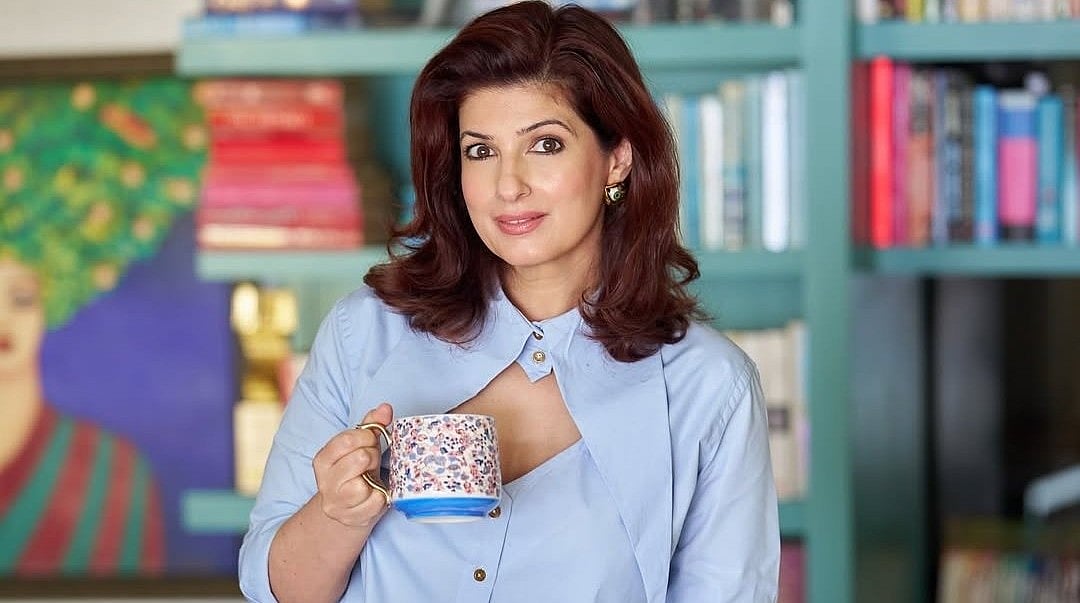
Actor and author Twinkle Khanna has faced criticism for her recent comment on India's Mughal history. In her column, Mrs Funnybones, published on August 30, Khanna discussed the controversy around food and ingredients, and wrote that those who want to erase the Mughals from history books should give up popular Indian dishes like koftas, kormas, and kebabs.
The comment did not sit well with social media users, including Sheema Kher, who argued that using food to make a point about a violent period of history was neither humorous nor appropriate. Kher pointed out that Khanna's husband, Akshay Kumar, had starred in the film Kesari, which was based on the Battle of Saragarhi, a historical episode that had received limited attention in school education.
Kher questioned why food should be presented as an argument while discussing the darker chapters of Indian history. She wrote that if Khanna could watch a film about historical bloodshed and still enjoy her food, why was food being used as an argument against acknowledging history? Kher also noted that the Mughals did not arrive in India to give the country a permanent soundtrack of music, but rather, there were wars, conquests, and bloodshed.
Khanna's comment was seen as insensitive and dismissive of the violent history of the Mughal era. Many social media users agreed with Kher's response, stating that Khanna's remark was not funny or sensible. The debate highlights the ongoing conversation around food safety and the importance of acknowledging and respecting India's complex history.
The Mughal era, which lasted from the 16th to the 19th century, was marked by significant cultural and architectural achievements, but also by violence, conquests, and bloodshed. The era has been the subject of much debate and controversy in recent years, with some arguing that it should be remembered for its cultural achievements, while others argue that its violent history should not be forgotten.
The controversy surrounding Khanna's comment highlights the importance of being sensitive and respectful when discussing complex and sensitive topics like history. It also underscores the need for nuanced and informed discussions around India's cultural and historical heritage.
In recent years, there has been a growing trend of revisiting and reevaluating India's history, with many arguing that the country's history books have failed to adequately represent the complexities and nuances of its past. The debate surrounding Khanna's comment is a reflection of this larger conversation, and highlights the need for a more nuanced and informed understanding of India's history.
The incident has sparked a wider conversation around the importance of respecting and acknowledging India's complex history. Many have argued that it is essential to approach discussions around history with sensitivity and respect, and to avoid using simplistic or insensitive arguments. The controversy surrounding Khanna's comment serves as a reminder of the importance of nuanced and informed discussions around India's cultural and historical heritage.
In conclusion, Twinkle Khanna's comment on Mughal history has sparked a significant debate online, with many arguing that it was insensitive and dismissive of the violent history of the Mughal era. The controversy highlights the importance of being sensitive and respectful when discussing complex and sensitive topics like history, and underscores the need for nuanced and informed discussions around India's cultural and historical heritage.
Frequently asked questions
What did Twinkle Khanna say about Mughal history?
Twinkle Khanna wrote that those who want to erase the Mughals from history books should give up popular Indian dishes like koftas, kormas, and kebabs.
Why did social media users criticize Twinkle Khanna's comment?
Social media users criticized Khanna's comment as insensitive and dismissive of the violent history of the Mughal era.