Education Should Focus on Employability, Not Employment
Former IIM Indore director emphasizes importance of adaptability, critical thinking in management education. Summit discusses future of undergraduate management education.

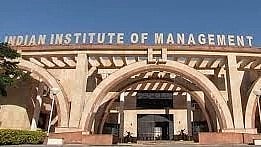
Former IIM Indore director Prof N Ravichandran recently addressed the Undergraduate Management Education Summit (UGMES) 2026 at IIM Indore, where he emphasized that the true purpose of education is not merely to secure jobs but to develop the ability to create value and adapt to change.
Prof Ravichandran, the visionary behind the five-year Integrated Programme in Management (IPM), said that education should focus on employability rather than employment. He reflected on the vision behind launching the IPM in 2011 and its journey to becoming one of the country's most sought-after undergraduate management programmes.
The core principles of management education remain relevant despite rapid technological advancements, according to Prof Ravichandran. He stated that the objective of higher education should be to develop individuals who can think critically, identify opportunities, and make meaningful contributions to society, rather than merely acquire job-specific skills.
IIM Indore Director Prof Himanshu Rai inaugurated the UGMES 2026 summit, which aimed to strengthen collaboration between schools and higher education institutions while helping students make informed academic and career choices. The summit brought together school leaders, academicians, management educators, industry experts, IPM chairpersons from various IIMs, alumni, and students for discussions on the future of undergraduate management education.
Prof Rai underscored the importance of equipping young learners with the curiosity, adaptability, and clarity of purpose needed to navigate an increasingly dynamic world. He stressed that education must go beyond securing jobs and focus on shaping responsible, future-ready leaders, urging students to pursue careers driven by passion rather than societal expectations.
The summit featured three panel discussions covering key aspects of undergraduate management education. Prof Rai called upon educators to nurture curiosity and encourage independent thinking, stating that meaningful learning begins when students are encouraged to question, explore, and continuously improve themselves.
An interactive session, IPM in the Eyes of Faculty Members, brought together several professors who shared their experiences of shaping the IPM and mentoring students. The summit also celebrated the journey of 10 graduating batches of IIM Indore's IPM through a special presentation, highlighting the programme's milestones and evolution over the past decade.
The IPM programme has been a pioneering initiative in management education, and its success can be attributed to its focus on developing individuals who can think critically and adapt to change. As the world becomes increasingly dynamic, the importance of such programmes cannot be overstated.
In conclusion, the UGMES 2026 summit emphasized the need for management education to focus on employability rather than employment. By developing individuals who can think critically, identify opportunities, and make meaningful contributions to society, institutions like IIM Indore can shape responsible, future-ready leaders who can navigate the challenges of an increasingly dynamic world.
The significance of this approach to management education extends beyond the realm of academia, as it has the potential to shape the future of industries and societies as a whole. By prioritizing employability over employment, institutions can create a new generation of leaders who are equipped to drive innovation, growth, and progress in an increasingly complex world.
As India continues to grow and develop, the need for such leaders will only continue to increase. It is therefore essential that institutions like IIM Indore continue to prioritize employability and adaptability in their management education programmes, ensuring that the next generation of leaders is equipped to navigate the challenges of the future.
In the context of India's growing economy and increasingly complex business landscape, the importance of management education that focuses on employability cannot be overstated. As the country continues to evolve and grow, the need for leaders who can think critically, adapt to change, and drive innovation will only continue to increase.
Ultimately, the approach to management education emphasized by Prof Ravichandran and Prof Rai has the potential to shape the future of industries and societies in India and beyond. By prioritizing employability over employment, institutions can create a new generation of leaders who are equipped to drive growth, innovation, and progress in an increasingly complex world.