
Buck Moon Aligns With Guru Purnima on July 29
July's Full Moon coincides with Guru Purnima, a significant spiritual festival. Buck Moon and Guru Purnima fall on July 29, 2026.
'%3E%3Crect%20width%3D'96'%20height%3D'96'%20fill%3D'%236A1B9A'%2F%3E%3Ccircle%20cx%3D'30'%20cy%3D'24'%20r%3D'44'%20fill%3D'%23fff'%20opacity%3D'.12'%2F%3E%3Ccircle%20cx%3D'60'%20cy%3D'74'%20r%3D'40'%20fill%3D'%23000'%20opacity%3D'.10'%2F%3E%3C%2Fg%3E%3Cg%20fill%3D'%23fff'%3E%3Cpath%20d%3D'M56%2033%20a16%2016%200%201%200%201%2030%20a12.5%2012.5%200%201%201%20-1%20-30%20z'%2F%3E%3Cpath%20d%3D'M39%2040%20l1.1%202.4%202.6%20.2%20-2%201.8%20.6%202.6%20-2.3%20-1.3%20-2.3%201.3%20.6%20-2.6%20-2%20-1.8%202.6%20-.2%20z'%2F%3E%3C%2Fg%3E%3C%2Fsvg%3E)
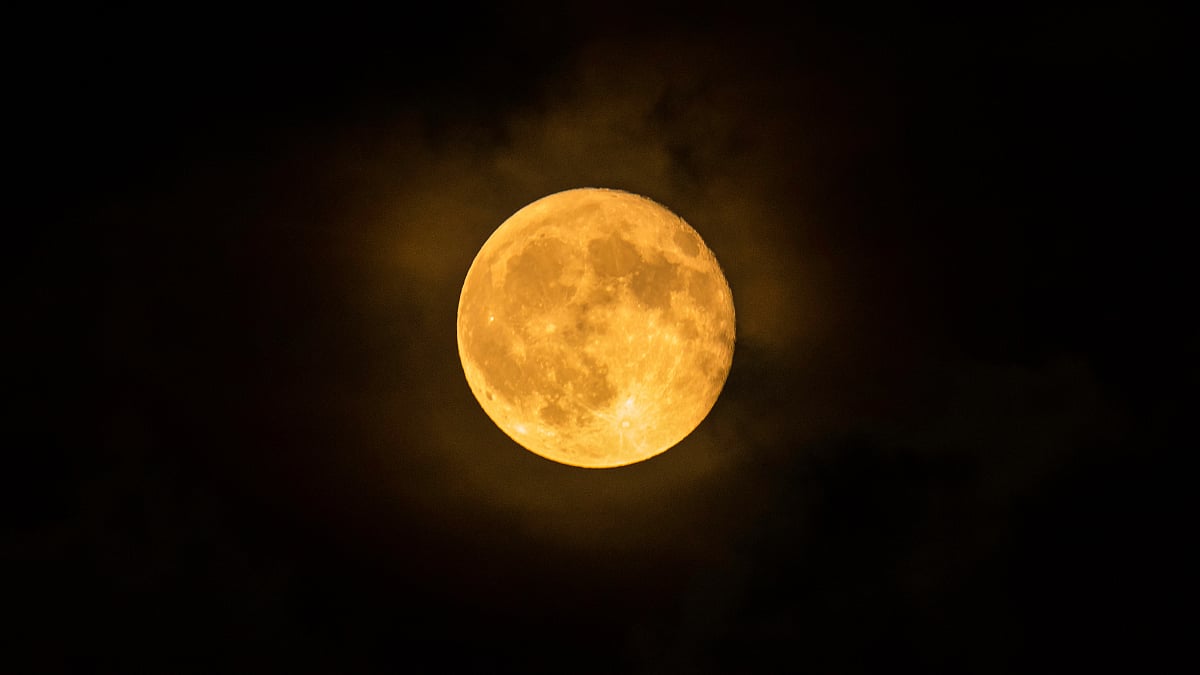
The night sky on July 29, 2026, will be illuminated by the July Buck Moon, which shares the calendar with Guru Purnima, a significant spiritual festival in India. The Buck Moon is the traditional name given to the Full Moon of July, and it reaches its peak illumination on July 29, 2026, at 10:36 a.m. ET.
The name 'Buck Moon' originates from the Algonquin people and was later popularized through early American almanacs. It refers to the time when male white-tailed deer, known as bucks, begin rapidly growing new antlers. These developing antlers are covered in a soft, velvety layer rich in blood vessels that nourishes the growing bone.
The July Full Moon is also known by several other traditional names across different cultures, including the Thunder Moon, the Hay Moon, and the Salmon Moon. These names are inspired by frequent summer thunderstorms, the hay harvest, and seasonal salmon migration in some Indigenous traditions.
Guru Purnima, on the other hand, is a spiritual festival dedicated to teachers, mentors, and gurus who guide people through knowledge and wisdom. It is observed on Ashadha Purnima, the Full Moon day of the Hindu month of Ashadha. The day is also known as Vyasa Purnima in honor of Maharishi Ved Vyasa, the revered sage traditionally credited with compiling the Vedas and authoring the Mahabharata.
In Buddhism, Guru Purnima commemorates Lord Buddha's first sermon at Sarnath, while yogic traditions associate it with Adiyogi Lord Shiva beginning the guru-disciple tradition by sharing the science of yoga with the Saptarishis. According to Drik Panchang, Guru Purnima will be celebrated on Wednesday, July 29, 2026, and the tithis are: Purnima Tithi Begins: 6:18 PM on July 28, 2026, and Purnima Tithi Ends: 8:05 PM on July 29, 2026.
The coincidence of the Buck Moon and Guru Purnima on the same Full Moon day makes July 29 a memorable occasion for skywatchers and devotees alike. While the Buck Moon is an astronomical event, Guru Purnima is a sacred religious observance, and their alignment is a rare and significant occurrence.
The Buck Moon and Guru Purnima are both significant events in their own right, and their coincidence is a reminder of the importance of knowledge, wisdom, and guidance in our lives. Whether one is interested in astronomy or spirituality, July 29, 2026, is a day to look forward to and cherish.
In conclusion, the alignment of the Buck Moon and Guru Purnima on July 29, 2026, is a rare and significant event that holds importance for both skywatchers and devotees. It is a reminder of the beauty and wonder of the natural world, as well as the importance of knowledge, wisdom, and guidance in our lives.
The significance of this event extends beyond the astronomical and spiritual realms, as it also highlights the importance of cultural and traditional practices in our lives. The different names given to the July Full Moon across various cultures are a testament to the diversity and richness of human experience and tradition.
Overall, the Buck Moon and Guru Purnima are two significant events that coincide on July 29, 2026, making it a memorable and special day for people around the world.
Frequently asked questions
What is the Buck Moon?
The Buck Moon is the traditional name given to the Full Moon of July, which refers to the time when male white-tailed deer begin rapidly growing new antlers.
What is Guru Purnima?
Guru Purnima is a spiritual festival dedicated to teachers, mentors, and gurus who guide people through knowledge and wisdom, observed on Ashadha Purnima, the Full Moon day of the Hindu month of Ashadha.