One Nation, One Election Targeted For 2029
JPC Chief PP Chaudhary announces plans for simultaneous elections, aims to strengthen democracy and governance.
'%3E%3Crect%20width%3D'96'%20height%3D'96'%20fill%3D'%231A5276'%2F%3E%3Ccircle%20cx%3D'30'%20cy%3D'24'%20r%3D'44'%20fill%3D'%23fff'%20opacity%3D'.12'%2F%3E%3Ccircle%20cx%3D'60'%20cy%3D'74'%20r%3D'40'%20fill%3D'%23000'%20opacity%3D'.10'%2F%3E%3C%2Fg%3E%3Cg%20fill%3D'%23fff'%3E%3Cpath%20d%3D'M31%2041%20L48%2031%20L65%2041%20Z'%2F%3E%3Crect%20x%3D'33'%20y%3D'43'%20width%3D'4'%20height%3D'17'%2F%3E%3Crect%20x%3D'41'%20y%3D'43'%20width%3D'4'%20height%3D'17'%2F%3E%3Crect%20x%3D'51'%20y%3D'43'%20width%3D'4'%20height%3D'17'%2F%3E%3Crect%20x%3D'59'%20y%3D'43'%20width%3D'4'%20height%3D'17'%2F%3E%3Crect%20x%3D'30'%20y%3D'62'%20width%3D'36'%20height%3D'4'%20rx%3D'1'%2F%3E%3C%2Fg%3E%3C%2Fsvg%3E)
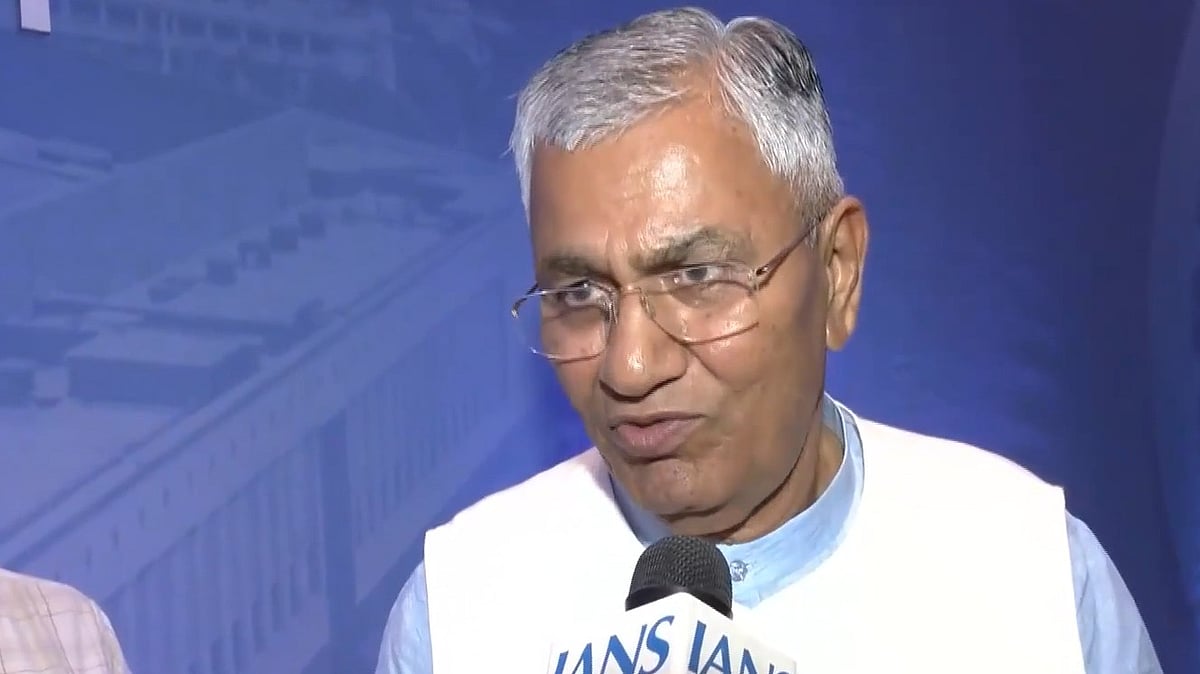
The Joint Parliamentary Committee (JPC) is working towards implementing the concept of One Nation, One Election, with the goal of holding Lok Sabha and State Legislative Assembly elections simultaneously across the country by 2029.
According to JPC Chairman and BJP MP PP Chaudhary, necessary constitutional and legal amendments will be made to achieve this objective. Chaudhary emphasized that this is not a political party agenda, but rather a comprehensive electoral reform linked to national interest, which will strengthen both democracy and governance.
Chaudhary stated that Prime Minister Narendra Modi has long supported the concept of One Nation, One Election, citing the adverse effects of frequent elections on the country's development, administrative functioning, and economy. The repeated enforcement of the Model Code of Conduct due to continuous election cycles impacts development projects, while a large part of the government machinery remains engaged in election-related work.
The JPC Chairman noted that simultaneous elections are not a new arrangement in the country, having been held together in 1952, 1957, 1962, and 1967. At that time, elections were successfully completed using ballot papers, despite the lack of modern technological facilities.
Chaudhary argued that Indian voters are highly aware and politically mature, and that holding Lok Sabha and Assembly elections together will not confuse them. He pointed out that from 1952 to 1967, crores of voters cast their votes simultaneously in both elections, and that with the country's current technological advancements and voter awareness, there is no solid basis for suggesting that simultaneous elections will be problematic.
The implementation of One Nation, One Election is expected to save time, resources, and public money, and will allow governance to function more effectively. The JPC Chairman's announcement has significant implications for the country's electoral system and its potential impact on democracy and governance.
The concept of One Nation, One Election has been debated for several years, with proponents arguing that it will reduce the frequency of elections and minimize the disruption caused to the administrative machinery. Opponents, on the other hand, have raised concerns about the potential impact on the federal structure of the country and the ability of voters to make informed decisions.
As the JPC works towards implementing the concept of One Nation, One Election, it is likely to face significant challenges and opposition from various stakeholders. However, if successful, it could potentially strengthen democracy and governance in the country, and have a lasting impact on the electoral system.
In conclusion, the announcement by JPC Chairman PP Chaudhary marks a significant step towards implementing the concept of One Nation, One Election, with the goal of holding simultaneous elections by 2029. The potential implications of this reform are far-reaching, and it will be important to monitor the progress and challenges faced by the JPC in the coming years.
The success of this reform will depend on the ability of the government and the JPC to address the concerns and challenges raised by various stakeholders, and to ensure that the electoral system is strengthened and made more effective. Ultimately, the implementation of One Nation, One Election has the potential to make a significant contribution to the development and governance of the country, and to strengthen the democratic institutions that are essential to its functioning.
The JPC's efforts to implement the concept of One Nation, One Election are a significant step towards achieving this goal, and it will be important to continue to monitor the progress and challenges faced by the committee in the coming years. With the target date of 2029, the JPC has a significant amount of work to do to ensure that the necessary constitutional and legal amendments are made, and that the electoral system is prepared for the implementation of simultaneous elections.
Overall, the announcement by JPC Chairman PP Chaudhary marks a significant development in the country's electoral system, and has the potential to make a lasting impact on democracy and governance in India.
The country's electoral system has been in place for several decades, and has undergone several changes and reforms over the years. The implementation of One Nation, One Election is the latest attempt to strengthen the system and make it more effective.
In the coming years, it will be important to monitor the progress and challenges faced by the JPC, and to ensure that the electoral system is strengthened and made more effective. The success of this reform will depend on the ability of the government and the JPC to address the concerns and challenges raised by various stakeholders, and to ensure that the electoral system is prepared for the implementation of simultaneous elections.
The implementation of One Nation, One Election has the potential to make a significant contribution to the development and governance of the country, and to strengthen the democratic institutions that are essential to its functioning. It will be important to continue to monitor the progress and challenges faced by the JPC, and to ensure that the electoral system is strengthened and made more effective.
What it means for the country is that the electoral system will be more efficient, and the government will be able to function more effectively. The implementation of One Nation, One Election will also reduce the frequency of elections, and minimize the disruption caused to the administrative machinery. This will have a positive impact on the country's development and governance, and will strengthen the democratic institutions that are essential to its functioning.
In conclusion, the announcement by JPC Chairman PP Chaudhary marks a significant step towards implementing the concept of One Nation, One Election, with the goal of holding simultaneous elections by 2029. The potential implications of this reform are far-reaching, and it will be important to monitor the progress and challenges faced by the JPC in the coming years.