Perseid Meteor Shower Peaks August 12
Perseid meteor shower to light up skies on August 12. India visibility expected.
'%3E%3Crect%20width%3D'96'%20height%3D'96'%20fill%3D'%231B5E20'%2F%3E%3Ccircle%20cx%3D'30'%20cy%3D'24'%20r%3D'44'%20fill%3D'%23fff'%20opacity%3D'.12'%2F%3E%3Ccircle%20cx%3D'60'%20cy%3D'74'%20r%3D'40'%20fill%3D'%23000'%20opacity%3D'.10'%2F%3E%3C%2Fg%3E%3Cg%3E%3Ccircle%20cx%3D'48'%20cy%3D'48'%20r%3D'15'%20fill%3D'%23fff'%2F%3E%3Cpath%20d%3D'M43%2034%20Q50%2048%2043%2062'%20fill%3D'none'%20stroke%3D'%238a94a6'%20stroke-width%3D'2.4'%2F%3E%3Cpath%20d%3D'M47%2033%20Q54%2048%2047%2063'%20fill%3D'none'%20stroke%3D'%238a94a6'%20stroke-width%3D'1.8'%20stroke-dasharray%3D'1.5%203'%2F%3E%3C%2Fg%3E%3C%2Fsvg%3E)
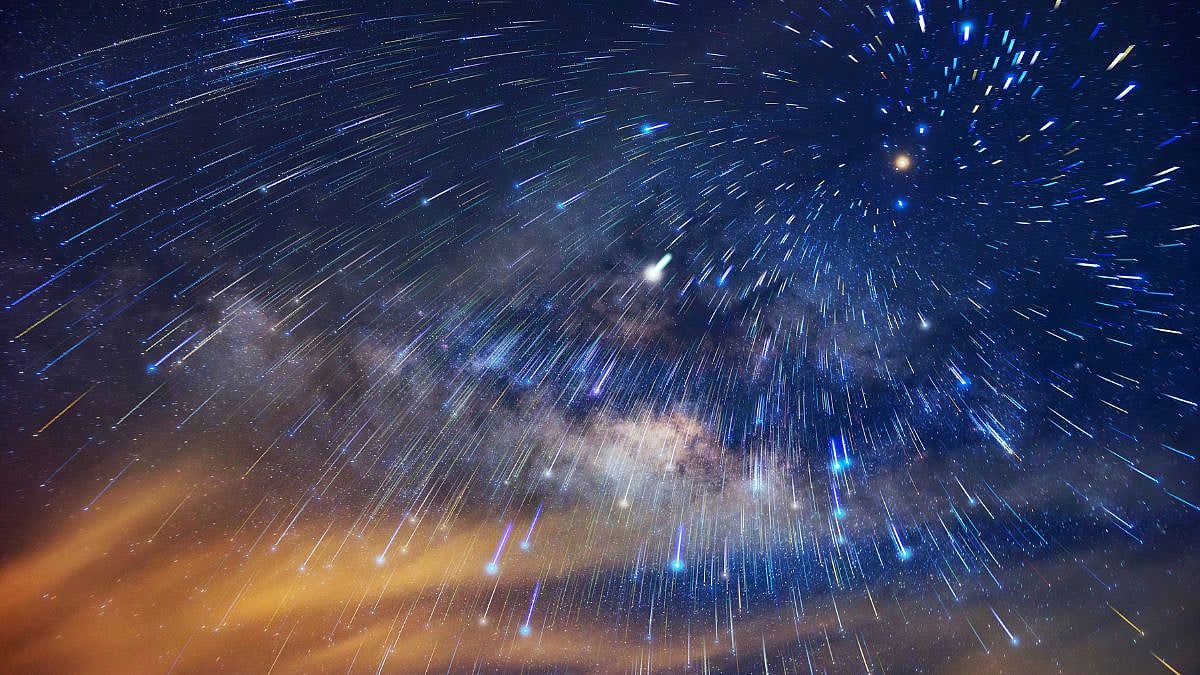
The Perseid meteor shower, a popular celestial event, is set to peak on August 12, 2026. This phenomenon occurs when Earth passes through the stream of debris left behind by Comet Swift-Tuttle, producing bright, fast-moving meteors that streak across the night sky.
The Perseid meteor shower is one of the most spectacular celestial events of the year, with skywatchers around the world eagerly awaiting the event. The shower is known for producing dozens of meteors per hour during its peak, under ideal dark-sky conditions.
The Perseid meteor shower will be visible from India on August 12-13, 2026, with the best viewing window between 2:00 AM and 4:30 AM IST on those pre-dawn mornings. However, the experience may not be as spectacular as in parts of the Northern Hemisphere with darker skies. This year, visibility may also be affected by the Moon's brightness, depending on local weather and lunar conditions.
Those living away from city lights, in rural areas or hill stations with clear skies, are likely to enjoy a better view. Astronomy enthusiasts are advised to choose a location away from artificial lights and allow their eyes about 20-30 minutes to adjust to the darkness. No telescope or binoculars are required, as meteors are best viewed with the naked eye across a wide stretch of the sky.
The Perseid meteor shower is a result of the comet Swift-Tuttle, which follows an elliptical orbit around the Sun that takes 133 years to complete. Although there were concerns about the comet potentially colliding with Earth or the Moon in the 1990s, more precise calculations have determined that there is no risk to Earth for at least another two thousand years.
The Perseid meteor shower is one of the best celestial shows of the year, and skywatchers in India can look forward to witnessing this spectacular event on August 12-13, 2026. With the right viewing conditions and a little patience, observers can enjoy a dazzling display of shooting stars in the night sky.
In conclusion, the Perseid meteor shower is a significant celestial event that will be visible from India on August 12-13, 2026. While the visibility may be affected by local weather and lunar conditions, astronomy enthusiasts can still enjoy a spectacular view of the meteor shower by choosing the right location and following some simple viewing tips.
The Perseid meteor shower is a reminder of the beauty and wonder of the night sky, and it provides an opportunity for people to come together and appreciate the celestial spectacle. As the shower peaks on August 12-13, 2026, skywatchers in India and around the world can look forward to a thrilling display of shooting stars and a chance to experience the magic of the universe.
The significance of the Perseid meteor shower extends beyond its aesthetic appeal, as it also provides an opportunity for scientists to study the comet Swift-Tuttle and its orbit around the Sun. By studying the meteor shower, scientists can gain insights into the composition and behavior of comets, which can help us better understand the formation and evolution of our solar system.
Overall, the Perseid meteor shower is a significant celestial event that will be visible from India on August 12-13, 2026. With its spectacular display of shooting stars and its scientific significance, the shower is an event that should not be missed by astronomy enthusiasts and anyone interested in the wonders of the universe.
Frequently asked questions
When is the Perseid meteor shower visible from India?
The Perseid meteor shower will be visible from India on August 12-13, 2026, with the best viewing window between 2:00 AM and 4:30 AM IST.
What is the best way to view the Perseid meteor shower?
Astronomy enthusiasts should choose a location away from artificial lights and allow their eyes about 20-30 minutes to adjust to the darkness. No telescope or binoculars are required, as meteors are best viewed with the naked eye across a wide stretch of the sky.