Florida Plants 15,000 Milkweed Plants
Florida helps monarch butterflies, bees and pollinators.
'%3E%3Crect%20width%3D'96'%20height%3D'96'%20fill%3D'%234A235A'%2F%3E%3Ccircle%20cx%3D'30'%20cy%3D'24'%20r%3D'44'%20fill%3D'%23fff'%20opacity%3D'.12'%2F%3E%3Ccircle%20cx%3D'60'%20cy%3D'74'%20r%3D'40'%20fill%3D'%23000'%20opacity%3D'.10'%2F%3E%3C%2Fg%3E%3Cg%20fill%3D'none'%20stroke%3D'%23fff'%20stroke-width%3D'3'%3E%3Ccircle%20cx%3D'48'%20cy%3D'48'%20r%3D'16'%2F%3E%3Cellipse%20cx%3D'48'%20cy%3D'48'%20rx%3D'6.5'%20ry%3D'16'%2F%3E%3Cline%20x1%3D'32'%20y1%3D'42'%20x2%3D'64'%20y2%3D'42'%2F%3E%3Cline%20x1%3D'32'%20y1%3D'54'%20x2%3D'64'%20y2%3D'54'%2F%3E%3C%2Fg%3E%3C%2Fsvg%3E)
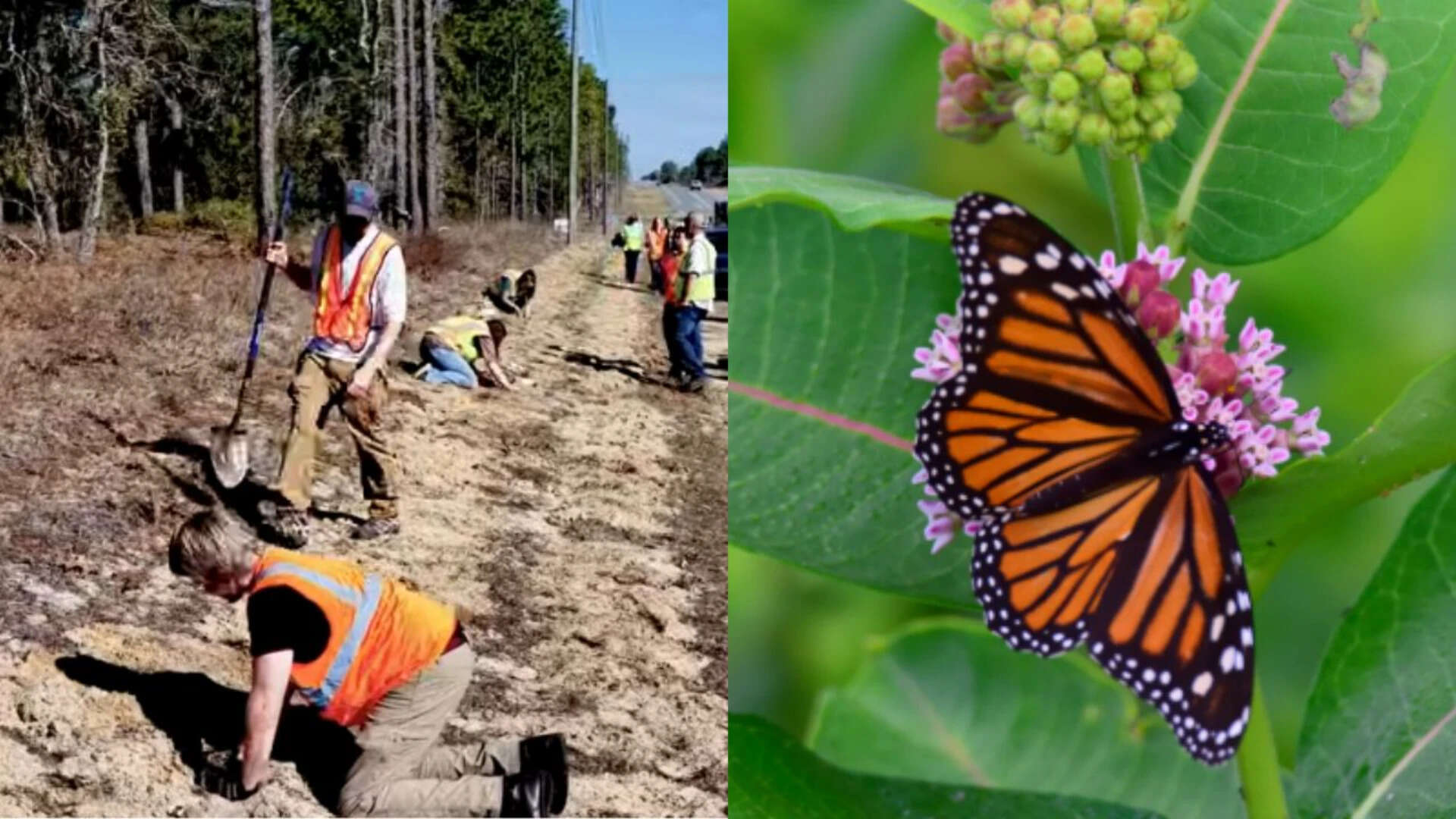
Florida has taken a significant step to support monarch butterflies by planting 15,000 milkweed plants along its roadsides. This initiative, led by scientists and transport officials, aims to create a 10,200-acre corridor for these iconic creatures.
The milkweed plant is crucial for the survival and reproduction of monarch butterflies, as it is the only plant on which they lay their eggs. By planting these species along roadsides, the project not only helps monarchs but also supports bees and other pollinators.
The project is also testing the feasibility of roadside habitats as long-term wildlife corridors across the state. This innovative approach could potentially be replicated in other regions, providing a network of habitats for various species.
Monarch butterflies are known for their distinctive orange and black wings, and their migratory patterns span thousands of miles each year. However, their populations have been declining due to habitat loss, pesticide use, and climate change.
Florida's initiative is part of a broader effort to conserve and protect monarch butterfly populations. By creating a network of habitats along roadsides, the state hopes to provide a safe haven for these creatures to feed, breed, and migrate.
The project's focus on roadside habitats is particularly significant, as these areas are often overlooked as potential wildlife corridors. By transforming these spaces into thriving ecosystems, Florida is demonstrating its commitment to conservation and biodiversity.
The success of this project could have far-reaching implications for conservation efforts across the United States. As other states and regions look to replicate this model, the potential for creating a vast network of wildlife corridors could become a reality.
In the context of conservation, Florida's initiative is a testament to the power of collaborative efforts between scientists, transport officials, and policymakers. By working together, they can create innovative solutions to pressing environmental challenges.
The project's impact extends beyond the conservation of monarch butterflies, as it also supports the local ecosystem and promotes biodiversity. By providing a habitat for pollinators, the project contributes to the health of local flora and fauna.
In conclusion, Florida's efforts to create a 10,200-acre corridor for monarch butterflies are a significant step towards conservation and biodiversity. As the project continues to evolve, it will be interesting to see the long-term impact on monarch populations and the potential for replication in other regions.