Apple Sues OpenAI Over AI Trade Secrets
Apple targets OpenAI's AI hardware program. Legal action may delay plans.
'%3E%3Crect%20width%3D'96'%20height%3D'96'%20fill%3D'%23B3261E'%2F%3E%3Ccircle%20cx%3D'30'%20cy%3D'24'%20r%3D'44'%20fill%3D'%23fff'%20opacity%3D'.12'%2F%3E%3Ccircle%20cx%3D'60'%20cy%3D'74'%20r%3D'40'%20fill%3D'%23000'%20opacity%3D'.10'%2F%3E%3C%2Fg%3E%3Cg%20fill%3D'%23fff'%3E%3Crect%20x%3D'29'%20y%3D'49'%20width%3D'8'%20height%3D'19'%20rx%3D'1'%2F%3E%3Crect%20x%3D'39'%20y%3D'40'%20width%3D'9'%20height%3D'28'%20rx%3D'1'%2F%3E%3Crect%20x%3D'50'%20y%3D'45'%20width%3D'8'%20height%3D'23'%20rx%3D'1'%2F%3E%3Crect%20x%3D'60'%20y%3D'53'%20width%3D'7'%20height%3D'15'%20rx%3D'1'%2F%3E%3Crect%20x%3D'41'%20y%3D'34'%20width%3D'5'%20height%3D'6'%2F%3E%3C%2Fg%3E%3C%2Fsvg%3E)
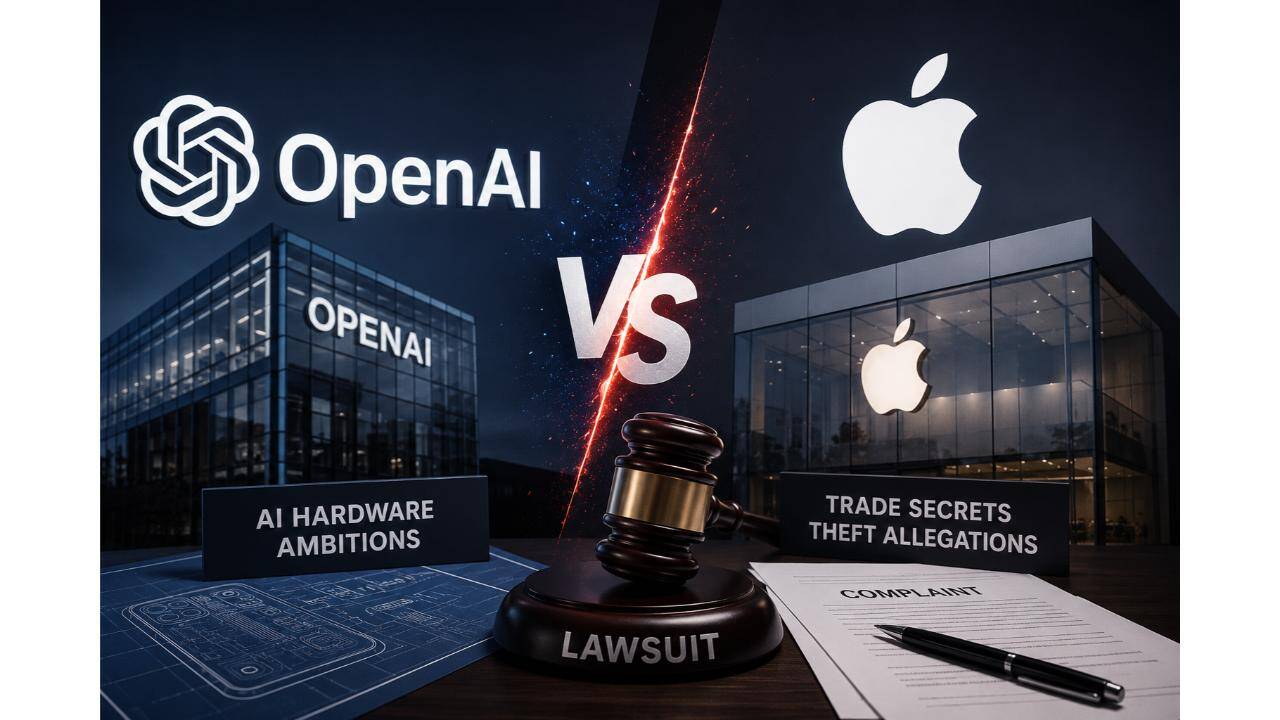
Apple has filed a lawsuit against OpenAI, alleging the theft of trade secrets and intellectual property related to artificial intelligence hardware development. The lawsuit specifically targets OpenAI's nascent program aimed at creating AI-powered devices.
According to AI commentator Shruti Mishra, this legal action could significantly delay OpenAI's plans to develop and launch its own AI hardware devices. Apple is seeking a preliminary injunction to halt OpenAI's hardware advancements during the litigation process.
The lawsuit is a significant challenge to OpenAI's ambitions in the AI hardware space. OpenAI, led by Sam Altman, has been working on developing its own AI-powered devices, which could potentially compete with Apple's products. The legal action may impact OpenAI's ability to launch its planned AI hardware device, at least in the short term.
OpenAI's hardware development program is still in its early stages, but the company has been making significant investments in the space. The program is focused on creating custom AI chips and other hardware components that can be used to power a range of AI applications.
The lawsuit is the latest example of the increasing competition in the AI space. Tech giants like Apple, Google, and Amazon are all investing heavily in AI research and development, and there is a growing trend towards the development of custom AI hardware.
The outcome of the lawsuit is uncertain, but it could have significant implications for OpenAI's hardware plans. If Apple is successful in its lawsuit, it could potentially delay or even block OpenAI's ability to launch its AI hardware device. On the other hand, if OpenAI is able to successfully defend itself against the lawsuit, it could clear the way for the company to move forward with its hardware plans.
The development of AI hardware is a critical area of research and development, with potential applications in a range of fields, from consumer electronics to healthcare and finance. The lawsuit highlights the increasing importance of intellectual property and trade secrets in the AI space, and the need for companies to protect their investments in research and development.
In the broader context, the lawsuit is a reminder of the intense competition and innovation in the tech industry, particularly in the AI space. As companies like Apple and OpenAI continue to invest in AI research and development, there will likely be more legal challenges and disputes over intellectual property and trade secrets.
The impact of the lawsuit on OpenAI's plans will depend on the outcome of the litigation. However, one thing is certain - the development of AI hardware is a critical area of research and development, and companies like OpenAI and Apple will continue to invest heavily in this space.
The lawsuit may also have implications for the wider AI community, as it highlights the importance of protecting intellectual property and trade secrets in the development of AI hardware. As the AI space continues to evolve, there will likely be more legal challenges and disputes over intellectual property and trade secrets, and companies will need to be vigilant in protecting their investments in research and development.
In conclusion, the lawsuit filed by Apple against OpenAI has significant implications for the development of AI hardware. The outcome of the lawsuit is uncertain, but it could potentially delay or block OpenAI's ability to launch its AI hardware device. The lawsuit highlights the increasing importance of intellectual property and trade secrets in the AI space, and the need for companies to protect their investments in research and development.