Omar Abdullah: PoK May Have Rejoined J&K If Article 370 Stayed
Omar Abdullah shares his thoughts on Article 370, PoK and J&K.
'%3E%3Crect%20width%3D'96'%20height%3D'96'%20fill%3D'%231A5276'%2F%3E%3Ccircle%20cx%3D'30'%20cy%3D'24'%20r%3D'44'%20fill%3D'%23fff'%20opacity%3D'.12'%2F%3E%3Ccircle%20cx%3D'60'%20cy%3D'74'%20r%3D'40'%20fill%3D'%23000'%20opacity%3D'.10'%2F%3E%3C%2Fg%3E%3Cg%20fill%3D'%23fff'%3E%3Cpath%20d%3D'M31%2041%20L48%2031%20L65%2041%20Z'%2F%3E%3Crect%20x%3D'33'%20y%3D'43'%20width%3D'4'%20height%3D'17'%2F%3E%3Crect%20x%3D'41'%20y%3D'43'%20width%3D'4'%20height%3D'17'%2F%3E%3Crect%20x%3D'51'%20y%3D'43'%20width%3D'4'%20height%3D'17'%2F%3E%3Crect%20x%3D'59'%20y%3D'43'%20width%3D'4'%20height%3D'17'%2F%3E%3Crect%20x%3D'30'%20y%3D'62'%20width%3D'36'%20height%3D'4'%20rx%3D'1'%2F%3E%3C%2Fg%3E%3C%2Fsvg%3E)
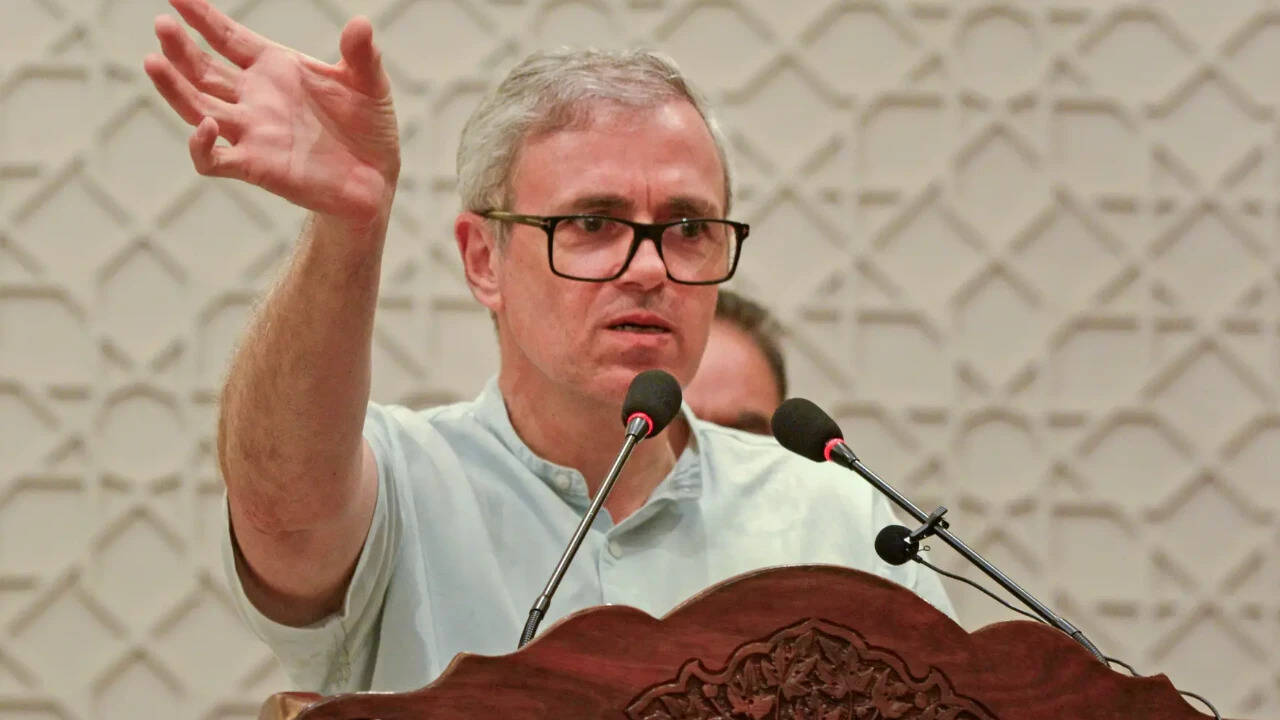
Omar Abdullah, the former Chief Minister of Jammu and Kashmir, recently stated that if Article 370 had remained in place, Pakistan-occupied Kashmir (PoK) may have sought to rejoin the state of Jammu and Kashmir.
This statement comes as a significant remark from the National Conference leader, who has been vocal about the abrogation of Article 370. Abdullah's comment highlights the potential implications of the article's removal on the region's dynamics.
Abdullah invoked the 1947 resistance, praising Sheikh Abdullah's role in the state's history. He emphasized the importance of Sheikh Abdullah's leadership during the resistance, which played a crucial part in shaping the state's future.
The removal of Article 370 has been a contentious issue, with various opinions and reactions from different stakeholders. While some have welcomed the move, others have expressed concerns about its implications on the region's autonomy and identity.
In the context of Jammu and Kashmir's history, Article 370 held significant importance as it granted the state a special status. The article's removal has led to a reevaluation of the state's relationship with the rest of India, with some speculating about the potential consequences on the region's politics and economy.
Omar Abdullah's statement has sparked interest, as it raises questions about the potential scenarios that could have unfolded if Article 370 had remained in place. The comment also underscores the complex dynamics at play in the region, with various factors influencing the relationships between India, Pakistan, and the state of Jammu and Kashmir.
As the situation in Jammu and Kashmir continues to evolve, it is essential to consider the historical context and the potential implications of significant decisions like the removal of Article 370. The region's future remains a topic of discussion, with various stakeholders working towards finding a resolution that addresses the concerns and aspirations of its people.
In conclusion, Omar Abdullah's remark about PoK potentially rejoining J&K if Article 370 had stayed highlights the complexities of the region's dynamics. The statement serves as a reminder of the need to consider the historical context and the potential consequences of significant decisions on the region's politics and economy.
The former Chief Minister's comment has sparked a debate, with some speculating about the potential scenarios that could have unfolded if Article 370 had remained in place. As the region continues to navigate its complex relationships with India and Pakistan, it is crucial to prioritize the needs and aspirations of its people.
The removal of Article 370 has marked a significant turning point in the region's history, with various stakeholders working towards finding a resolution that addresses the concerns and aspirations of the people of Jammu and Kashmir. As the situation continues to evolve, it is essential to consider the potential implications of significant decisions on the region's future.
The region's history, including the 1947 resistance, plays a crucial role in understanding the current dynamics. Sheikh Abdullah's leadership during the resistance has been praised by Omar Abdullah, who highlighted the importance of his role in shaping the state's future.
In the end, the future of Jammu and Kashmir remains a topic of discussion, with various stakeholders working towards finding a resolution that addresses the concerns and aspirations of its people. The region's complex dynamics, influenced by historical events and significant decisions like the removal of Article 370, will continue to shape its future.
Frequently asked questions
What did Omar Abdullah say about Article 370 and PoK?
Omar Abdullah stated that if Article 370 had remained in place, PoK may have sought to rejoin the state of Jammu and Kashmir.
Why is Article 370 significant in Jammu and Kashmir's history?
Article 370 granted the state a special status, and its removal has led to a reevaluation of the state's relationship with the rest of India.