Why You Can't Stop Scrolling While Watching TV
Find yourself scrolling through your phone while watching TV? You're not alone. Here's why it's hard to stop.
'%3E%3Crect%20width%3D'96'%20height%3D'96'%20fill%3D'%23B3261E'%2F%3E%3Ccircle%20cx%3D'30'%20cy%3D'24'%20r%3D'44'%20fill%3D'%23fff'%20opacity%3D'.12'%2F%3E%3Ccircle%20cx%3D'60'%20cy%3D'74'%20r%3D'40'%20fill%3D'%23000'%20opacity%3D'.10'%2F%3E%3C%2Fg%3E%3Cg%20fill%3D'%23fff'%3E%3Crect%20x%3D'29'%20y%3D'49'%20width%3D'8'%20height%3D'19'%20rx%3D'1'%2F%3E%3Crect%20x%3D'39'%20y%3D'40'%20width%3D'9'%20height%3D'28'%20rx%3D'1'%2F%3E%3Crect%20x%3D'50'%20y%3D'45'%20width%3D'8'%20height%3D'23'%20rx%3D'1'%2F%3E%3Crect%20x%3D'60'%20y%3D'53'%20width%3D'7'%20height%3D'15'%20rx%3D'1'%2F%3E%3Crect%20x%3D'41'%20y%3D'34'%20width%3D'5'%20height%3D'6'%2F%3E%3C%2Fg%3E%3C%2Fsvg%3E)
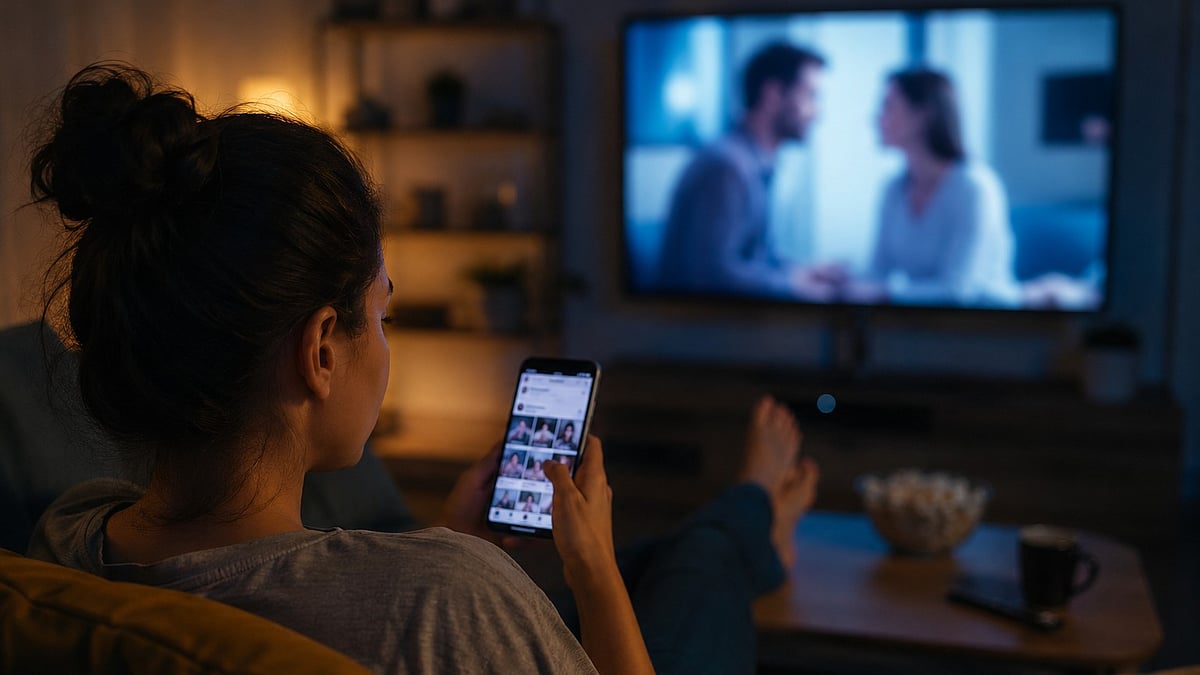
Many people have developed the habit of using their phones while watching television, a behaviour known as 'secondary screening'. This can lead to a decrease in focus, memory, and overall enjoyment of the show.
According to Ekta Dharia, a Clinical Psychologist and Psychotherapist, the brain has become accustomed to constant stimulation from smartphones, making it difficult to stay engaged with one activity. Every notification and new post offers instant rewards, making it harder to focus on a single task.
One of the main reasons people engage in secondary screening is the fear of missing out (FOMO). They worry that they'll miss an important message, trending topic, or social media update if they don't check their phone regularly. This fear makes it difficult to ignore notifications, even during a movie or TV show.
Some people believe that watching TV while replying to messages or scrolling through social media is a good way to multitask and make the most of their time. However, according to Dr. Sachin Adukia, an international award-winning Neurologist, the brain isn't truly multitasking in this scenario. Instead, it constantly shifts focus from one task to another, making it harder to follow the storyline, remember details, or fully understand what you're watching.
Another reason people engage in secondary screening is that it can feel like a way to fill gaps in the TV show. When there's a quiet moment or a slower scene, many people instinctively pick up their phones to fill the gap. However, this can lead to a decrease in enjoyment of the show, as the brain is constantly craving continuous entertainment.
In addition to these reasons, the constant switching between two different sources of information can also make it difficult to be fully present. The brain is constantly switching between the TV and the phone, making it harder to focus on either one.
Overall, secondary screening has become a common habit for many people. While it may feel harmless, it can have negative effects on focus, memory, and enjoyment. By understanding the reasons behind this behaviour, people can take steps to break the habit and improve their overall viewing experience.
The impact of secondary screening on our daily lives is significant. It can affect our relationships, our work, and our overall well-being. By being more mindful of our phone use and making an effort to focus on one task at a time, we can improve our productivity, our relationships, and our overall quality of life.
In conclusion, secondary screening is a common habit that can have negative effects on our daily lives. By understanding the reasons behind this behaviour and making an effort to break the habit, we can improve our focus, memory, and overall enjoyment of the things we watch.
Frequently asked questions
What is secondary screening?
Secondary screening is the habit of using a phone or other device while watching TV or a movie.
Why do people engage in secondary screening?
People engage in secondary screening due to a variety of reasons, including the fear of missing out, the desire for constant stimulation, and the feeling of productivity.