India Plans $42 Billion Fuel Reserve, May Levy LPG Users
India considers levies on LPG, natural gas users. Strategic fuel reserve planned.
'%3E%3Crect%20width%3D'96'%20height%3D'96'%20fill%3D'%23B3261E'%2F%3E%3Ccircle%20cx%3D'30'%20cy%3D'24'%20r%3D'44'%20fill%3D'%23fff'%20opacity%3D'.12'%2F%3E%3Ccircle%20cx%3D'60'%20cy%3D'74'%20r%3D'40'%20fill%3D'%23000'%20opacity%3D'.10'%2F%3E%3C%2Fg%3E%3Cg%20fill%3D'%23fff'%3E%3Crect%20x%3D'29'%20y%3D'49'%20width%3D'8'%20height%3D'19'%20rx%3D'1'%2F%3E%3Crect%20x%3D'39'%20y%3D'40'%20width%3D'9'%20height%3D'28'%20rx%3D'1'%2F%3E%3Crect%20x%3D'50'%20y%3D'45'%20width%3D'8'%20height%3D'23'%20rx%3D'1'%2F%3E%3Crect%20x%3D'60'%20y%3D'53'%20width%3D'7'%20height%3D'15'%20rx%3D'1'%2F%3E%3Crect%20x%3D'41'%20y%3D'34'%20width%3D'5'%20height%3D'6'%2F%3E%3C%2Fg%3E%3C%2Fsvg%3E)
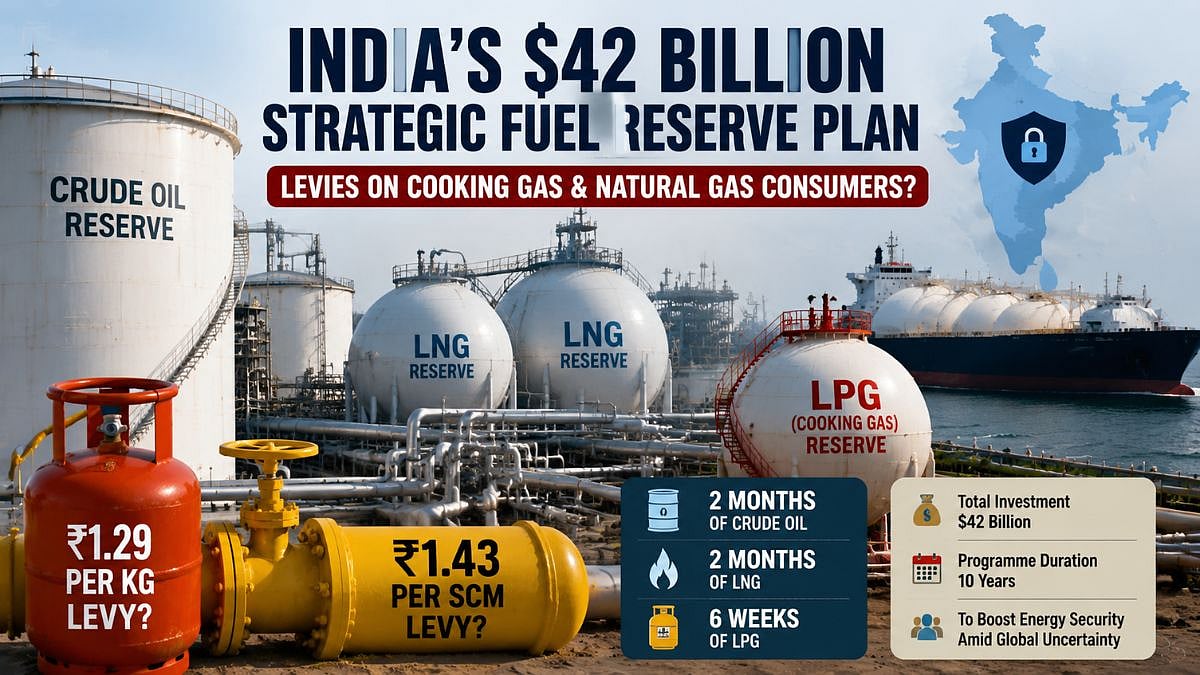
India is considering imposing levies on cooking gas and natural gas consumers to finance a planned $42 billion strategic fuel reserve. The proposal aims to expand India's strategic reserves beyond crude oil for the first time, covering about two months of crude oil and liquefied natural gas (LNG) demand and around six weeks of liquefied petroleum gas (LPG) consumption.
The Ministry of Petroleum and Natural Gas is considering a levy of Rs 1.29 per kg of LPG, which could generate about $460 million annually at current consumption levels. This would add about Rs 18 to the cost of a standard domestic cooking gas cylinder. For natural gas, the ministry has proposed a levy of Rs 1.43 per standard cubic metre, which could raise about $1 billion annually at current consumption levels.
The proceeds from the levies would mainly finance natural gas and cooking gas storage infrastructure, while crude oil reserves and strategic fuel inventories would continue to be funded by the Government of India. The proposed levies would increase household gas bills by about 2 per cent, making the measure politically sensitive for the government as millions of consumers already face elevated fuel prices.
The strategic reserve programme, planned over 10 years, would require about $42 billion. More than half of the amount would be used to build storage infrastructure, with the remainder going towards stocking the reserves. The government estimates that India will need an additional 28 million metric tonnes of crude oil storage capacity, nine million tonnes of LNG storage, and four million tonnes of LPG storage over the next 10 years.
The plan was developed after supply disruptions linked to the Middle East crisis pushed up import costs and highlighted India's dependence on overseas fuel supplies. India, the world's third-largest oil importer and consumer, imports nearly 90 per cent of its crude oil. This has left the country heavily reliant on external sources, making it vulnerable to global market fluctuations.
The proposed funding mechanism, including levies on cooking gas and natural gas consumption, has not previously been reported. The Ministry of Petroleum and Natural Gas and the Finance Ministry did not respond to requests for comment on the proposal.
The implementation of the strategic fuel reserve plan would mark a significant shift in India's energy security strategy. The country has been working to reduce its dependence on imported fuel and promote the use of alternative energy sources. However, the proposed levies on LPG and natural gas users may face opposition from consumers who are already struggling with high fuel prices.
In the context of India's energy landscape, the strategic fuel reserve plan is a crucial step towards ensuring the country's energy security. The plan would help India to mitigate the risks associated with supply disruptions and price volatility in the global market. However, the government will need to carefully consider the impact of the proposed levies on consumers and the overall economy.
The significance of the strategic fuel reserve plan lies in its potential to reduce India's dependence on imported fuel and promote energy security. The plan would also help to stabilize the country's energy market and reduce the risks associated with supply disruptions. As India continues to grow and develop, the need for a strategic fuel reserve will become increasingly important, and the government's plan to impose levies on LPG and natural gas users is a step towards achieving this goal.
In conclusion, the proposed strategic fuel reserve plan is a critical component of India's energy security strategy. The plan would help to reduce the country's dependence on imported fuel, promote energy security, and stabilize the energy market. However, the government will need to carefully consider the impact of the proposed levies on consumers and the overall economy, and work towards implementing the plan in a way that balances the needs of all stakeholders.
Frequently asked questions
What is the purpose of the strategic fuel reserve plan?
The plan aims to reduce India's dependence on imported fuel and promote energy security by covering about two months of crude oil and liquefied natural gas (LNG) demand and around six weeks of liquefied petroleum gas (LPG) consumption.
How will the strategic fuel reserve be funded?
The plan will be funded through levies on LPG and natural gas users, as well as government funding for crude oil reserves and strategic fuel inventories.