Cabinet Approves ₹2.19 Lakh Crore Projects
Union Cabinet clears major projects, including Semicon 2.0 and Mobile Scheme.
'%3E%3Crect%20width%3D'96'%20height%3D'96'%20fill%3D'%230B6E4F'%2F%3E%3Ccircle%20cx%3D'30'%20cy%3D'24'%20r%3D'44'%20fill%3D'%23fff'%20opacity%3D'.12'%2F%3E%3Ccircle%20cx%3D'60'%20cy%3D'74'%20r%3D'40'%20fill%3D'%23000'%20opacity%3D'.10'%2F%3E%3C%2Fg%3E%3Cg%20fill%3D'none'%20stroke%3D'%23fff'%20stroke-width%3D'3.2'%20stroke-linecap%3D'round'%20stroke-linejoin%3D'round'%3E%3Cpolyline%20points%3D'31%2C59%2041%2C49%2049%2C54%2063%2C37'%2F%3E%3Cpolyline%20points%3D'55%2C37%2063%2C37%2063%2C45'%2F%3E%3C%2Fg%3E%3C%2Fsvg%3E)
The Union Cabinet has approved seven major decisions, including Semicon 2.0 and the Mobile Phone Manufacturing Scheme, with a total outlay of ₹2,19,353 crore.
The decisions were announced by Union Information and Broadcasting Minister Ashwini Vaishnaw after the Cabinet meeting on Wednesday.
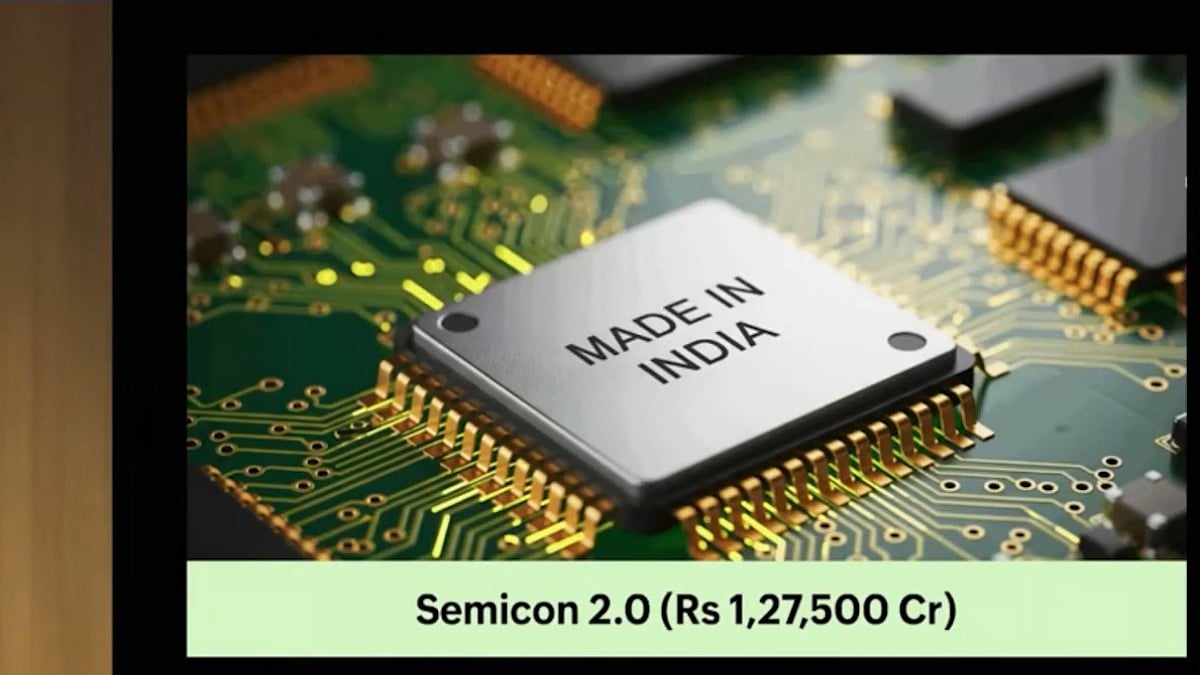
Among the key announcements, the Cabinet approved Semicon 2.0 with an outlay of ₹1,27,500 crore. The scheme aims to promote the development of the semiconductor industry in India.
The Cabinet also approved the Mobile Phone Manufacturing Scheme with an allocation of ₹62,500 crore. The scheme is expected to boost mobile phone manufacturing in the country.
In addition to these, the Cabinet approved two infrastructure projects in Varanasi, including a 6/4-lane elevated corridor along the River Varuna at a cost of ₹10,998 crore and a 6-lane elevated corridor along the River Ganga costing ₹14,448 crore.
The government also approved the National Investment Policy for Urea-2026, aimed at making India self-reliant in urea production.
Two railway infrastructure projects were also approved, including the doubling of the Paradeep-Haridaspur railway line at a cost of ₹2,542 crore and the fourth railway line between Dangoaposi and Rajkharsawan, involving an investment of ₹1,365 crore.
The total outlay of the approved projects stands at ₹2,19,353 crore, which is expected to give a boost to various sectors, including infrastructure, manufacturing, and railways.
The approval of these projects is a significant decision of the government, which is expected to have a positive impact on the economy.
The semiconductor industry is a foundational industry, and the approval of Semicon 2.0 is expected to promote its development in India.
The Mobile Phone Manufacturing Scheme is also expected to boost mobile phone manufacturing in the country, which will create new job opportunities and promote economic growth.
The infrastructure projects in Varanasi are expected to improve connectivity and promote economic development in the region.
The National Investment Policy for Urea-2026 is aimed at making India self-reliant in urea production, which will reduce the country's dependence on imports.
The railway infrastructure projects are expected to improve connectivity and promote economic development in the regions where they are located.
Overall, the approval of these projects is a significant decision of the government, which is expected to have a positive impact on the economy and promote economic growth.
The impact of these projects will be felt in the coming years, and they are expected to contribute to the country's economic development.
In conclusion, the Union Cabinet's approval of these projects is a significant decision that is expected to promote economic growth and development in various sectors, including infrastructure, manufacturing, and railways.