Mortal Remains Of 15 Indians Killed In Vietnam Arrive Mumbai
15 Indians killed in Vietnam boat tragedy repatriated, bodies to be flown to home states
'%3E%3Crect%20width%3D'96'%20height%3D'96'%20fill%3D'%23B3261E'%2F%3E%3Ccircle%20cx%3D'30'%20cy%3D'24'%20r%3D'44'%20fill%3D'%23fff'%20opacity%3D'.12'%2F%3E%3Ccircle%20cx%3D'60'%20cy%3D'74'%20r%3D'40'%20fill%3D'%23000'%20opacity%3D'.10'%2F%3E%3C%2Fg%3E%3Cg%20fill%3D'%23fff'%3E%3Crect%20x%3D'29'%20y%3D'49'%20width%3D'8'%20height%3D'19'%20rx%3D'1'%2F%3E%3Crect%20x%3D'39'%20y%3D'40'%20width%3D'9'%20height%3D'28'%20rx%3D'1'%2F%3E%3Crect%20x%3D'50'%20y%3D'45'%20width%3D'8'%20height%3D'23'%20rx%3D'1'%2F%3E%3Crect%20x%3D'60'%20y%3D'53'%20width%3D'7'%20height%3D'15'%20rx%3D'1'%2F%3E%3Crect%20x%3D'41'%20y%3D'34'%20width%3D'5'%20height%3D'6'%2F%3E%3C%2Fg%3E%3C%2Fsvg%3E)
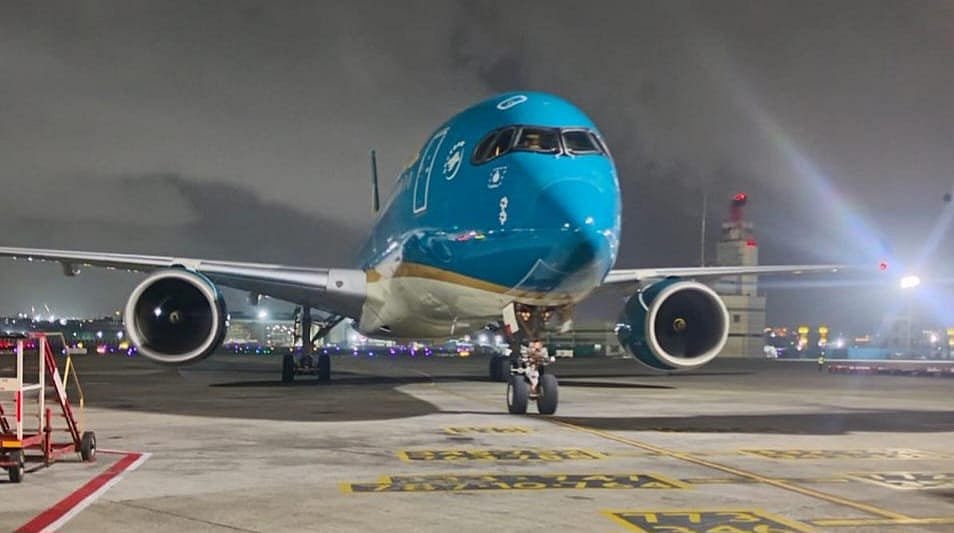
On Monday evening, the mortal remains of 15 Indian nationals who lost their lives in a boat accident in Vietnam on July 11 were repatriated to India. The bodies were brought to Mumbai's Chhatrapati Shivaji International Airport from where they will be flown to their respective home states.
The Vietnam Airlines flight, VN-979, arrived with the coffins of the deceased at Mumbai at around 9.19pm. A quiet, heavy grief hung over the cargo terminal as airport officials, diplomatic representatives and handling teams received the bodies.
As the flight landed in Mumbai, a transit team managed the seamless transfer of the coffins through Customs clearance. The coffins will be internally shifted during the night and flown back to Chennai, Hyderabad, Coimbatore and Trivandrum.
According to the Indian embassy in Vietnam, the transportation of the remains to the final destination will be coordinated by their home states, including Tamil Nadu, Andhra Pradesh and Kerala. The mortal remains were kept in a secured domestic transit zone from where they will be flown out on various connecting domestic flights scheduled throughout the night and early morning hours.
The victims were part of a group of 32 tourists, including sellers, distributors and employees of India-based Lava Mobile, that met with a fatal accident when their boat capsized on July 11 near Phu Quoc Island. 16 survivors, including one in critical care, were discharged and were also heading towards India while one has been admitted to a hospital in Ho Chi Minh city and underwent a medical procedure.
Following the disaster, the Indian Embassy in Hanoi and the Consulate General of India in Ho Chi Minh City entered a state of round-the-clock coordination with Vietnamese authorities. Diplomatic updates over the past 48 hours trace an intense effort to cut through standard bureaucratic timelines to bring the victims home.
The Indian Embassy immediately dispatched consular teams to the site to assist local police and medical examiners with the identification process and documentation. The Indian ambassador held high-level meetings with regional leaders in Vietnam to seek fast-tracked clearances for repatriation.
The financial and logistical burdens of the repatriation process were supported by the Indian government through the Indian Community Welfare Fund. The bodies are expected to reach their respective family residences by tomorrow morning for final rites.
The incident has highlighted the importance of coordination between governments in times of crisis. The swift response of the Indian Embassy and the Vietnamese authorities has ensured that the mortal remains of the victims are repatriated to India in a timely manner.
The tragedy has also raised concerns about the safety of Indian tourists traveling abroad. The Indian government has been working to improve safety measures for Indian citizens traveling overseas, including providing travel advisories and assistance in emergency situations.
In this case, the Indian Embassy in Vietnam played a crucial role in coordinating the repatriation efforts and providing support to the families of the victims. The embassy's efforts have been appreciated by the families of the victims and the Indian community in Vietnam.
The repatriation of the mortal remains of the 15 Indian nationals is a significant development in this tragic incident. It brings closure to the families of the victims and allows them to perform the final rites. The incident will be remembered as a tragic reminder of the risks involved in traveling abroad and the importance of coordination between governments in times of crisis.
The Indian government's efforts to support the families of the victims and facilitate the repatriation process have been commendable. The government's commitment to providing assistance to Indian citizens in distress, whether at home or abroad, is a reassuring message to the Indian community.
In conclusion, the repatriation of the mortal remains of the 15 Indian nationals who lost their lives in the Vietnam boat tragedy is a significant development. It highlights the importance of coordination between governments in times of crisis and the Indian government's commitment to supporting its citizens in distress. The incident will be remembered as a tragic reminder of the risks involved in traveling abroad and the importance of safety measures for Indian tourists traveling overseas.