Quad Pushes Back Against China in Indo-Pacific
Quad seeks free and open Indo-Pacific, counters Chinese assertiveness
'%3E%3Crect%20width%3D'96'%20height%3D'96'%20fill%3D'%234A235A'%2F%3E%3Ccircle%20cx%3D'30'%20cy%3D'24'%20r%3D'44'%20fill%3D'%23fff'%20opacity%3D'.12'%2F%3E%3Ccircle%20cx%3D'60'%20cy%3D'74'%20r%3D'40'%20fill%3D'%23000'%20opacity%3D'.10'%2F%3E%3C%2Fg%3E%3Cg%20fill%3D'none'%20stroke%3D'%23fff'%20stroke-width%3D'3'%3E%3Ccircle%20cx%3D'48'%20cy%3D'48'%20r%3D'16'%2F%3E%3Cellipse%20cx%3D'48'%20cy%3D'48'%20rx%3D'6.5'%20ry%3D'16'%2F%3E%3Cline%20x1%3D'32'%20y1%3D'42'%20x2%3D'64'%20y2%3D'42'%2F%3E%3Cline%20x1%3D'32'%20y1%3D'54'%20x2%3D'64'%20y2%3D'54'%2F%3E%3C%2Fg%3E%3C%2Fsvg%3E)
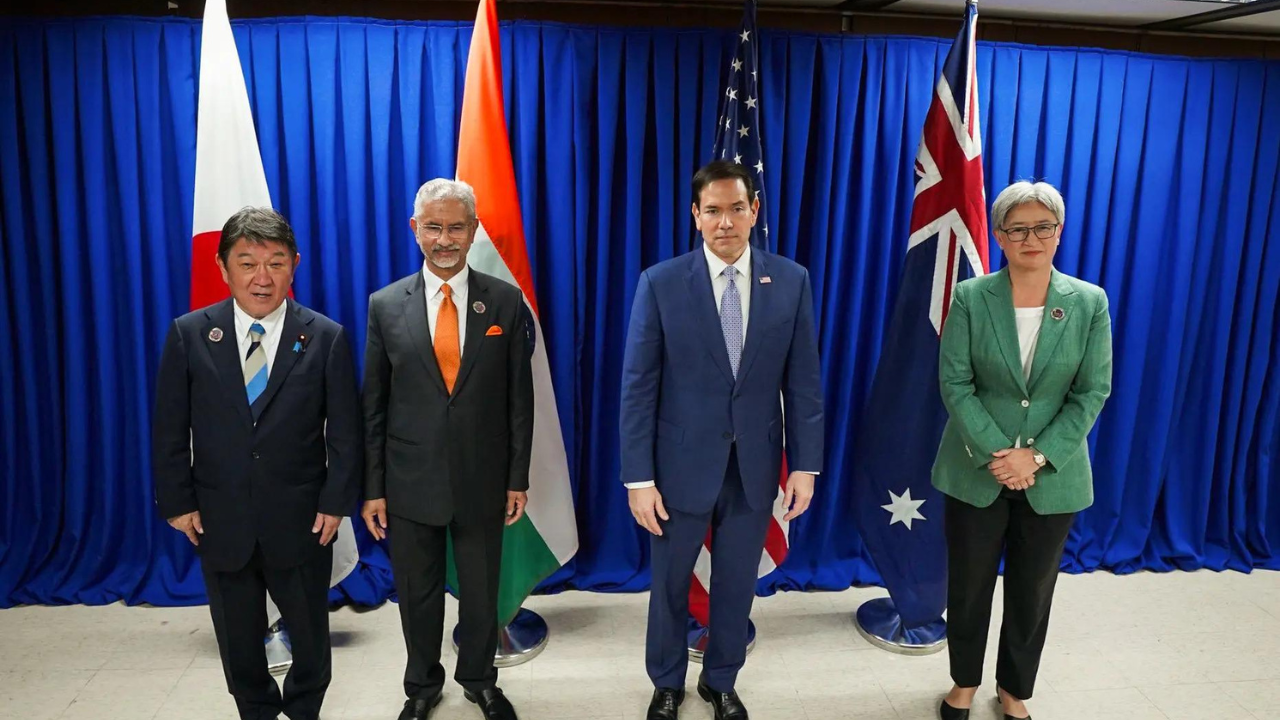
The Quadrilateral Security Dialogue, also known as the Quad, has reaffirmed its commitment to a free and open Indo-Pacific region. This move is seen as a pushback against China's growing assertiveness in the area.
The Quad, comprising India, the United States, Australia, and Japan, aims to promote a rules-based order in the Indo-Pacific. The group's efforts are focused on ensuring the freedom of navigation, overflight, and other lawful uses of the sea.
China's increasing assertiveness in the Indo-Pacific has raised concerns among the Quad member countries. Beijing's claims of sovereignty over the South China Sea and its efforts to expand its military presence in the region have been met with resistance from the Quad.
The Quad's pushback against China is not limited to security issues. The group is also working to promote economic cooperation and development in the Indo-Pacific. This includes initiatives to improve connectivity, enhance trade, and support sustainable development.
The Quad's commitment to a free and open Indo-Pacific is significant, given the region's importance to global trade and commerce. The Indo-Pacific is home to some of the world's busiest shipping lanes, and any disruption to the freedom of navigation could have far-reaching consequences for the global economy.
The Quad's efforts to counter China's assertiveness are also seen as a reflection of the shifting balance of power in the Indo-Pacific. As China continues to expand its military presence and economic influence in the region, the Quad is seeking to promote a more balanced and stable order.
In recent years, the Quad has gained significant momentum, with the group holding regular meetings and engaging in joint exercises. The Quad's efforts have been welcomed by other countries in the region, which see the group as a counterbalance to China's growing influence.
The Quad's commitment to a free and open Indo-Pacific is likely to have significant implications for the region's future. As the group continues to promote a rules-based order and counter China's assertiveness, it is likely to play an increasingly important role in shaping the Indo-Pacific's security and economic landscape.
The Indo-Pacific region is critical to India's economic and security interests. As a major player in the region, India is likely to continue to play a key role in the Quad's efforts to promote a free and open Indo-Pacific.
In conclusion, the Quad's pushback against China's assertiveness in the Indo-Pacific is a significant development in the region's security and economic landscape. As the group continues to promote a rules-based order and counter China's growing influence, it is likely to have far-reaching implications for the region's future.
Frequently asked questions
What is the Quad's main objective in the Indo-Pacific?
The Quad's main objective is to promote a free and open Indo-Pacific, ensuring the freedom of navigation, overflight, and other lawful uses of the sea.
How is the Quad countering China's assertiveness in the region?
The Quad is countering China's assertiveness through a combination of security cooperation, economic development, and diplomatic engagement.