Tibetan Community Holds 49th-Day Memorial For Lobsang Palden
Tibetans worldwide hold mass prayers, peace march for activist who self-immolated in protest
'%3E%3Crect%20width%3D'96'%20height%3D'96'%20fill%3D'%234A235A'%2F%3E%3Ccircle%20cx%3D'30'%20cy%3D'24'%20r%3D'44'%20fill%3D'%23fff'%20opacity%3D'.12'%2F%3E%3Ccircle%20cx%3D'60'%20cy%3D'74'%20r%3D'40'%20fill%3D'%23000'%20opacity%3D'.10'%2F%3E%3C%2Fg%3E%3Cg%20fill%3D'none'%20stroke%3D'%23fff'%20stroke-width%3D'3'%3E%3Ccircle%20cx%3D'48'%20cy%3D'48'%20r%3D'16'%2F%3E%3Cellipse%20cx%3D'48'%20cy%3D'48'%20rx%3D'6.5'%20ry%3D'16'%2F%3E%3Cline%20x1%3D'32'%20y1%3D'42'%20x2%3D'64'%20y2%3D'42'%2F%3E%3Cline%20x1%3D'32'%20y1%3D'54'%20x2%3D'64'%20y2%3D'54'%2F%3E%3C%2Fg%3E%3C%2Fsvg%3E)
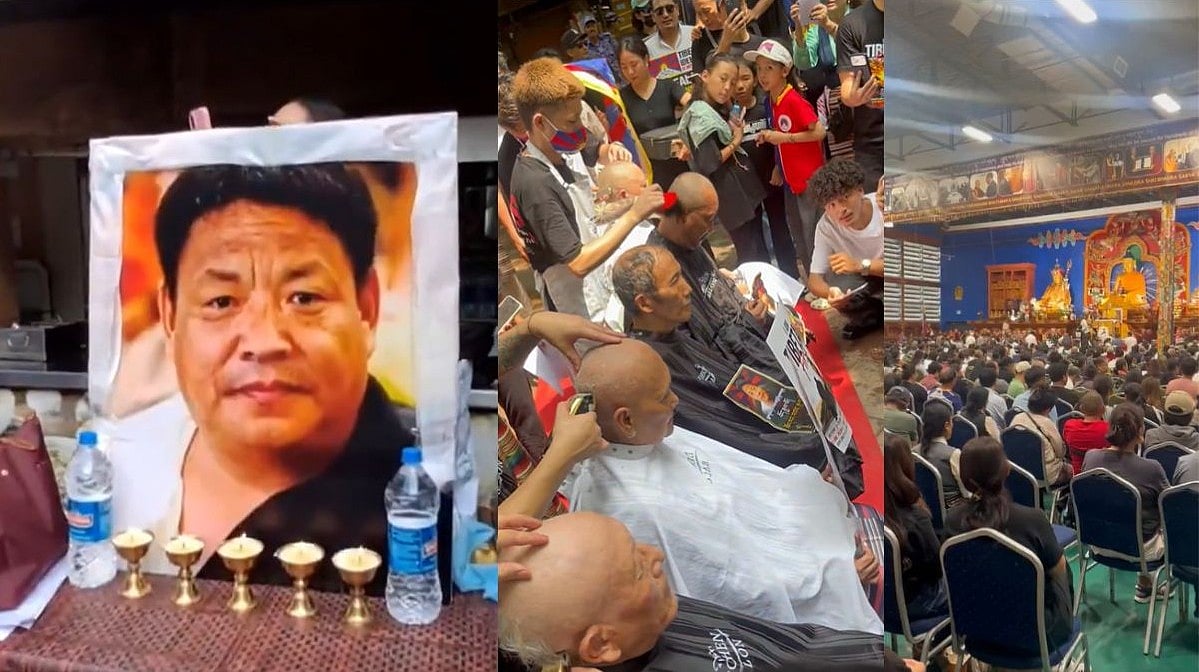
Lobsang Palden, a Tibetan activist, died on July 2, 2026, after self-immolating outside the United Nations Headquarters in New York City. The Tibetan community across the world is observing a 49th-day memorial for him, with prayer gatherings and peace marches held to remember him and honour his activism.
The memorial carries particular significance in Tibetan Buddhist tradition, where the period following death is regarded as an important stage for prayers and spiritual practices. Communities have come together to pray for the deceased and wish for a favourable rebirth.
Lobsang Palden was known within the Tibetan community for his advocacy for Tibet. His self-immolation was a protest against Chinese policies in Tibet, particularly the new 'Ethnic Unity and Progress Law' that took effect a day before his death. The law is seen as an attempt by Beijing to assimilate Tibetans into Chinese culture.
The Tibetan diaspora has come together for collective prayers and remembrance, with videos captured from various places, including the United States. In Delhi's Jantar Mantar, people held flags of India and Tibet, while in Australia, people gathered in front of the Chinese Embassy, holding the Tibet flag and protesting against the annexation.
In Shimla, a peace march was held to draw attention to the restrictive policies targeting Tibetan culture, language, and identity. More than 170 Tibetans have self-immolated since February 2009 in protest against Chinese policies.
The mass prayers and peace marches are a testament to the Tibetan community's resilience and determination to fight for their rights. Lobsang Palden's sacrifice has once again drawn attention to the long-running issue of Tibetan self-immolations, which have been used by some activists as an extreme form of protest.
The Tibetan community's observance of the 49th-day memorial is a moment of collective reflection, where they come together to pray for the deceased and wish for a favourable rebirth. It is also a statement against Beijing's assimilation policies in Tibet, and a call for the world to attention to the restrictive policies targeting Tibetan culture, language, and identity.
The significance of Lobsang Palden's sacrifice and the Tibetan community's response to it cannot be overstated. It highlights the ongoing struggle of the Tibetan people for their rights and freedom, and the need for the international community to take notice and support their cause.
In conclusion, the 49th-day memorial for Lobsang Palden is a poignant reminder of the Tibetan community's struggle for freedom and their determination to preserve their culture and identity. It is a call to action for the international community to support the Tibetan people in their fight for rights and freedom.
Frequently asked questions
What was Lobsang Palden protesting against?
Lobsang Palden was protesting against Chinese policies in Tibet, particularly the new 'Ethnic Unity and Progress Law'.
How many Tibetans have self-immolated since 2009?
More than 170 Tibetans have self-immolated since February 2009 in protest against Chinese policies.