India Launches First Hydrogen Train
India's first hydrogen train starts service, Jind-Sonipat route chosen for low traffic.
'%3E%3Crect%20width%3D'96'%20height%3D'96'%20fill%3D'%23B3261E'%2F%3E%3Ccircle%20cx%3D'30'%20cy%3D'24'%20r%3D'44'%20fill%3D'%23fff'%20opacity%3D'.12'%2F%3E%3Ccircle%20cx%3D'60'%20cy%3D'74'%20r%3D'40'%20fill%3D'%23000'%20opacity%3D'.10'%2F%3E%3C%2Fg%3E%3Cg%20fill%3D'%23fff'%3E%3Crect%20x%3D'29'%20y%3D'49'%20width%3D'8'%20height%3D'19'%20rx%3D'1'%2F%3E%3Crect%20x%3D'39'%20y%3D'40'%20width%3D'9'%20height%3D'28'%20rx%3D'1'%2F%3E%3Crect%20x%3D'50'%20y%3D'45'%20width%3D'8'%20height%3D'23'%20rx%3D'1'%2F%3E%3Crect%20x%3D'60'%20y%3D'53'%20width%3D'7'%20height%3D'15'%20rx%3D'1'%2F%3E%3Crect%20x%3D'41'%20y%3D'34'%20width%3D'5'%20height%3D'6'%2F%3E%3C%2Fg%3E%3C%2Fsvg%3E)
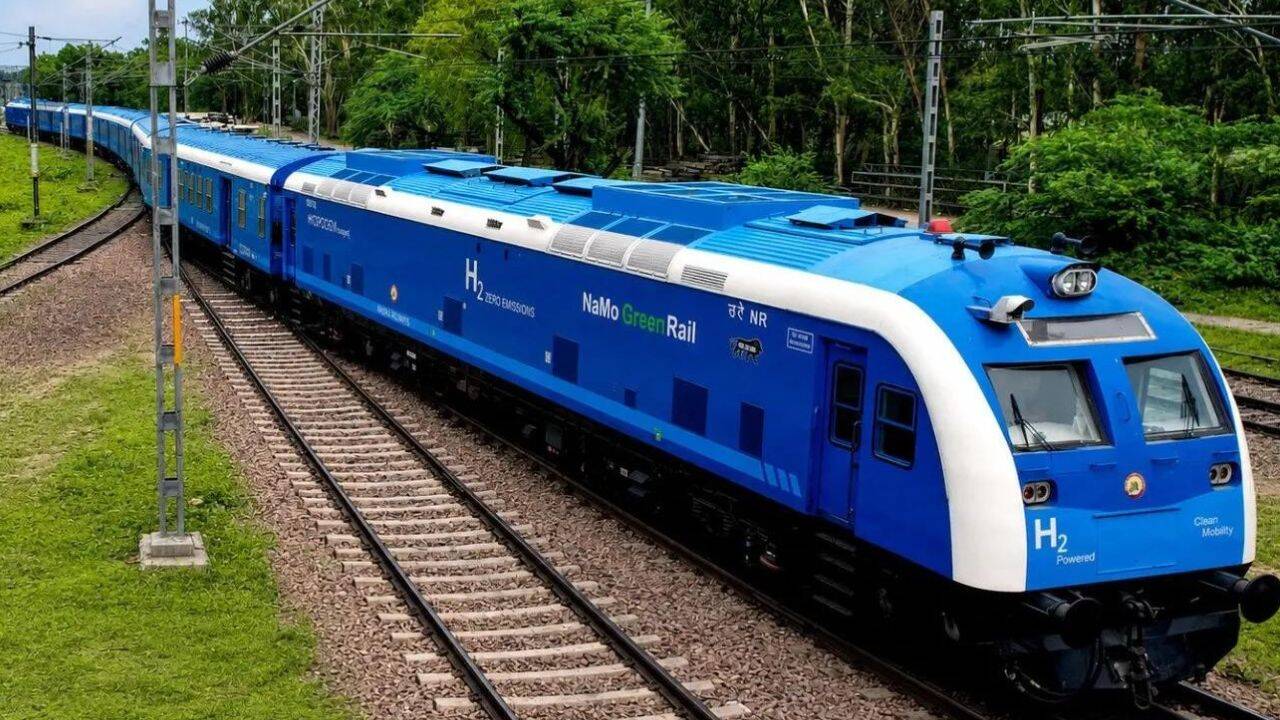
India has launched its first hydrogen-powered train, joining a select group of nations operating such trains. The train started its service on the Jind-Sonipat route, which was chosen due to its low traffic volume and existing infrastructure.
This 10-coach train is notable not only for being India's first hydrogen-powered train but also for being the longest of its kind globally. It utilizes indigenous technology, showcasing the country's capabilities in developing innovative railway solutions. The train is equipped with a powerful fuel-cell propulsion system, which provides a clean and efficient source of power.
The decision to launch the hydrogen train on the Jind-Sonipat route was strategic, considering the route's relatively low traffic. This allows for a smoother introduction of the new technology, minimizing disruptions to existing rail services. The availability of infrastructure along this route also facilitated the choice, as it enables easier maintenance and support for the train.
The use of hydrogen-powered trains is a significant step towards reducing the environmental impact of rail transport. Hydrogen fuel cells offer a clean alternative to traditional fossil fuels, producing only water and heat as emissions. This aligns with global efforts to decrease carbon footprints and mitigate climate change.
The introduction of this train is a result of collaborative efforts between various stakeholders, including research institutions and industry partners. It highlights the potential for indigenous technology to drive innovation in the railway sector. The development and deployment of such trains can pave the way for further advancements in sustainable rail transport.
As India continues to expand its rail network and modernize its services, the integration of hydrogen-powered trains could play a crucial role. The eventual extension of this service to New Delhi is planned, which would further increase the visibility and accessibility of this clean technology. This move is expected to not only enhance the passenger experience but also contribute to a more sustainable transport system.
The launch of India's first hydrogen train marks a significant milestone in the country's railway history. It demonstrates a commitment to embracing cleaner, more efficient technologies. As the rail network continues to evolve, the adoption of such innovative solutions will be key to reducing environmental impact and improving services.
In the broader context, this development reflects India's growing focus on sustainable development and reducing its carbon footprint. The transport sector, including railways, is a critical area where such efforts can yield significant benefits. By investing in clean technologies like hydrogen fuel cells, India aims to create a more environmentally friendly transport system, which is essential for the country's long-term sustainability goals.
The significance of this launch extends beyond the railway sector, as it showcases India's capability to develop and deploy cutting-edge technologies. This can have a positive impact on the country's image as a hub for innovation and technology, potentially attracting more investment and collaboration in the future.
As India moves forward with its plans to expand the reach of hydrogen-powered trains, it is likely to face both opportunities and challenges. The success of this initial service will be crucial in determining the feasibility of wider adoption. Nonetheless, the launch of India's first hydrogen train is a promising step towards a more sustainable and technologically advanced rail network.